GS 2: International RelationsGS 3: EconomyPrelimsGS 3: Changes in Industrial Policy and Effects on Industrial GrowthGS 2: Bilateral, Regional and Global Groupings and Agreements
India well positioned, but textile input sourcing a worry: Exporters, Pg16
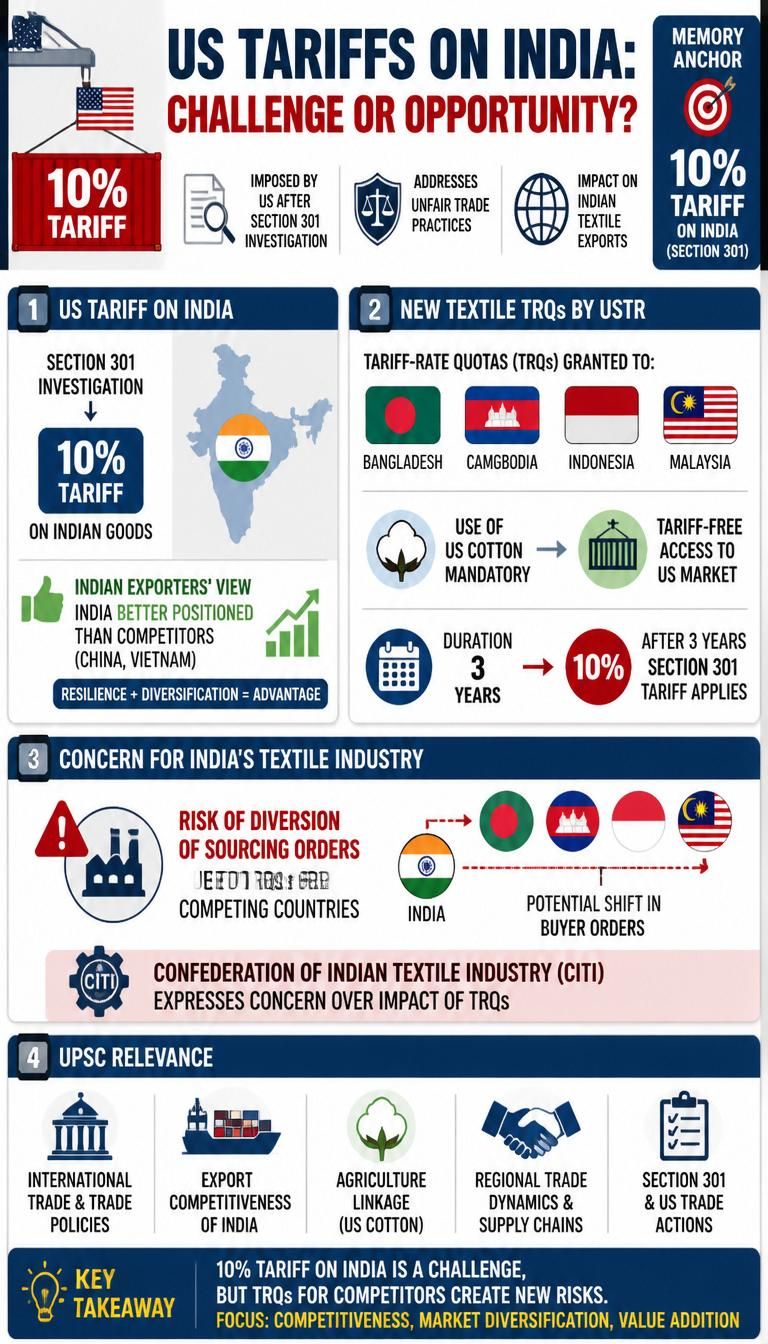
US slaps 10% tariffs on India; textile exporters fear competitor TRQs will divert crucial input sourcing, impacting India's export competitiveness.
Practice MCQs
767 Students attempted
Key Highlights:
- The US imposed 10% tariffs on India following a Section 301 investigation.
- Indian exporters, represented by FIEO, believe India is better positioned than competitors like China and Vietnam despite the tariffs.
- The USTR established new textile tariff-rate quotas (TRQs) for Bangladesh, Cambodia, Indonesia, and Malaysia.
- These TRQs allow specific volumes of textiles from these nations to enter the US tariff-free, provided they use US cotton.
- The Indian textile industry, through CITI, expressed concern over potential diversion of sourcing orders from India due to these TRQs.
Textile.jpg
Detailed Insights:
- The US tariffs are a consequence of a Section 301 investigation, which addresses unfair trade practices by foreign countries.
- The USTR's decision to grant TRQs to select countries aims to promote the use of US cotton and textile inputs in their manufacturing.
- These TRQs have an initial duration of three years, after which a 10% Section 301 tariff will apply to these countries.
- CITI Chairman Ashwin Chandran highlighted that the tariffs are linked to "forced labor" concerns, posing reputational risks for India.
- India's competitive advantage might stem from other competing countries facing a higher 12.5% tariff in the US market.
- The differential treatment could lead to trade diversion, impacting India's exports of cotton, yarn, and intermediate goods to these countries.
Key Concepts Involved:
- Section 301 investigation: A provision in US trade law allowing the President to take action against foreign countries engaging in unfair trade practices.
- Tariff-Rate Quotas (TRQs): A two-tiered tariff system where a specified quantity of imports is allowed at a lower tariff rate, while imports above that quantity face a higher tariff.
- Trade Diversion: A shift in trade patterns where imports are sourced from a less efficient supplier due to preferential trade agreements or tariffs.
- USTR: The principal trade advisor, negotiator, and spokesperson for the United States on trade issues.

SuperKalam is your personal mentor for UPSC preparation, guiding you at every step of the exam journey.
Download the App


STUDY RESOURCES
CONTACT US
ⓒ Snapstack Technologies Private Limited