GS 2: GovernanceGS 2: PolityGS 2: Social JusticeGS 3: EconomyPrelims
Alongside Centre, states' education expenditure too declined over past 12 years, Pg17
Alarming 12-year decline in Centre and state education spending fuels nationwide youth protests demanding urgent reforms.
Practice MCQs
767 Students attempted
Key Highlights:
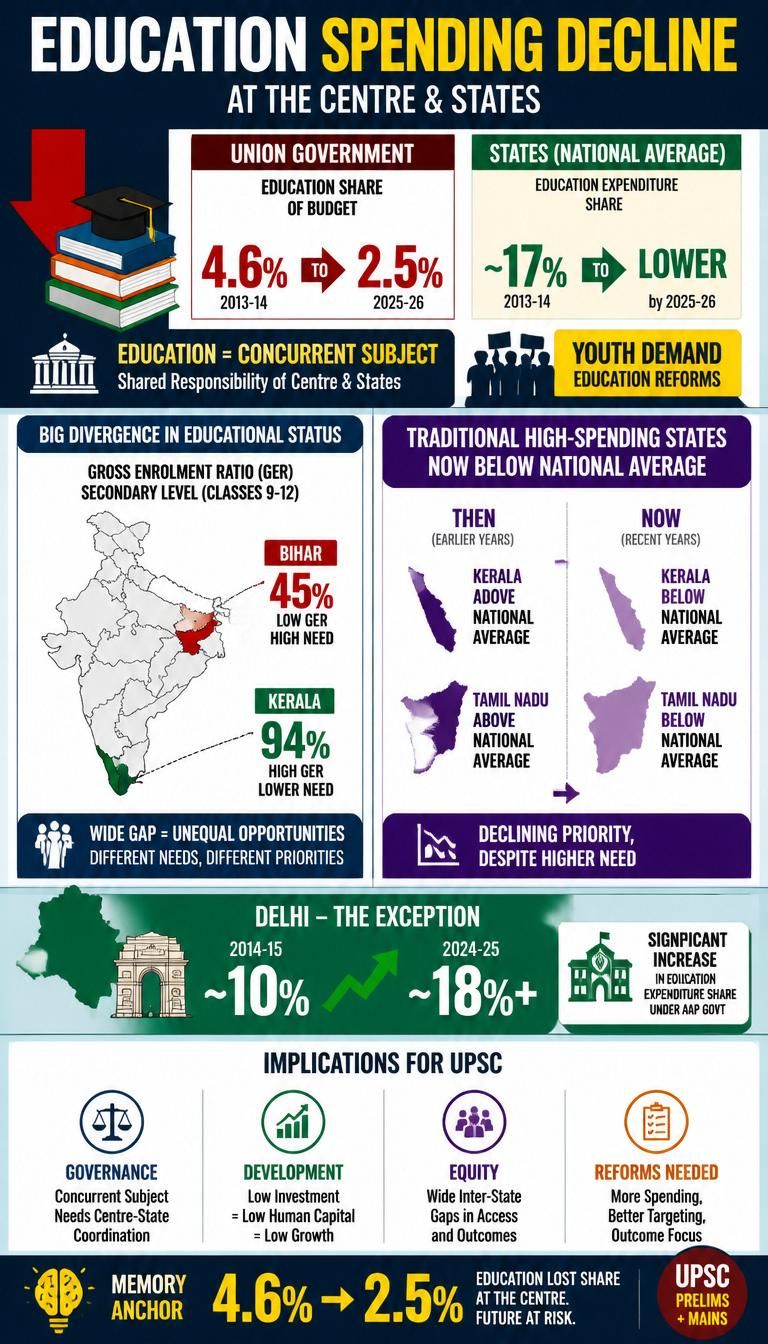
- Education expenditure by the Union government declined from 4.6% of the budget in 2013-14 to 2.5% in 2025-26.
- The national average of states' education expenditure also fell from around 17% in 2013-14, mirroring the Union government's trend.
- Education is a subject on the Concurrent List of the Seventh Schedule of the Indian Constitution, implying shared responsibility between the Centre and states.
- Youth protests across India are demanding education reforms and highlighting the declining emphasis on the sector.
Education Spending.jpg
Detailed Insights:
- The Seventh Schedule of the Indian Constitution delineates legislative powers between the Union and state governments.
- The Concurrent List allows both the Union and state governments to legislate on subjects like education.
- Gross Enrolment Ratio (GER) at the secondary level (Classes 9-12) serves as an indicator of educational status across states.
- States like Bihar exhibit a low GER of 45, while Kerala shows a high GER of 94, reflecting diverse educational needs.
- Historically higher-spending states like Kerala and Tamil Nadu have recently seen their education expenditure fall below the national average.
- Delhi, under the Aam Aadmi Party government, is an exception, significantly increasing its education expenditure share between 2014-15 and 2024-25.
Key Concepts Involved:
- Concurrent List: A list in the Seventh Schedule of the Indian Constitution where both the Union and state governments can legislate.
- Seventh Schedule: Part of the Indian Constitution that divides legislative powers between the Union and state governments into three lists.
- Gross Enrolment Ratio (GER): The total enrollment in a specific level of education, regardless of age, expressed as a percentage of the official age group population for that level.
Previous21/21

SuperKalam is your personal mentor for UPSC preparation, guiding you at every step of the exam journey.
Download the App


STUDY RESOURCES
CONTACT US
ⓒ Snapstack Technologies Private Limited