GS 3: Environment & EcologyGS 3: EconomyPrelimsGS 3: Buffer Stocks and Food SecurityGS 3: Infrastructure: Energy, Ports, Roads, Airports, Railways etc.
Balancing Ethanol Blending Targets With National Food Security
India hits its 20% ethanol blending target ahead of schedule, sparking critical debates over food security, water depletion, and grain subsidies.
Source: Indian Express (Pg. 13)
Practice MCQs
782 Students attempted
Key Highlights:
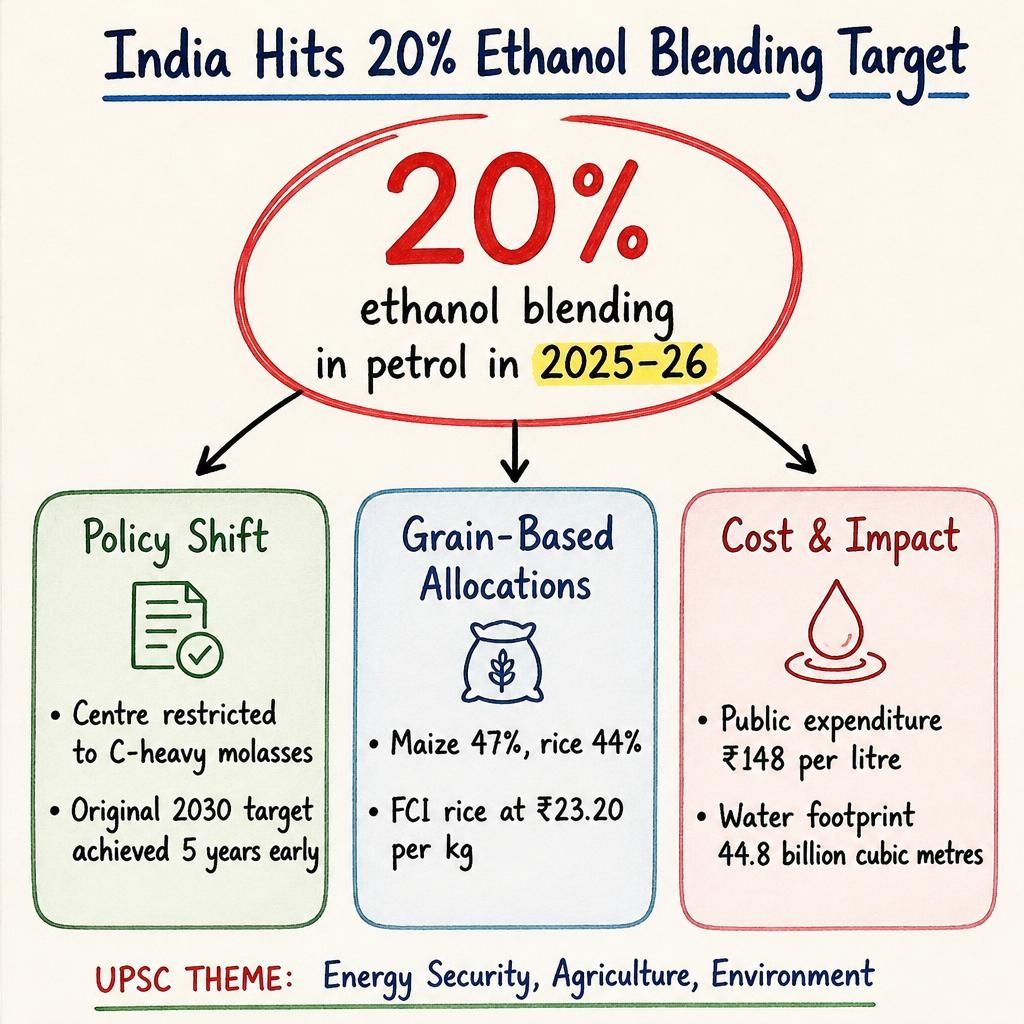
- India achieved the 20% ethanol blending target in petrol in 2025–26, five years ahead of the original 2030 schedule under the Ethanol Blended Petrol Programme.
- The Centre prohibited oil marketing companies from utilizing sugarcane juice, sugar syrup, and B-heavy molasses, restricting domestic ethanol production solely to C-heavy molasses.
- Grain-based feedstocks dominate allocations for Ethanol Supply Year 2026–27, with maize contributing 47% and rice accounting for 44% of total supplies.
- The Food Corporation of India supplies rice to distilleries at ₹23.20 per kg against its economic cost of ₹43.91 per kg, excluding farm-input subsidies.
- Producing ethanol from rice embodies an estimated public expenditure of ₹148 per litre, creating an indirect subsidy of ₹87.93 per litre for fuel retailers.
- Rice-based ethanol consumes approximately 11,000 litres of irrigation water per litre of fuel, generating a total agricultural water footprint of 44.8 billion cubic metres.
EBP Target.jpg
Detailed Insights:
- Escalating grain diversion for fuel has driven open-market maize prices well above official minimum support prices, raising input costs for the poultry and livestock industries.
- Inundated paddy cultivation produces high methane emissions, generating an estimated 5 tonnes of carbon dioxide equivalent per hectare in major agricultural states.
- Diverting acreage toward rainfed kharif maize can reduce crop water requirements by four-fifths while drastically reducing agricultural greenhouse gas emissions.
- Policy experts recommend adopting a dynamic blending mandate between 15% and 20%, calibrated against domestic food buffer stocks and annual harvest outputs.
- Commercializing second-generation biofuel refineries under the PM JI-VAN Yojana remains vital to converting surplus paddy straw into fuel and curbing stubble burning.
- Third-generation marine feedstocks like cultivated seaweed provide long-term fuel alternatives that compete with neither food security nor freshwater reserves.
Scientific/Technical Concepts Involved:
- First-Generation Biofuels: Liquid fuels produced directly from edible food crops such as sugarcane, maize grain, and surplus rice.
- Second-Generation Biofuels: Advanced fuels manufactured from non-edible lignocellulosic biomass, agricultural crop residues, and industrial plant waste.
- Third-Generation Biofuels: Renewable fuels extracted from aquatic organisms like microalgae and cultivated seaweed without requiring arable agricultural land.
- Well-to-Wheel Assessment: An analytical metric evaluating overall energy consumption and greenhouse gas emissions across an entire fuel lifecycle.

SuperKalam is your personal mentor for UPSC preparation, guiding you at every step of the exam journey.
Download the App


STUDY RESOURCES
CONTACT US
ⓒ Snapstack Technologies Private Limited