GS 2: International RelationsGS 3: EconomyGS 2: Bilateral, Regional and Global Groupings and AgreementsGS 2: Effect of Policies and Politics of Developed and Developing Countries on India's Interests
Canada Vows Retaliatory Move As US Puts 50% Tariffs On Some Goods, Pg2
Canada announces retaliatory tariffs on US goods after trade deal collapse, escalating bilateral dispute over new 50% US duties.
Practice MCQs
760 Students attempted
Key Highlights:
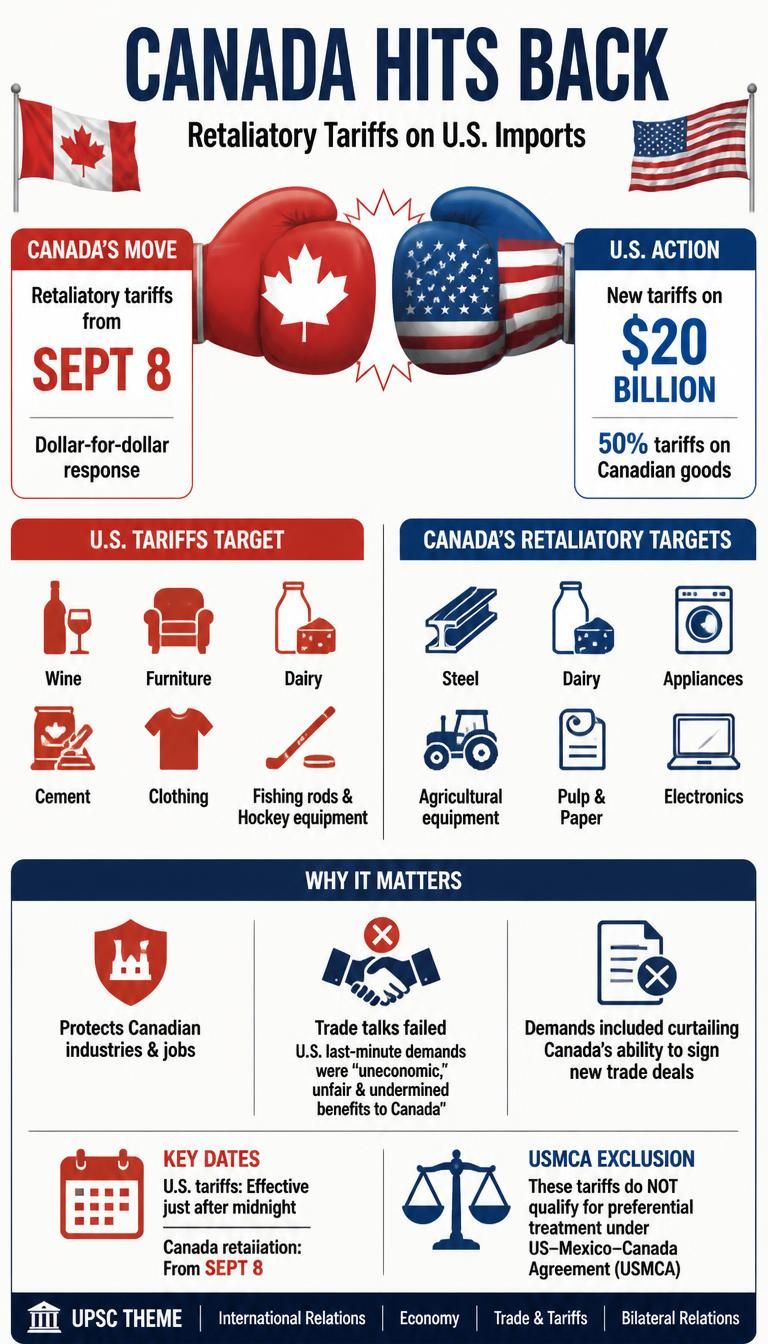
- Canada announced it would impose retaliatory tariffs on imports from the United States starting September 8.
- This move comes after the U.S. implemented new 50% tariffs on approximately $20 billion of Canadian goods, effective just after midnight.
- The U.S. tariffs targeted Canadian products such as wine, furniture, dairy, cement, clothing, fishing rods, and hockey equipment.
- Canadian Prime Minister Mark Carney stated that Canada would match Washington's new tariffs dollar for dollar to protect Canadian industries.
- The trade dispute escalated after the two nations failed to reach a new trade deal following intense negotiations.
Canada-USA.jpg
Detailed Insights:
- The U.S. tariffs cover just over 5% of Canada's exports to the United States and do not qualify for preferential treatment under the US-Mexico-Canada free trade agreement.
- Canada's retaliatory tariffs will target U.S. sectors including steel, dairy, appliances, agricultural equipment, pulp and paper, and electronics.
- Prime Minister Mark Carney indicated that the U.S. administration's last-minute demands were "uneconomic, unfair, and undermined the net benefits to Canada."
- These demands reportedly included curtailing Canada's ability to forge new trade deals.
- Carney had suspended trade negotiations and directed Canadian negotiators to return to Ottawa after the talks collapsed.
- U.S. Trade Representative Jamieson Greer stated that Canada declined to finalize the trade deal under terms agreed upon earlier.
Key Concepts Involved:
- Tariff: A tax imposed by a government on imported or exported goods and services.
- Retaliatory Tariffs: Taxes imposed by a country on imported goods from another nation in response to tariffs previously placed on its own exports.
- US-Mexico-Canada Free Trade Agreement (USMCA): A free trade agreement between the United States, Mexico, and Canada, which replaced the North American Free Trade Agreement (NAFTA).

SuperKalam is your personal mentor for UPSC preparation, guiding you at every step of the exam journey.
Download the App


STUDY RESOURCES
CONTACT US
ⓒ Snapstack Technologies Private Limited