GS 2: GovernanceGS 3: Environment & EcologyGS 3: EconomyPrelimsGS 3: Buffer Stocks and Food Security
Dip in production, stocks at 9-year low: Soaring sugar prices leave bitter taste, Pg3
Soaring sugar prices hit consumers as production dips to a 9-year low, prompting government to ban exports and allow duty-free imports.
Practice MCQs
753 Students attempted
Key Highlights:
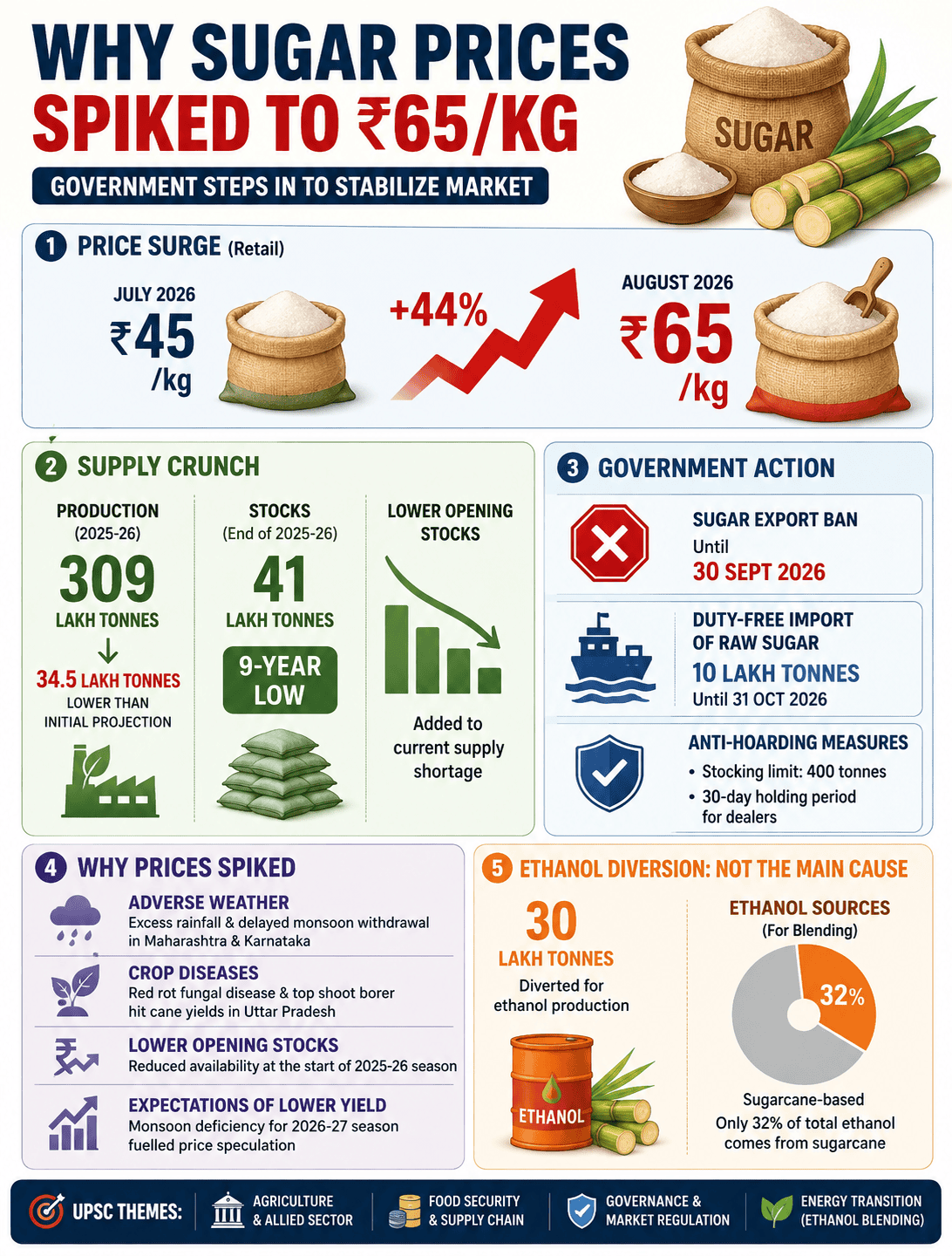
- Retail sugar prices in India surged to Rs 65 per kg by August 2026, a significant increase from Rs 45 per kg in July 2026.
- India's sugar stocks are projected to reach a nine-year low of around 41 lakh tonnes by the end of the 2025-26 season.
- Gross sugar production for 2025-26 is estimated at 309 lakh tonnes, 34.5 lakh tonnes lower than initial projections by the Indian Sugar & Bio-energy Manufacturers Association (ISMA).
- The government banned sugar exports until September 30, 2026, and allowed duty-free import of 10 lakh tonnes of raw sugar until October 31.
Sugar.png
Detailed Insights:
- The production shortfall is primarily attributed to adverse weather conditions like excess rainfall and delayed monsoon withdrawal in Maharashtra and Karnataka.
- Crop diseases such as red rot fungal disease and top shoot borer insect pest significantly affected sugarcane yields in Uttar Pradesh.
- Lower opening stocks at the beginning of the 2025-26 season contributed to the current supply crunch in the domestic market.
- Anticipation of reduced cane yields in the upcoming 2026-27 season due to monsoon deficiency further fueled price speculation among traders.
- The government imposed a stocking limit of 400 tonnes on sugar dealers and a 30-day holding period to prevent hoarding and stabilize prices.
- While 30 lakh tonnes of sugar were diverted for ethanol production, the article suggests this is not the primary cause of the current price surge.
- Most ethanol for blending comes from grain-based feedstock, with sugarcane-based sources accounting for only 32% of the total ethanol supplied.
Key Concepts Involved:
- Modal Retail Price: The most frequently reported price at which a commodity is sold to consumers across various locations.
- Ex-factory Price: The price of goods as they leave the manufacturing unit, excluding taxes, transport, and other distribution costs.
- Ethanol Blending Programme: A government initiative to mix ethanol with petrol to reduce crude oil imports and promote the use of biofuels.
- Stocking Limit: A regulatory measure imposing a maximum quantity of a commodity that can be held by traders or dealers to prevent artificial scarcity and price manipulation.

SuperKalam is your personal mentor for UPSC preparation, guiding you at every step of the exam journey.
Download the App


STUDY RESOURCES
CONTACT US
ⓒ Snapstack Technologies Private Limited