GS 2: GovernanceGS 1: Indian GeographyGS 2: Social JusticeGS 3: Environment & EcologyPrelims
KEN, BETWA AND A LINE DRAWN ON WATER, Pg15
Ken-Betwa river linking project, a Rs 44,605-crore mega-project, sparks fierce protests over flawed rehabilitation and displacement of 2,000 families in Bundelkhand.
Practice MCQs
746 Students attempted
Key Highlights:
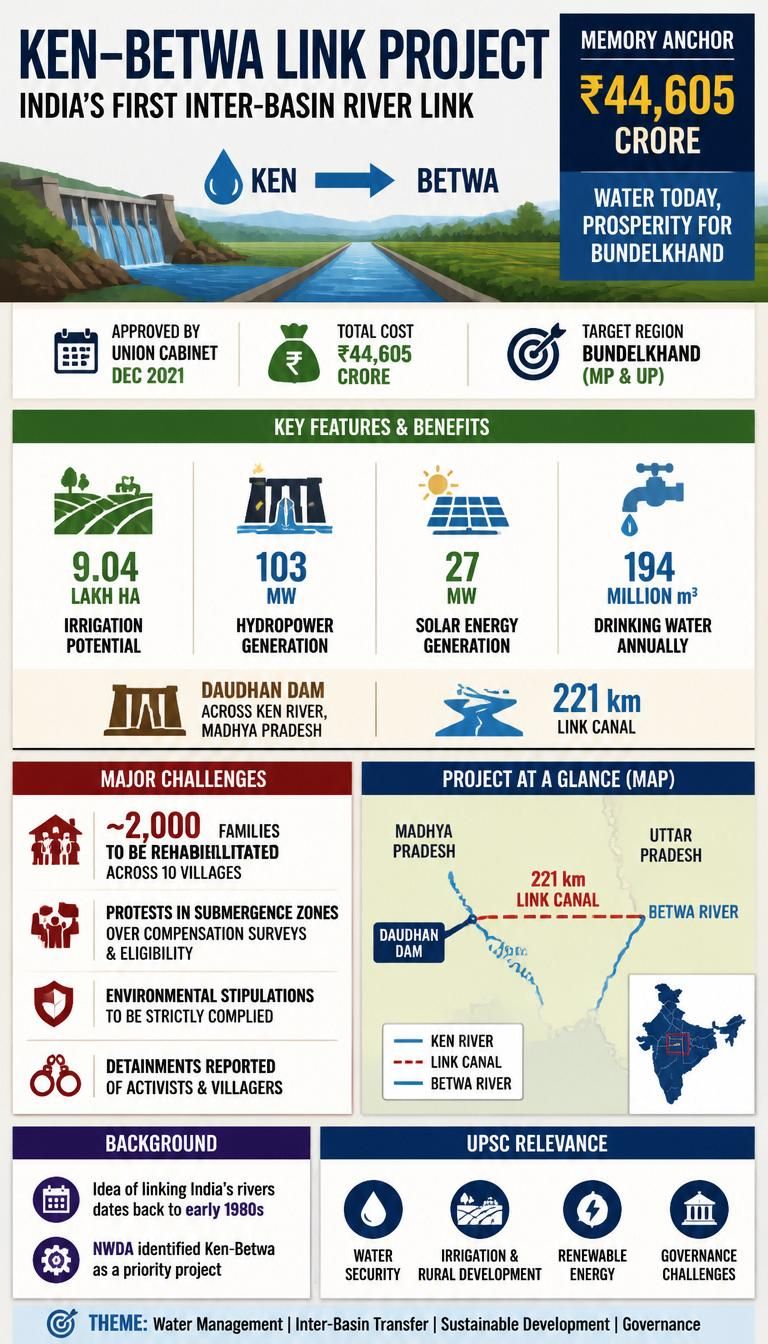
- The Ken-Betwa Link Project, costing Rs 44,605 crore, aims to irrigate the Bundelkhand region by transferring water from the Ken to the Betwa river.
- It is India's first inter-basin river link project, approved by the Union Cabinet in December 2021.
- The project involves the construction of the Daudhan dam across the Ken river in Madhya Pradesh and a 221-km link canal.
- It is designed to irrigate 9.04 lakh hectares, generate 103 MW hydropower and 27 MW solar energy, and supply 194 million cubic metres of drinking water annually.
- Construction is progressing, but faces significant challenges related to land acquisition, rehabilitation of nearly 2,000 families across 10 villages, and environmental stipulations.
- Protests have erupted in submergence zones over compensation surveys and eligibility, leading to detentions of activists and villagers.
Ken-Betwa.jpg
Detailed Insights:
- The idea of linking India's rivers dates back to the early 1980s, with the National Water Development Agency identifying Ken-Betwa as a priority.
- The project will benefit parched districts in Madhya Pradesh (Chhatarpur, Tikamgarh, Panna, Damoh, Vidisha, Sagar, Shivpuri, Datia, Raisen) and Uttar Pradesh (Banda, Mahoba, Jhansi, Lalitpur).
- The Daudhan dam reservoir is designed to hold 2,853 million cubic metres of water, with two power stations generating over 219 million units of electricity annually.
- Other irrigation structures include the Lower Orr Project, Kotha Barrage, Bina Complex Multipurpose Project, and the restored Ken Canal System in Uttar Pradesh.
- The project will directly submerge about 2,171 hectares of village land, with a wider submergence area spanning roughly 9,000 hectares.
- The Environmental Clearance stipulation mandates that all rehabilitation and resettlement issues must be completed before the project's commissioning.
- A special rehabilitation package offers Rs 12.5 lakh per adult and plots in Kawar Karondiya resettlement colony, but many families report being excluded or undercounted.
- Displaced families, particularly tribal communities, face loss of traditional livelihoods dependent on forest produce and river resources, which are not adequately compensated.
- Administrative gaps include omitted houses, missing names, excluded family members, and undercounted land parcels in official surveys.
- Resettlement colonies often lack basic amenities like water supply, forcing residents to incur additional expenses for necessities.
Key Concepts Involved:
- River Interlinking Project: A large-scale engineering endeavor to connect different river basins to transfer surplus water to deficit areas.
- Bundelkhand Region: A drought-prone area in central India, spanning parts of Uttar Pradesh and Madhya Pradesh, known for water scarcity.
- National Water Development Agency (NWDA): An autonomous organization under the Ministry of Jal Shakti, responsible for studies related to inter-basin water transfer.
- Environmental Clearance: A mandatory approval from the Ministry of Environment, Forest and Climate Change for projects with potential environmental impact.
- Resettlement and Rehabilitation (R&R): Policies and processes to compensate and relocate populations displaced by development projects, ensuring their livelihood restoration.

SuperKalam is your personal mentor for UPSC preparation, guiding you at every step of the exam journey.
Download the App


STUDY RESOURCES
CONTACT US
ⓒ Snapstack Technologies Private Limited