GS 2: GovernanceGS 2: Social JusticeGS 3: EconomyPrelimsGS 3: Indian Economy, Planning, Mobilization of Resources, Growth, Development and Employment
Building an Atmanirbhar philanthropy ecosystem, Pg8
India's domestic philanthropy surges past foreign aid, driving 'Atmanirbhar' ecosystem; experts urge FCRA reforms and tax incentives for high-net-worth individuals.
Practice MCQs
746 Students attempted
Key Highlights:
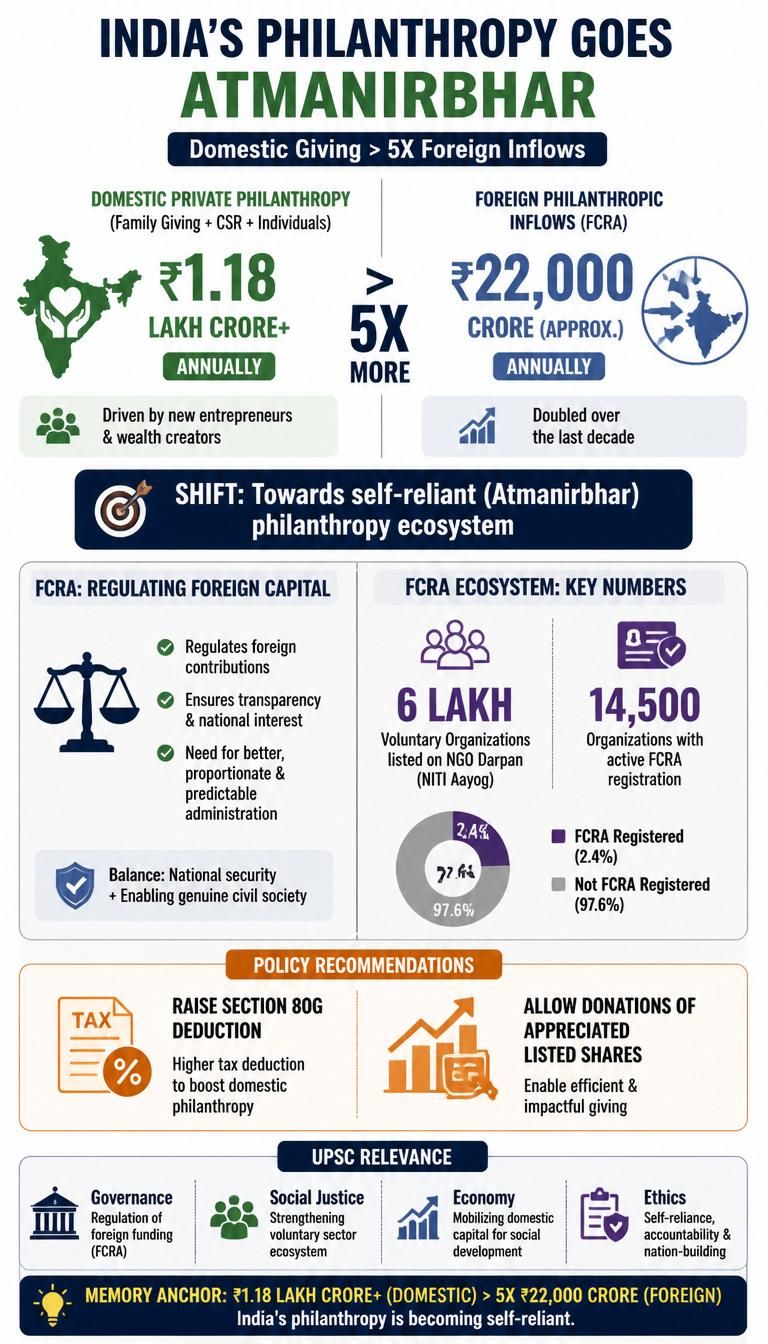
- India's domestic private philanthropy, including family giving, Corporate Social Responsibility (CSR), and individual donations, has grown significantly, now exceeding ₹1.18 lakh crore annually.
- This domestic giving is more than five times the foreign philanthropic inflows, which have doubled over the decade to around ₹22,000 crore.
- The article highlights a shift towards an Atmanirbhar (self-reliant) philanthropy ecosystem, reducing reliance on foreign funding.
- The Foreign Contribution (Regulation) Act (FCRA) is discussed in the context of regulating foreign capital, with calls for better, proportionate, and predictable administration.
- Policy recommendations include raising the Section 80G deduction for philanthropic donations and allowing donations of appreciated listed shares.
Philatrophy (CSR).jpg
Detailed Insights:
- The growth in domestic giving is driven by a new generation of entrepreneurs and wealth creators who view giving as part of wealth stewardship.
- While FCRA regulations have caused disruption for some organizations, the overall foreign contributions to India have increased.
- The NITI Aayog's NGO Darpan portal lists approximately six lakh voluntary organizations, with only about 14,500 holding active FCRA registration.
- The article suggests that improved governance in the social sector, similar to corporate sector reforms, can build trust and attract more capital.
- CSR currently channels over ₹40,000 crore annually into development, marking a significant phase in India's philanthropic evolution.
- The third phase of India's giving is envisioned to be powered by Indian families, entrepreneurs, and citizens, especially high-net-worth individuals.
- Expanding the donor base through digital platforms like UPI and potentially a Social Stock Exchange is seen as the next frontier for mass participation.
- Domestic philanthropy fosters greater ownership, governance, and accountability, strengthening the social contract within the country.
Key Concepts Involved:
- Atmanirbhar: A policy vision promoting self-reliance and self-sufficiency, applied here to India's philanthropic ecosystem.
- Foreign Contribution (Regulation) Act (FCRA): An Indian law regulating the acceptance and utilization of foreign contributions by individuals, associations, or companies.
- Corporate Social Responsibility (CSR): A business approach contributing to sustainable development by delivering economic, social, and environmental benefits for all stakeholders.
- Section 80G: A provision in the Indian Income Tax Act that allows taxpayers to claim deductions for donations made to certain charitable institutions.

SuperKalam is your personal mentor for UPSC preparation, guiding you at every step of the exam journey.
Download the App


STUDY RESOURCES
CONTACT US
ⓒ Snapstack Technologies Private Limited