GS 2: International RelationsGS 3: EconomyPrelims
Iran War: Houthis open new front on Saudi Arabia, Pg1
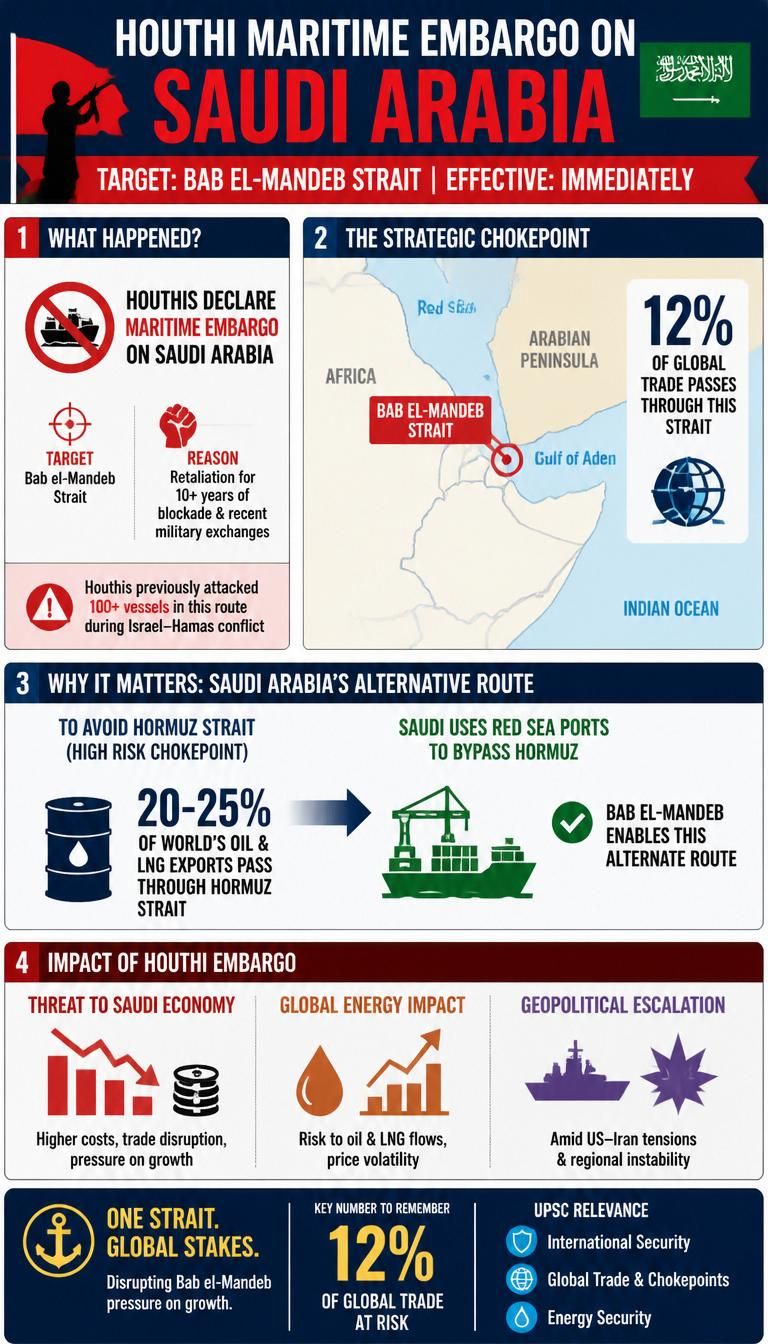
Yemen's Iran-aligned Houthis impose naval blockade on Saudi Arabia, escalating US-Iran war and threatening 7% of global oil supply via Bab el-Mandeb.
Practice MCQs
739 Students attempted
Key Highlights:
- The Houthis declared a naval blockade on Saudi Arabia on Monday, opening a new front in the conflict involving the US and Iran.
- This move threatens global energy supplies, with the potential to reduce global oil supply by 7% if the Bab el-Mandeb strait is fully closed.
- The blockade was announced in response to what the Houthis termed an "unjust and oppressive siege" imposed on Yemen by the Saudis.
- US President Donald Trump stated that Iran would "pay" for killing US soldiers, escalating rhetoric.
Houthis.jpg
Detailed Insights:
- The Houthis, an Iran-aligned group, made their announcement despite ongoing diplomatic efforts between Tehran and Washington to de-escalate tensions.
- Iran had reportedly pressured the Houthis to close the Bab el-Mandeb gateway if US attacks on Iranian power infrastructure continued.
- The Bab el-Mandeb strait is a critical maritime chokepoint connecting the Red Sea to the Gulf of Aden, vital for global oil trade.
- Closure of this strait would force most of Saudi Arabia's oil exports to divert, significantly increasing transit times and shipping costs.
- Diplomatic efforts include mediators presenting proposals for a 10-day ceasefire to salvage an interim agreement.
- The escalation follows recent US strikes on Iranian cities and retaliatory attacks by the Islamic Revolutionary Guard Corps (IRGC) on US military assets.
Key Concepts Involved:
- Houthis: An Iran-aligned Zaydi Shia Islamist political and military organization operating primarily in Yemen.
- Naval Blockade: A military operation to prevent vessels from entering or leaving specified coastal areas, considered an act of war under international law.
- Bab el-Mandeb Strait: A narrow, strategic waterway connecting the Red Sea to the Gulf of Aden, crucial for international shipping and oil transit.

SuperKalam is your personal mentor for UPSC preparation, guiding you at every step of the exam journey.
Download the App


STUDY RESOURCES
CONTACT US
ⓒ Snapstack Technologies Private Limited