GS 2: GovernanceGS 3: Science & TechnologyGS 2: Social JusticeGS 3: EconomyPrelims
Single-use medical devices: ban on reuse and who decides what is safe, Pg II
DGHS bans single-use medical device reuse, sparking debate on patient safety, healthcare affordability, and the urgent need for robust reprocessing regulations.
Practice MCQs
760 Students attempted
Key Highlights:
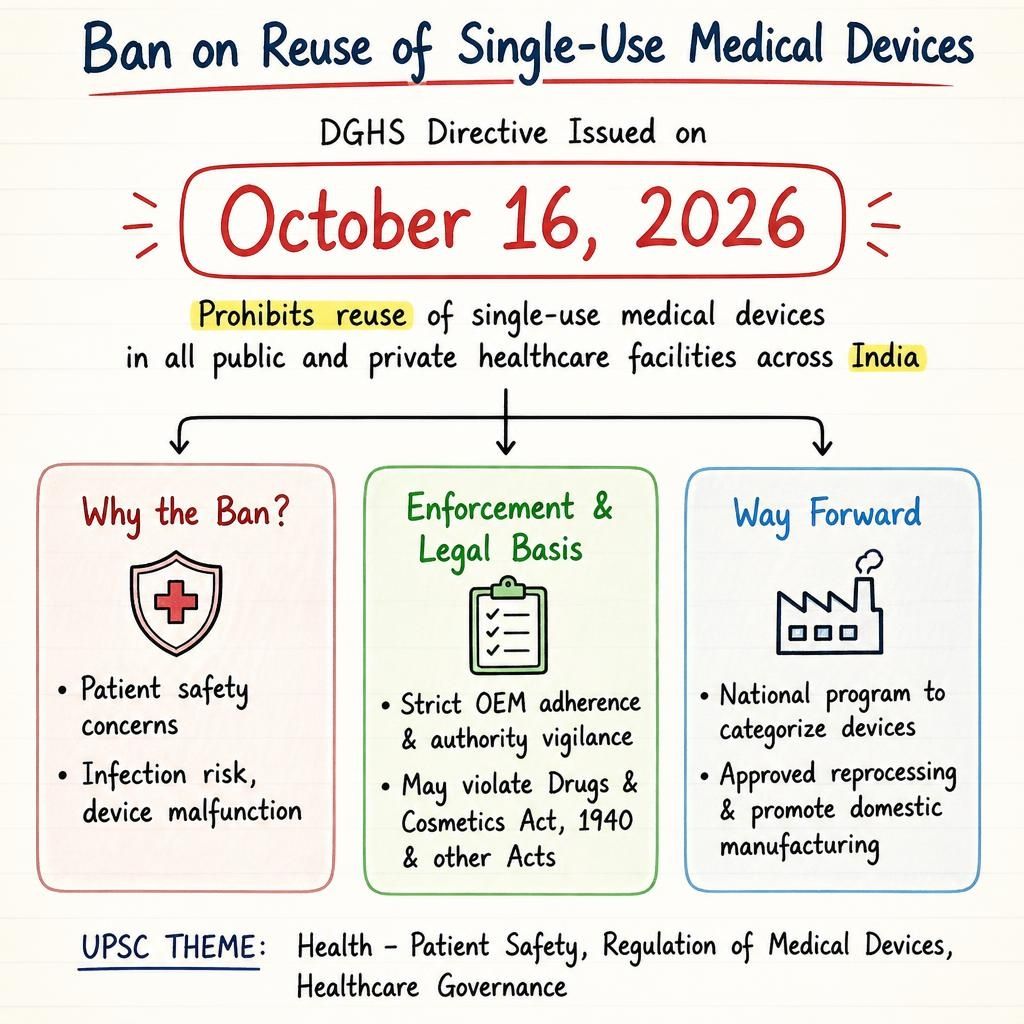
- The Directorate-General of Health Services (DGHS) issued a directive on October 16, 2026, prohibiting the reuse of single-use medical devices and disposable surgical items in all public and private healthcare facilities across India.
- The ban was prompted by concerns over patient safety, including infection risks, device malfunction, reduced performance, and potential regulatory non-compliance.
- The directive also addressed unethical practices such as charging patients the full price for devices that had been reused.
- Enforcement requires strict adherence to Original Equipment Manufacturer (OEM) instructions and vigilance from state and Union Territory health authorities.
- The reuse of such devices may violate provisions of the Drugs and Cosmetics Act, 1940, Medical Devices Rules, 2017, and the Clinical Establishments Act, 2010.
- While aiming to enhance patient safety, the ban has raised concerns regarding increased treatment costs and the affordability of healthcare.
Single Use Medical Devices.jpg
Detailed Insights:
- The "single-use" designation for medical devices is typically determined by manufacturers, who benefit financially from new purchases and avoid the costs associated with testing for safe reuse.
- India has historically lacked consistent protocols, proper tracking, and systematic record-keeping for the reprocessing of medical devices, leading to safety and ethical issues.
- Internationally, countries like the United States, Canada, Japan, and the European Union have established regulatory frameworks for reprocessing, often treating reprocessors as manufacturers.
- In the US, the Food and Drug Administration (FDA) regulates reprocessors of single-use devices with the same stringent requirements as original manufacturers.
- Effective reprocessing involves more than just sterilization; it requires validating cleaning efficacy, ensuring the device's structural integrity, maintaining performance standards, and adhering to quality controls.
- Proposed solutions include establishing a national program to categorize devices based on their reusability, allowing reprocessing only in approved facilities with validated methods, and promoting domestic manufacturing of medical devices to reduce costs.
- The Central Drugs Standard Control Organisation (CDSCO), under the Ministry of Health and Family Welfare, is India's primary regulatory body for medical devices, operating under the Medical Devices Rules, 2017.
Key Concepts Involved:
- Single-use medical devices: Devices intended for one use on a single patient during a single procedure, as specified by the manufacturer.
- Reprocessing: The validated sequence of steps including cleaning, disinfection or sterilization, functional testing, and repackaging of a used medical device for subsequent safe use.
- Original Equipment Manufacturer (OEM): The entity that originally designed and produced a product, whose instructions are critical for the safe and intended use of the device.

SuperKalam is your personal mentor for UPSC preparation, guiding you at every step of the exam journey.
Download the App


STUDY RESOURCES
CONTACT US
ⓒ Snapstack Technologies Private Limited