GS 1: Indian SocietyGS 1: Art & CultureGS 3: EconomyPrelimsGS 1: Architecture
West Bengal's Durga Puja: Private patrons to public pools to corporate capital, Pg13
Durga Puja evolves from private ritual to mass cultural phenomenon, generating Rs 65,000 crore economic activity, now facing increasing corporatization and UNESCO recognition.
Practice MCQs
753 Students attempted
Key Highlights:
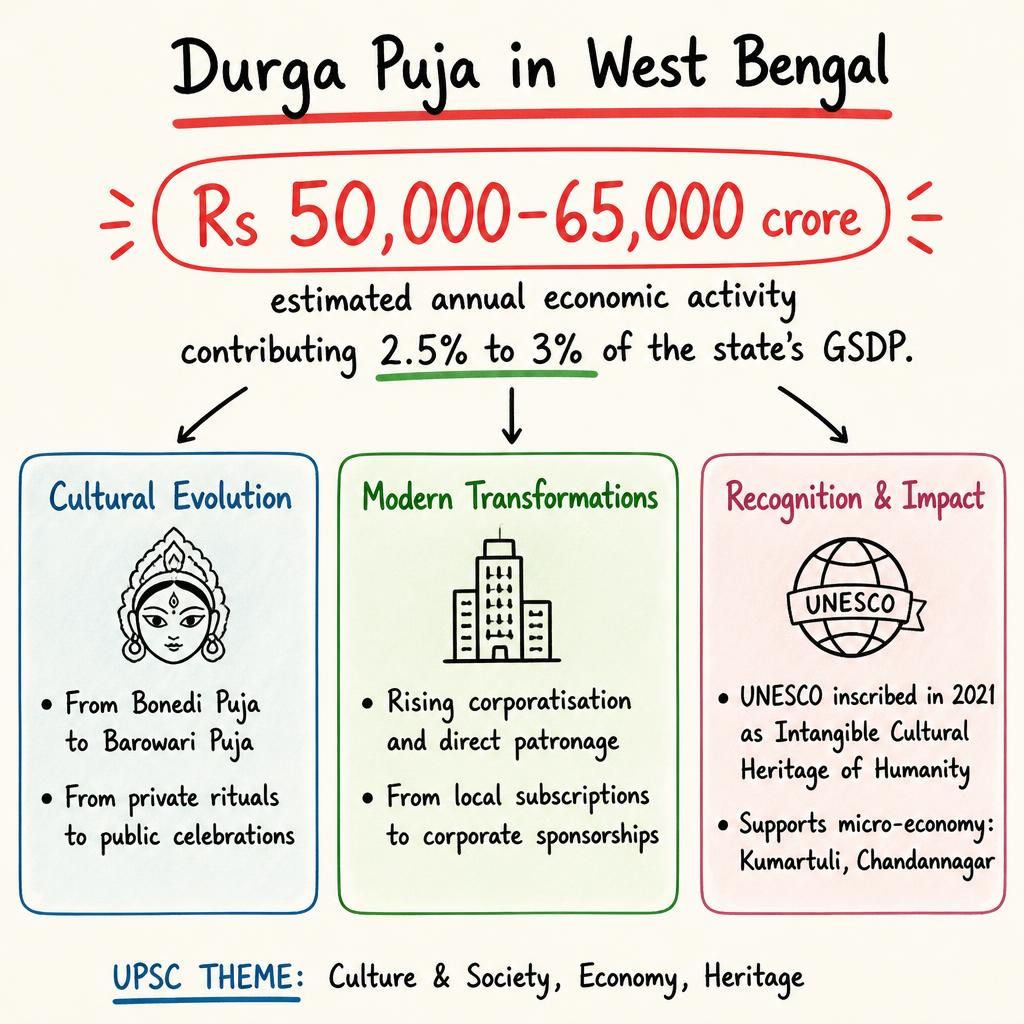
- Durga Puja in West Bengal generates an estimated Rs 50,000-65,000 crore in annual economic activity, contributing 2.5% to 3% of the state's GSDP.
- The festival has evolved from private rituals of zamindars (Bonedi Puja) to community-led celebrations (Barowari Puja) and modern "themed" art spectacles.
- A recent trend shows increasing corporatisation, with private companies moving beyond sponsorships to direct patronage, like the Adani Group's grant program.
- In 2021, UNESCO inscribed Durga Puja on its Representative List of the Intangible Cultural Heritage of Humanity.
- The festival supports a significant micro-economy, including clay modelers in Kumartuli and illumination artists in Chandannagar.
Durga Puja.jpg
Detailed Insights:
- The earliest documented organized Durga Puja dates back to the early 17th century, with the Sabarna Roy Choudhury family in Barisha.
- Raja Nabakrishna Deb organized a notable puja in 1757 at Shobhabazar Rajbari, coinciding with the East India Company's rise in Bengal.
- The Barowari Puja tradition began in 1759 in Guptipara, Hooghly, democratizing the festival by shifting funding to public donations.
- During the independence movement, public pandals served as important sites for nationalist mobilization and fostering social solidarity.
- Economic liberalization in the mid-1990s led to the rise of "themed" pujas, transforming pandals into elaborate art installations.
- Funding for themed pujas shifted from local subscriptions to corporate sponsorships, engaging specialized professionals like architects and designers.
- A British Council study in 2019 estimated the creative economy around Durga Puja at Rs 32,377 crore, which has since grown significantly.
- The economic footprint spans retail, fashion, food and beverage, event production, and corporate advertising.
Key Concepts Involved:
- Bonedi Puja: Traditional Durga Puja organized privately by aristocratic families or zamindars in their ancestral homes.
- Barowari Puja: Community-led Durga Puja, funded by public donations and managed by local committees.
- Intangible Cultural Heritage: Cultural practices, expressions, knowledge, and skills recognized by UNESCO as part of humanity's heritage.

SuperKalam is your personal mentor for UPSC preparation, guiding you at every step of the exam journey.
Download the App


STUDY RESOURCES
CONTACT US
ⓒ Snapstack Technologies Private Limited