GS 2: GovernanceGS 2: Social JusticeGS 3: Disaster ManagementGS 3: Environment & EcologyPrelims
Climate Change Is Blurring The Seasons. Policy Must Catch Up, Pg11
Mumbai faces unseasonal heat and severe pollution, exposing climate change's impact and demanding integrated policy, adaptive heat action plans, and stricter enforcement.
Practice MCQs
753 Students attempted
Key Highlights:
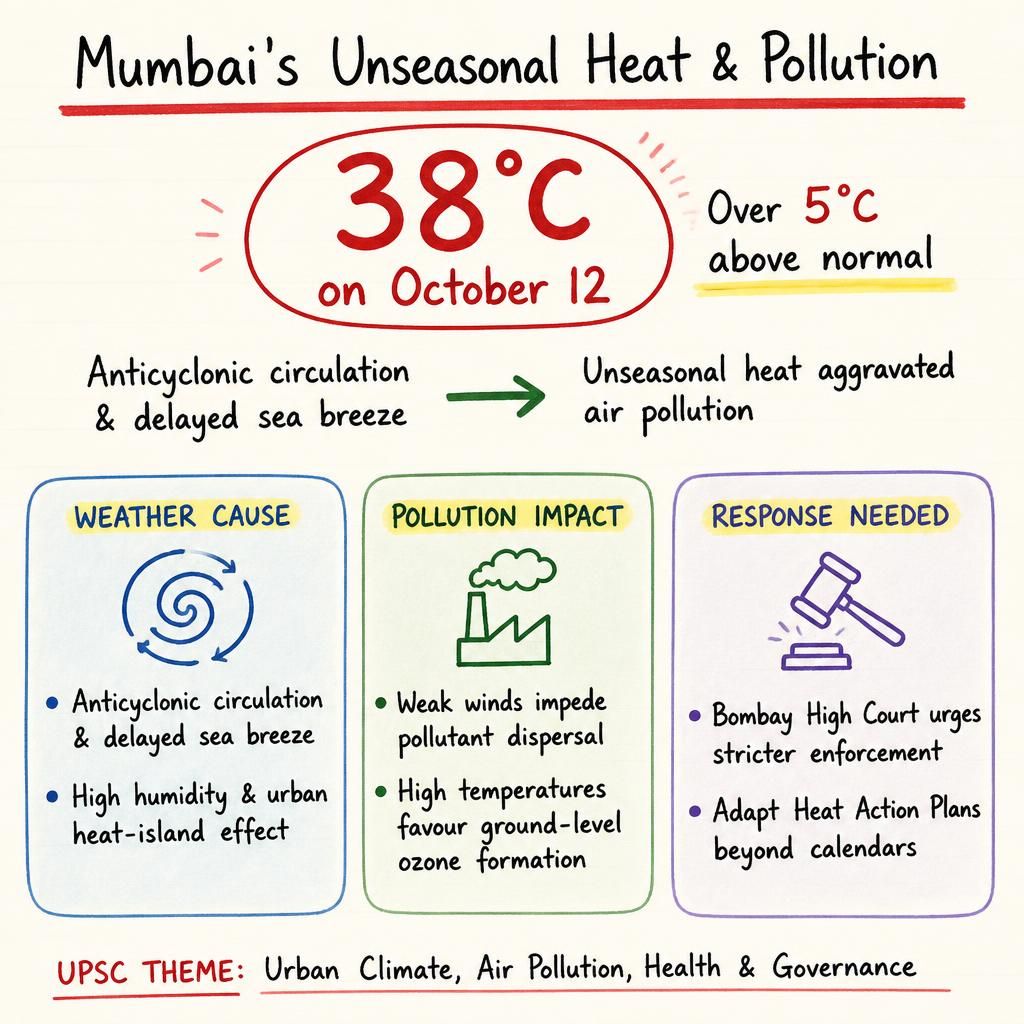
- Mumbai recorded 38°C on October 12, over 5°C above normal, due to anticyclonic circulation and delayed sea breeze.
- Unseasonal heat aggravated air pollution, with weak winds impeding pollutant dispersal and high temperatures favoring ground-level ozone formation.
- The Bombay High Court has repeatedly expressed concern over Mumbai's deteriorating air quality, urging stricter enforcement.
- Climate change is blurring seasonal transitions, necessitating adaptation of Heat Action Plans beyond conventional calendars.
- Research highlights the potential for substantial heat-related health impacts in India even during winter.
Climate Change.jpg
Detailed Insights:
- The unusual weather in Mumbai was attributed to an anticyclonic circulation and shifting wind patterns delaying the sea breeze.
- High humidity and the urban heat-island effect from concrete structures further compounded the heat discomfort.
- Fine particulate matter (PM2.5) and ground-level ozone pose significant health risks, especially to vulnerable populations.
- The Bombay High Court warned that uncontrolled firecracker bursting could turn cities into "gas chambers" amid rising pollution.
- Key pollution sources in Indian cities include vehicular emissions, construction dust, industrial activity, and waste burning.
- Effective pollution control requires consistent implementation of measures like dust suppression and real-time monitoring.
- Heat preparedness must account for humidity, warm nights, duration of heat exposure, and integrate air quality alerts.
- Local conditions must shape Heat Action Plans, avoiding a uniform pan-India approach.
- Integrating heat preparedness, pollution control, and public health planning is crucial to address climate change impacts.
Key Concepts Involved:
- Anticyclonic Circulation: A weather phenomenon characterized by descending air, clear skies, and often higher temperatures.
- Urban Heat-Island Effect: Phenomenon where urban areas are significantly warmer than surrounding rural areas due to human activities and built environments.
- Heat Action Plans: Comprehensive strategies developed by cities or regions to prepare for and respond to extreme heat events.

SuperKalam is your personal mentor for UPSC preparation, guiding you at every step of the exam journey.
Download the App


STUDY RESOURCES
CONTACT US
ⓒ Snapstack Technologies Private Limited