GS 3: Science & TechnologyGS 3: Environment & EcologyPrelimsGS 3: Conservation, Pollution and DegradationGS 3: Indigenization of Technology and New Technology Development
Ways to conquer plastic waste and produce useful materials, Pg11
New technologies offer diverse solutions for plastic waste, transforming it into fuel, hydrogen, and electricity, combating India's growing pollution challenge.
Practice MCQs
746 Students attempted
Key Highlights:
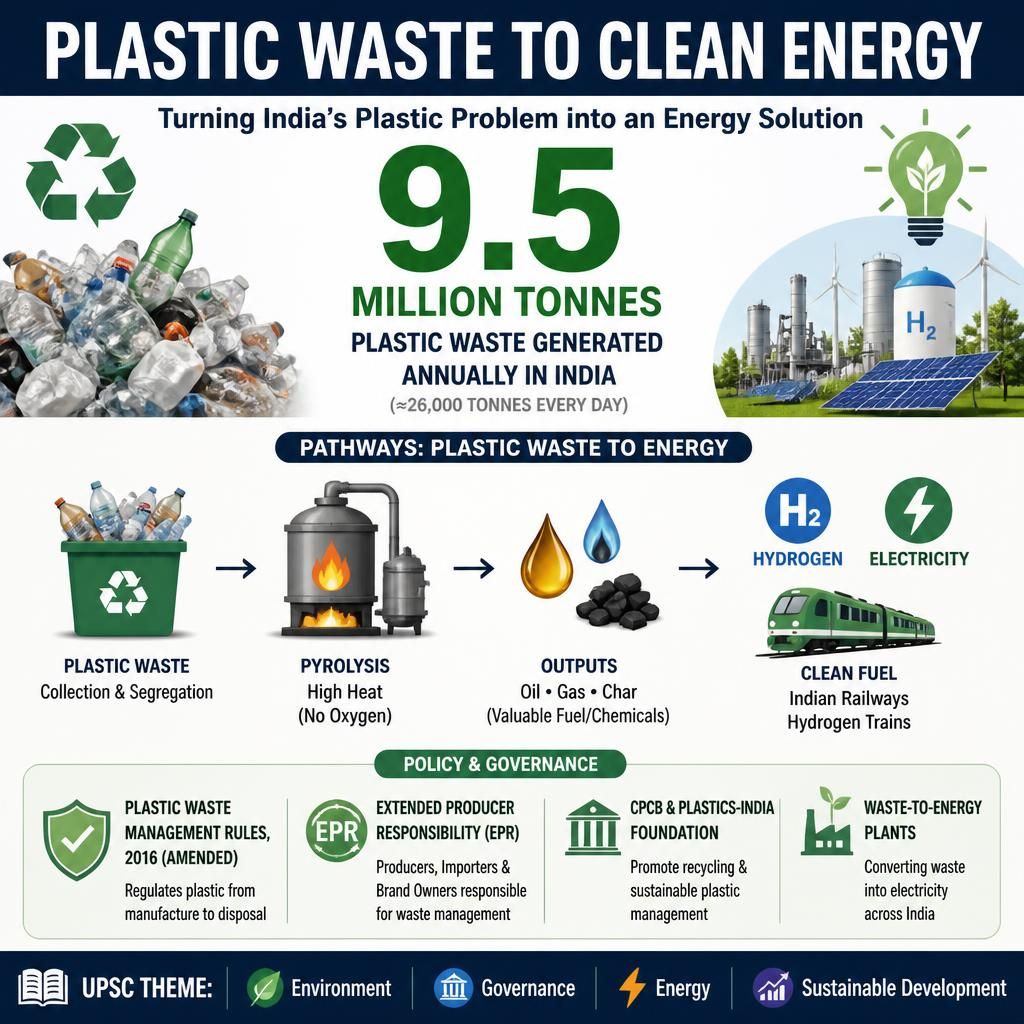
- India generates a significant amount of plastic waste, with Central Pollution Control Board (CPCB) estimates indicating around 26,000 tonnes daily, totaling approximately 9.5 million tonnes annually.
- Traditional recycling efforts, supported by the CPCB and organizations like the Plastics-India Foundation, convert discarded plastics into new bottles, furniture, and other materials.
- Innovative methods are being explored, including pyrolysis, which converts plastic waste into fuel using high heat.
- Plastic waste can also be used to produce hydrogen gas, a clean energy source, with research demonstrating its generation from plastic using heat and atmospheric carbon dioxide.
- Waste-to-energy plants are operational in India, converting garbage into electricity, while the Indian Railways has demonstrated hydrogen-fueled long-distance services.
Plastic Waste.jpg
Detailed Insights:
- Plastics, synthesized by Leo Hendrik Baekeland, have become ubiquitous due to their convenience, leading to substantial waste generation, particularly in urban areas.
- India's plastic waste figures vary, with official estimates ranging from 4.1 million metric tonnes per year to the CPCB's 9.5 million tonnes annually, highlighting data inconsistencies.
- The Plastic Waste Management Rules, 2016, and subsequent amendments, aim to regulate plastic waste from manufacture to disposal, extending coverage to rural areas.
- Extended Producer Responsibility (EPR), a key feature of these rules, mandates producers, importers, and brand owners to manage the collection, recycling, and disposal of plastic waste.
- Pyrolysis is a thermochemical process that decomposes plastic in the absence of oxygen, yielding valuable chemicals and fuels like oil, gas, and char.
- Hydrogen production from plastic waste offers a promising pathway for clean energy, with methods like photoreforming using sunlight and catalysts also being researched.
- Waste-to-energy plants address both waste management and energy generation, converting municipal solid waste into electricity, heat, or biogas.
- Despite the potential, waste-to-energy plants in India face challenges such as low calorific value of waste, high capital costs, and issues with waste segregation.
Key Concepts Involved:
- Plastic Waste Management Rules, 2016: A regulatory framework by the Ministry of Environment, Forest and Climate Change to manage plastic waste across its entire lifecycle in India.
- Pyrolysis: A thermochemical decomposition of organic materials, such as plastic, at elevated temperatures in the absence of oxygen, producing liquid oil, gas, and char.
- Waste-to-Energy (WtE): The process of converting municipal solid waste and other organic waste into usable forms of energy like electricity, heat, biogas, or bio-CNG.
- Extended Producer Responsibility (EPR): A policy approach where producers are given significant responsibility for the treatment or disposal of post-consumer products.

SuperKalam is your personal mentor for UPSC preparation, guiding you at every step of the exam journey.
Download the App


STUDY RESOURCES
CONTACT US
ⓒ Snapstack Technologies Private Limited