GS 2: GovernanceGS 2: International RelationsGS 3: EconomyPrelimsGS 3: Indian Economy, Planning, Mobilization of Resources, Growth, Development and Employment
How will the U.S.’s Sanctioning Act affect India?, Pg12
US Sanctioning Act threatens India with 100% tariffs on imports over Russian oil, impacting energy security and exports amidst geopolitical tensions.
Practice MCQs
746 Students attempted
Key Highlights:
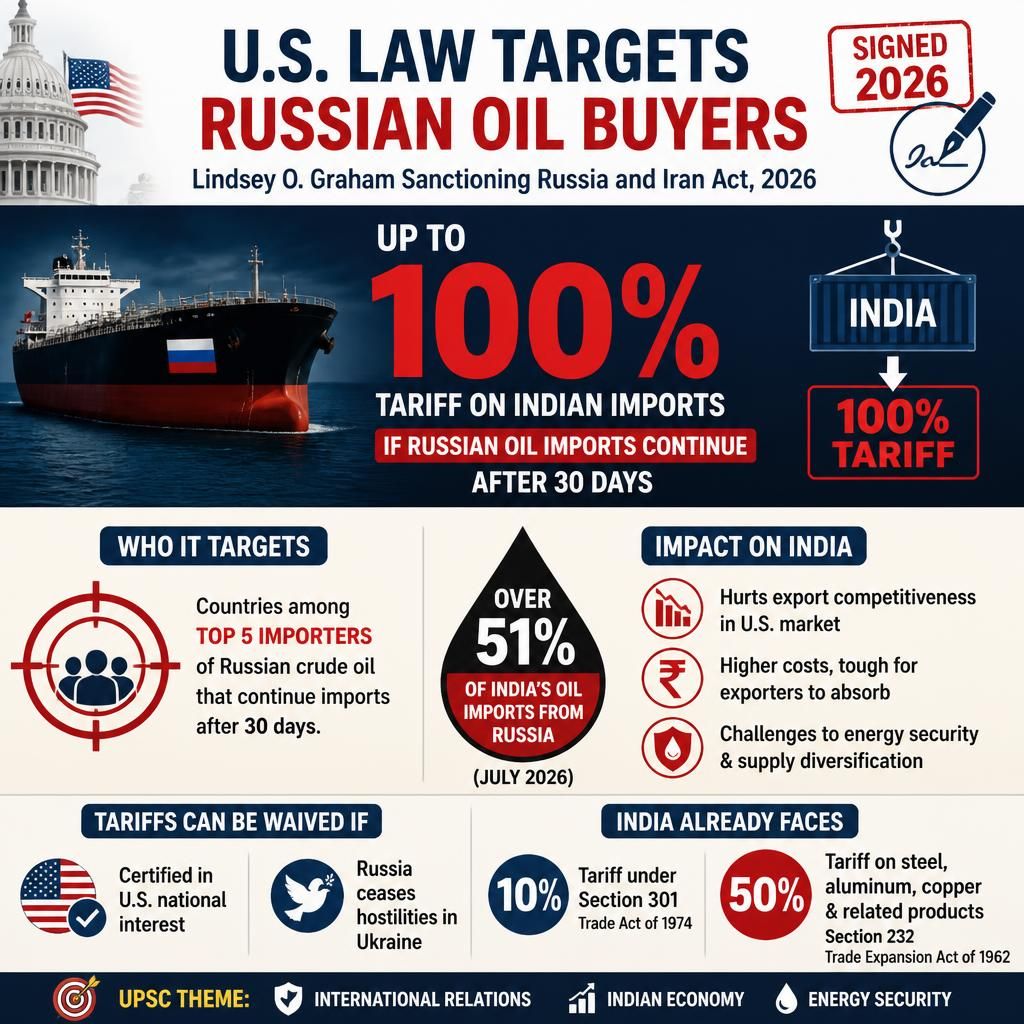
- U.S. President Donald Trump signed the Lindsey O. Graham Sanctioning Russia and Iran Act, 2026, which could impose 100% tariffs on Indian imports.
- The Act targets countries that are among the top five importers of Russian crude oil and continue these imports after a 30-day period.
- India is a major importer of Russian crude, with over 51% of its oil imports coming from Russia in July 2026.
- The new tariffs would be in addition to existing duties under Section 301 of the Trade Act of 1974 and Section 232 of the Trade Expansion Act of 1962.
- The U.S. President can waive these tariffs if certified to be in the U.S. national interest or if Russia ceases hostilities in Ukraine.
US Law.jpg
Detailed Insights:
- The primary goal of the Lindsey O. Graham Sanctioning Russia and Iran Act, 2026 is to cut off financing for Russia's war in Ukraine and target Iran.
- India faces significant implications for its export ambitions and energy security due to the potential tariffs.
- Scaling back Russian oil imports within 30 days is challenging for India, especially with constraints in the Strait of Hormuz.
- India already faces a 10% tariff under Section 301 of the Trade Act of 1974 and a 50% tariff on steel, aluminum, copper, and related products under Section 232 of the Trade Expansion Act of 1962.
- A 100% tariff would severely impact the competitiveness of Indian exports to the U.S., making it difficult for exporters to absorb costs.
- Historically, India has complied with U.S. pressure to reduce oil imports from sanctioned countries like Venezuela and Iran.
- Reducing Russian oil imports could lead to higher fuel prices and supply issues within India, posing political challenges ahead of state elections.
- The U.S. Trade Representative, in consultation with the Secretary of State and the Secretary of Energy, will review importing countries within 180 days after initial tariff imposition.
Key Concepts Involved:
- Sanctions: Economic or political penalties imposed by one country on another to compel a change in policy.
- Tariffs: Taxes imposed on imported goods and services, increasing their cost to consumers.
- Energy Security: The uninterrupted availability of energy sources at an affordable price.
- Trade Act of 1974 (Section 301): Authorizes the U.S. Trade Representative to investigate and retaliate against foreign trade practices deemed unfair.

SuperKalam is your personal mentor for UPSC preparation, guiding you at every step of the exam journey.
Download the App


STUDY RESOURCES
CONTACT US
ⓒ Snapstack Technologies Private Limited