GS 2: International RelationsGS 3: EconomyPrelimsGS 3: Infrastructure: Energy, Ports, Roads, Airports, Railways etc.GS 2: Government policies and interventions for development in various sectors
Data Suggest Indian Oil Buys Fall After U.S. Curbs, Pg1
India's oil imports from sanctioned nations like Russia, Venezuela, Iran, fluctuate with US pressure, prompting India to assert strategic energy independence.
Practice MCQs
739 Students attempted
Key Highlights:
- India's oil import patterns show a direct correlation with U.S. sanctions on countries like Venezuela, Iran, and Russia.
- The External Affairs Ministry asserted India's strategic independence in energy sourcing, based on national interest and diversification.
- A proposed U.S. Bill threatens tariffs of up to 100% on India for importing Russian oil, prompting India to convey its concerns to the U.S. administration.
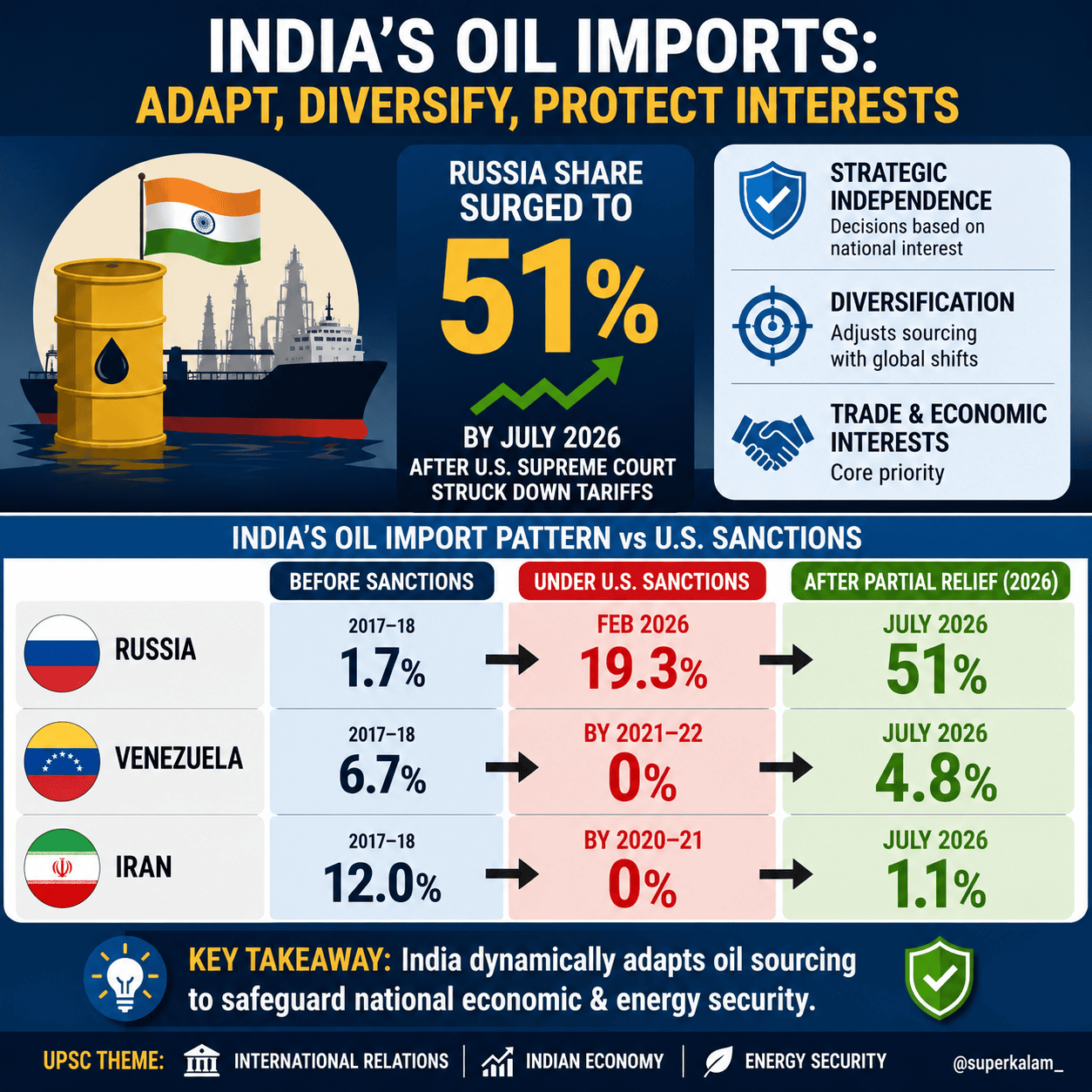
- India's oil imports from Russia fell to 19.3% by February 2026 after U.S. tariffs were hiked, but surged to over 51% by July 2026 after the U.S. Supreme Court struck down the tariffs.
- Imports from Venezuela and Iran also plummeted to zero under U.S. sanctions but saw a rebound in April-July 2026 after partial lifting of restrictions.
Oil Imports.jpg
Detailed Insights:
- India consistently adjusts its energy sourcing to protect its "trade and economic interests" in response to U.S. sanctions and tariff programs.
- Venezuela's share in India's oil imports dropped from 6.7% in 2017-18 to zero by 2021-22 following U.S. sanctions in January 2019.
- After former U.S. President Trump partially lifted sanctions on Venezuelan oil companies in March 2026, its share rebounded to 4.8% by July 2026.
- Iran's oil imports to India fell to zero by 2020-21 due to wide-ranging U.S. sanctions reimposed in November 2018.
- Following a partial allowance for Iran to sell oil in March 2026, its share in India's imports rose to 1.1% by July 2026.
- The U.S. Supreme Court struck down the Trump administration's tariff regime in February 2026, removing penal tariffs on Russian oil.
- The increase in Russian oil imports in July 2026 coincided with a U.S. attack on Iran, the closure of the Strait of Hormuz, and rising global oil prices.
Key Concepts Involved:
- Energy Security: Ensuring a reliable and affordable supply of energy to meet national needs.
- Sanctions: Economic penalties imposed by one country on another to influence its policies.
- Tariffs: Taxes imposed on imported goods and services, often used to protect domestic industries or as a political tool.
- National Interest: A country's goals and ambitions, encompassing economic, political, and security concerns.

SuperKalam is your personal mentor for UPSC preparation, guiding you at every step of the exam journey.
Download the App


STUDY RESOURCES
CONTACT US
ⓒ Snapstack Technologies Private Limited