GS 2: GovernanceGS 3: Science & TechnologyGS 2: Social JusticePrelimsGS 2: Government policies and interventions for development in various sectors
Why patient safety needs more than hospital checklists, Pg II
Experts advocate comprehensive patient safety beyond checklists, emphasizing multi-layered checks, quality medical education, drug regulation, and stakeholder involvement for safe healthcare delivery.
Practice MCQs
731 Students attempted
Key Highlights:
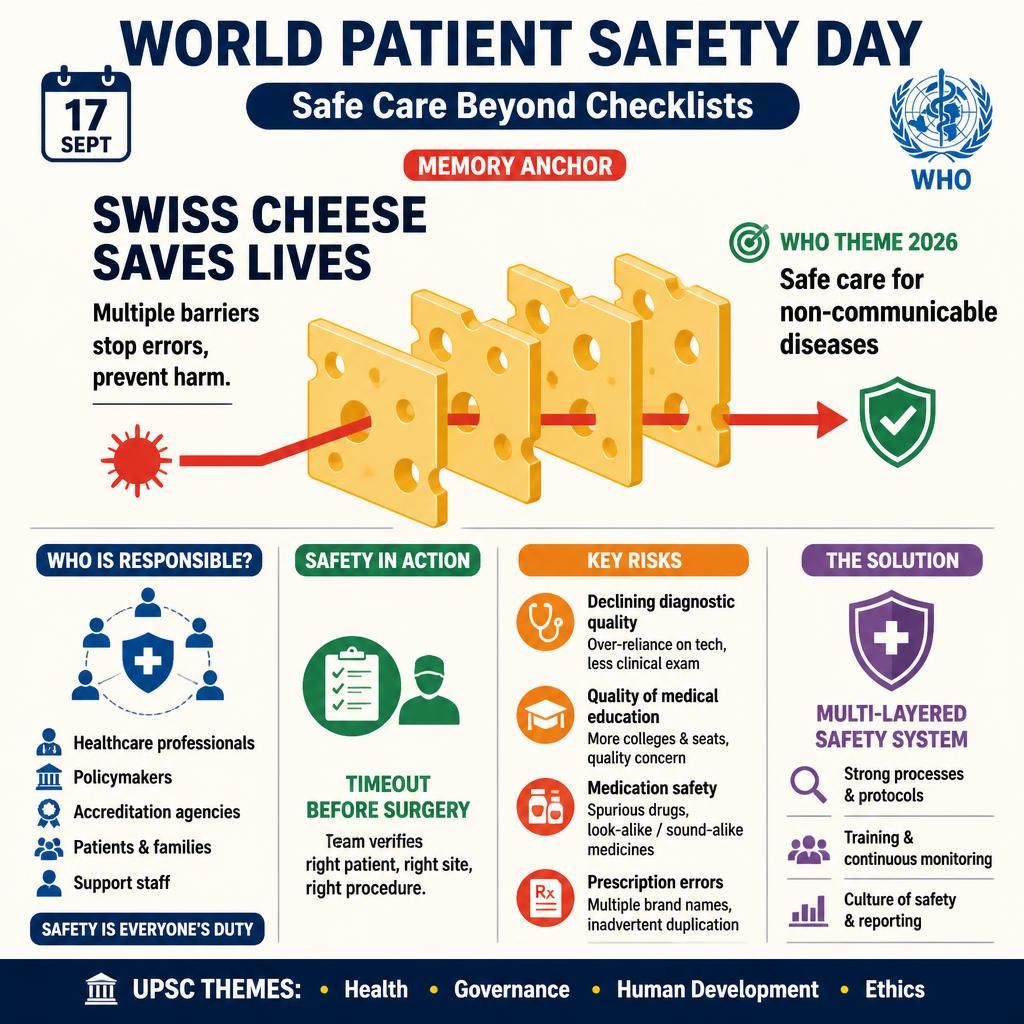
- World Patient Safety Day was observed on September 17, emphasizing the need for comprehensive patient safety measures beyond simple checklists.
- The World Health Organization's (WHO) theme for 2026 was 'Safe care for non-communicable diseases', highlighting risks in long-term care for chronic conditions.
- Experts advocated for a multi-layered approach, known as the 'Swiss cheese mechanism', to prevent errors in healthcare.
- Patient safety responsibility extends beyond medical professionals to include policymakers, accreditation agencies, patients, and support staff.
Patient Safety Day.jpg
Detailed Insights:
- The 'timeout' procedure before surgery is an example of a safety barrier, where the surgical team confirms critical details to prevent mistakes.
- The Swiss cheese mechanism, conceptualized by James Reason, illustrates how multiple, imperfect safety barriers can align to prevent hazards from causing patient harm.
- Declining diagnostic quality is attributed to doctors moving away from basic clinical examination towards over-reliance on technology, leading to 'no touch' healthcare.
- Ensuring the quality of medical education is crucial, especially with the increasing number of medical colleges and seats.
- Medication safety concerns include spurious drugs, look-alike and sound-alike medicines, and prescription errors due to multiple brand names or inadvertent duplication.
- Hospitals implement measures like separate labelling and storage for similar-sounding medications to mitigate error risks.
- Patient safety also encompasses environmental factors within hospitals, such as preventing falls, addressing fire hazards, and ensuring the integrity of electrical infrastructure.
- Antimicrobial Resistance (AMR) and infection prevention are critical components of patient safety, particularly for vulnerable patients with chronic diseases.
- The increasing digitization of healthcare introduces new patient safety risks related to data privacy and cybersecurity.
- Artificial intelligence should serve as a tool to support clinical reasoning, not replace it, to maintain patient safety.
- Active involvement of patients, families, and caregivers is essential for enhancing overall safety in healthcare.
Key Concepts Involved:
- World Patient Safety Day: An annual global campaign by the WHO on September 17 to raise awareness and promote actions for patient safety.
- Swiss cheese mechanism: A model in risk management where multiple layers of defense (like slices of Swiss cheese) are in place, each with potential weaknesses (holes), to prevent errors from reaching the patient.
- Antimicrobial Resistance (AMR): The ability of microorganisms (like bacteria, viruses, fungi, and parasites) to resist antimicrobial drugs, making infections harder to treat.
- Non-communicable diseases (NCDs): Chronic diseases that are not transmissible from person to person, such as cardiovascular diseases, cancers, diabetes, and chronic respiratory diseases.

SuperKalam is your personal mentor for UPSC preparation, guiding you at every step of the exam journey.
Download the App


STUDY RESOURCES
CONTACT US
ⓒ Snapstack Technologies Private Limited