GS 2: International RelationsGS 3: EconomyPrelimsGS 3: Infrastructure: Energy, Ports, Roads, Airports, Railways etc.GS 2: Bilateral, Regional and Global Groupings and Agreements
U.S. clears Russia sanctions Bill; India faces tariff threat, Pg1
US House passes Russia sanctions bill, authorizing 100% tariffs on India for Russian oil, impacting energy security and bilateral trade relations.
Practice MCQs
731 Students attempted
Key Highlights:
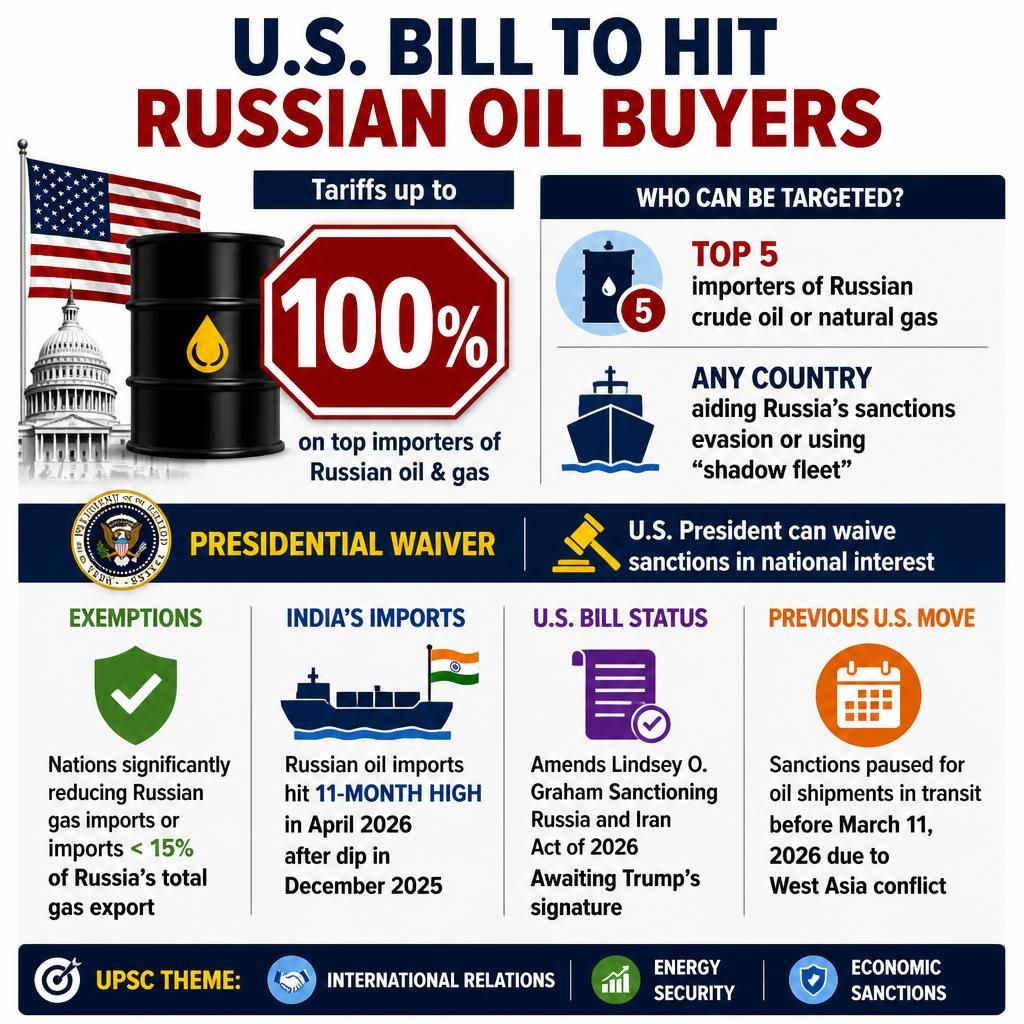
- The U.S. House of Representatives passed legislation authorizing tariffs of up to 100% on countries, including India, for purchasing Russian oil and gas.
- The bill is an amendment to the Lindsey O. Graham Sanctioning Russia and Iran Act of 2026 and awaits President Donald Trump's signature.
- India's Ministry of External Affairs affirmed its commitment to energy security through diversified sourcing and protecting its trade and economic interests.
- The legislation specifically targets Russia’s energy sector and its "shadow fleet" of tankers.
- The U.S. President will have the authority to waive these sanctions in the national interest.
US Bill.jpg
Detailed Insights:
- The bill identifies potential target countries as the top five largest importers of Russian-origin crude oil or natural gas.
- Countries facilitating Russian oil sanctions evasion are also eligible for the tariffs.
- Exemptions are provided for nations significantly reducing Russian natural gas imports or whose imports are less than 15% of Russia’s total gas export.
- India's import of Russian oil reached an 11-month high in April 2026, despite a previous dip in December 2025.
- The U.S. Treasury had previously paused sanctions for oil shipments in transit before March 11, 2026, due to supply disruptions from the West Asia conflict.
- The legislation passed the Senate on August 7, 2026, with an 86-11 vote, despite concerns from some lawmakers about sweeping presidential powers.
Key Concepts Involved:
- Sanctions: Economic penalties imposed by one country on another to achieve specific foreign policy objectives.
- Tariffs: Taxes levied on imported goods or services, increasing their cost and potentially discouraging trade.
- Energy Security: The uninterrupted availability of energy sources at an affordable price to meet national demand.
- Shadow Fleet: A clandestine network of older, often uninsured, vessels used to transport sanctioned oil to circumvent international restrictions.

SuperKalam is your personal mentor for UPSC preparation, guiding you at every step of the exam journey.
Download the App


STUDY RESOURCES
CONTACT US
ⓒ Snapstack Technologies Private Limited