GS 2: Social JusticeGS 2: GovernanceGS 3: Science & TechnologyPrelimsGS2: Government policies and interventions for development in various sectors
A Dose of Trust, Pg8
Delhi's HPV vaccination drive struggles with parental hesitancy and misinformation, underscoring the critical need for trust-building and sustained awareness campaigns.
Practice MCQs
898 Students attempted
Key Highlights:
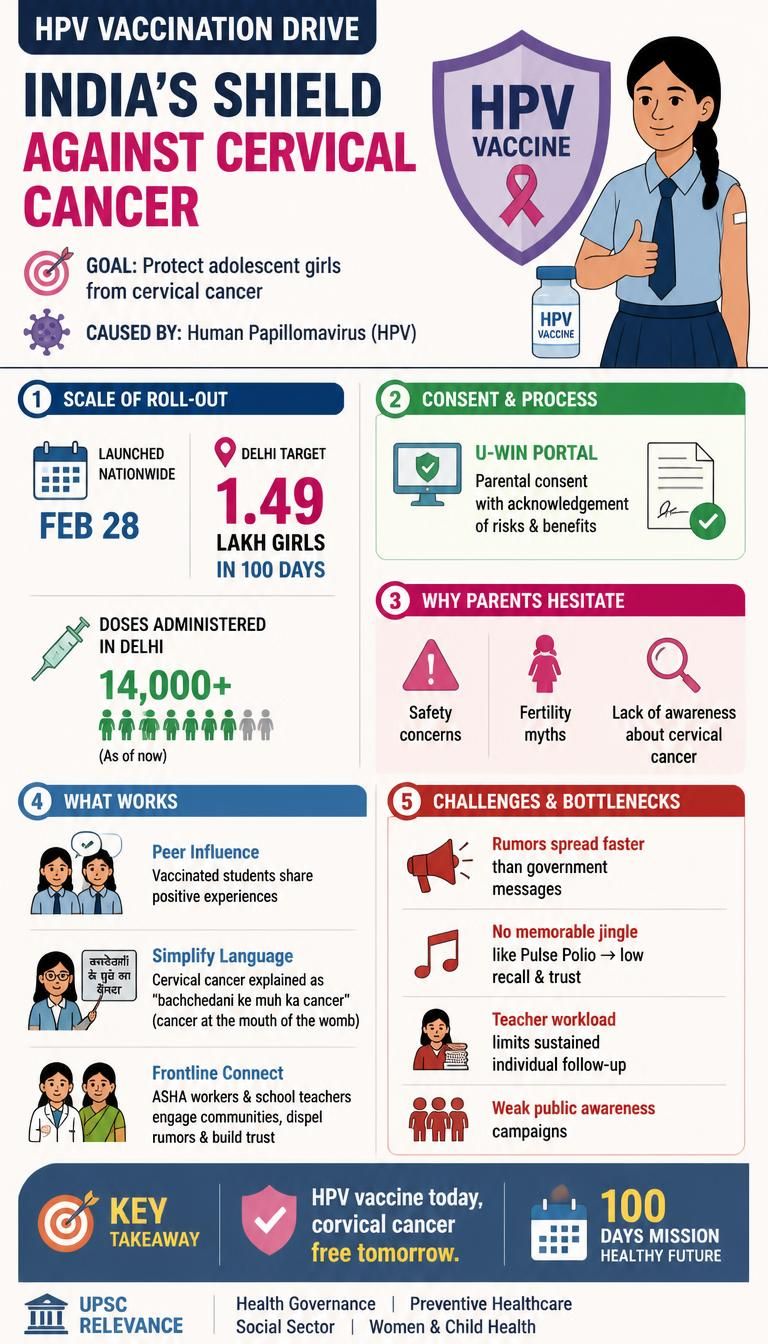
- India launched a nationwide HPV vaccination drive on February 28, targeting adolescent girls to prevent cervical cancer.
- Delhi aims to vaccinate 1.49 lakh girls over 100 days, having administered over 14,000 doses.
- A significant challenge is parental hesitancy, driven by safety concerns, fertility myths, and a general lack of awareness about cervical cancer.
- Successful strategies include using vaccinated students as role models, simplifying medical terminology, and leveraging personal stories to build trust.
- ASHA workers and school teachers are crucial in community engagement and dispelling misinformation.
HPV Vaccine.jpg
Detailed Insights:
- The HPV vaccination drive seeks to protect adolescent girls from Human Papillomavirus, a primary cause of cervical cancer.
- Consent for vaccination is managed through the government's U-WIN portal, which requires parental acknowledgment of risks and benefits.
- Hesitancy among parents often stems from fears about vaccine side effects, potential impact on fertility, and suspicion regarding research conducted on the Indian population.
- Schools that achieved higher vaccination rates effectively used peer influence, with vaccinated students sharing their positive experiences.
- Teachers simplified complex medical terms, referring to cervical cancer as "bachchedani ke muh ka cancer" (cancer at the mouth of the womb) for better understanding.
- ASHA workers face challenges in countering rumors and misinformation, noting that such narratives spread faster than government messaging.
- Unlike the widely recognized pulse polio campaign, the HPV vaccination drive lacks a memorable public jingle or slogan, impacting public recall and trust.
- Bottlenecks include teacher workload, which limits sustained individual follow-up, and a perceived lack of robust public awareness campaigns.
- Private schools often integrate HPV awareness into annual health programs, involving doctors and alumni to address parental concerns effectively.
Key Concepts Involved:
- HPV (Human Papillomavirus): A common group of viruses, some types of which can cause cervical cancer and other cancers.
- Cervical Cancer: A type of cancer that develops in the cervix, the lower part of the uterus, primarily caused by persistent HPV infection.
- U-WIN portal: A digital platform developed by the Indian government for managing and tracking vaccination programs across the country.
- ASHA (Accredited Social Health Activist): Community health workers who serve as a link between the community and the public health system in India.
- Vaccine Hesitancy: The delay in acceptance or refusal of vaccination despite the availability of vaccination services.

SuperKalam is your personal mentor for UPSC preparation, guiding you at every step of the exam journey.
Download the App


STUDY RESOURCES
CONTACT US
ⓒ Snapstack Technologies Private Limited