GS 3: Science & TechnologyGS 3: Environment & EcologyPrelims
Hydrogen Train rolls out today; leak detectors, auto shutdown, real-time monitoring on track, Pg8
PM Modi launches India's first hydrogen train from Jind, featuring advanced leak detectors and auto-shutdown for safe, green rail travel.
Practice MCQs
891 Students attempted
Key Highlights:
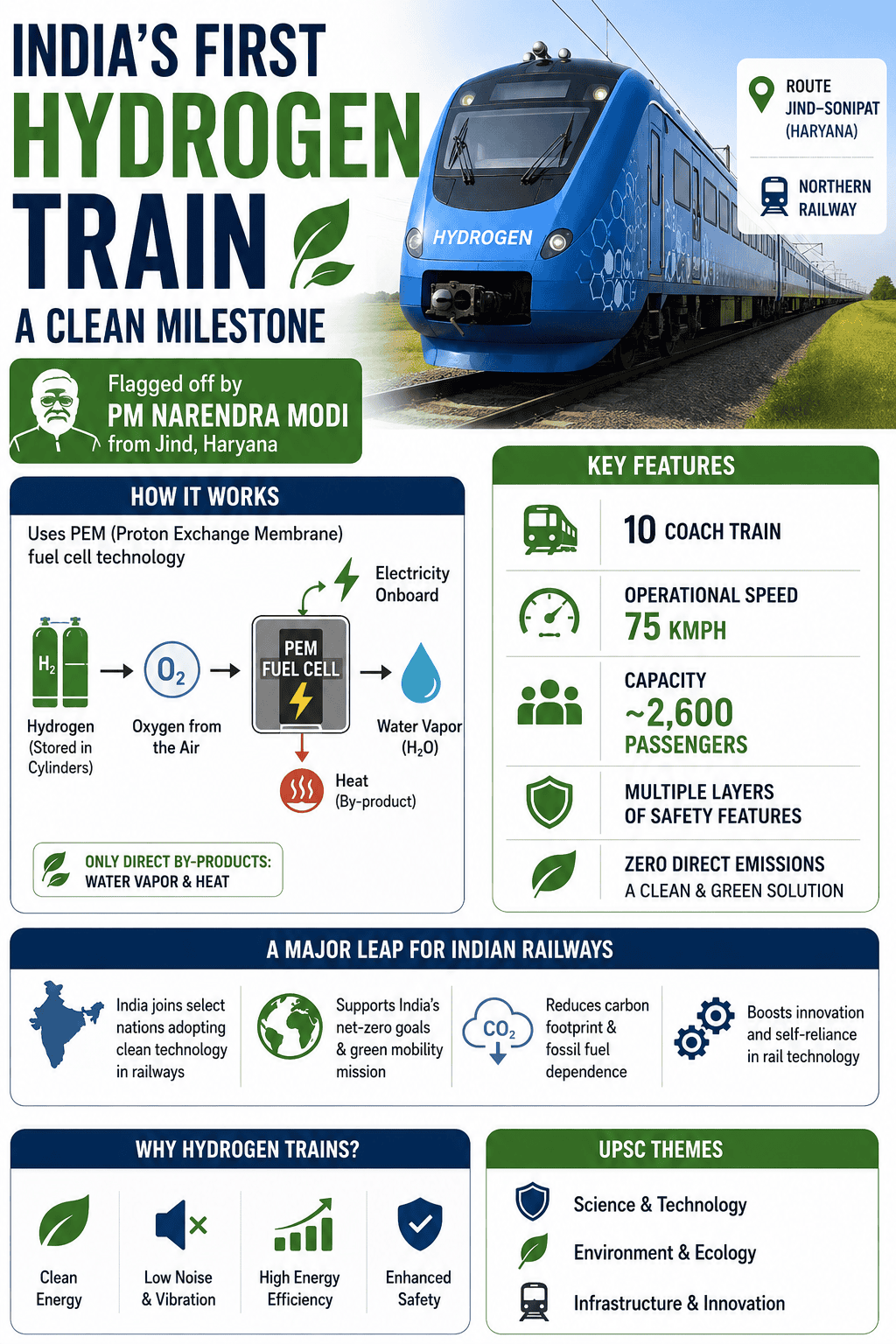
- India's first hydrogen-powered train was flagged off by Prime Minister Narendra Modi from Jind, Haryana.
- The train operates on the Jind-Sonipat section of Northern Railway and incorporates multiple layers of safety features.
- It utilizes Proton Exchange Membrane (PEM) fuel cell technology to generate electricity onboard.
- The 10-coach train has an operational speed of 75 kmph and a capacity of approximately 2,600 passengers.
- This launch positions India among a select group of nations adopting clean technology in the railway sector.
Hydrogen Train.png
Detailed Insights:
- The train generates electricity by reacting hydrogen stored in cylinders with oxygen from the atmosphere, with water vapor and heat as the only direct by-products.
- Safety systems include continuous monitoring for hydrogen leaks, unusual heat, flames, or smoke, along with an automatic shut-off system for hydrogen supply.
- Non-stop ventilation ensures that any potential hydrogen leaks are safely diluted and carried away.
- A dedicated hydrogen storage, compression, and dispensing facility established at Jind uses electrolysis to split water into hydrogen and oxygen.
- This initiative aligns with India's broader goals of adopting clean technology and promoting sustainable mobility, supporting the National Green Hydrogen Mission.
- The train is designed for high-capacity passenger operations on non-electrified or difficult-to-electrify routes.
- The project is part of the Hydrogen for Heritage initiative, which aims to deploy 35 hydrogen trains on ecologically sensitive and scenic routes.
- The train was developed by the Integral Coach Factory (ICF) in Chennai.
Scientific/Technical Concepts Involved:
- Proton Exchange Membrane (PEM) fuel cell: An electrochemical device that converts the chemical energy of hydrogen and oxygen into electrical energy, producing water and heat as by-products.
- Electrolysis: A chemical process that uses an electric current to split water (H₂O) into hydrogen (H₂) and oxygen (O₂).
- Green Hydrogen: Hydrogen produced by the electrolysis of water using electricity generated from renewable energy sources, resulting in zero carbon emissions.

SuperKalam is your personal mentor for UPSC preparation, guiding you at every step of the exam journey.
Download the App


STUDY RESOURCES
CONTACT US
ⓒ Snapstack Technologies Private Limited