GS 2: International RelationsGS 3: EconomyPrelims
Ahead of the big deal, strike a careful balance, Pg11
US intensifies trade pressure on India with Section 301 tariffs and Russia sanctions, forcing Delhi to carefully balance market expansion and national interests.
Practice MCQs
891 Students attempted
Key Highlights:
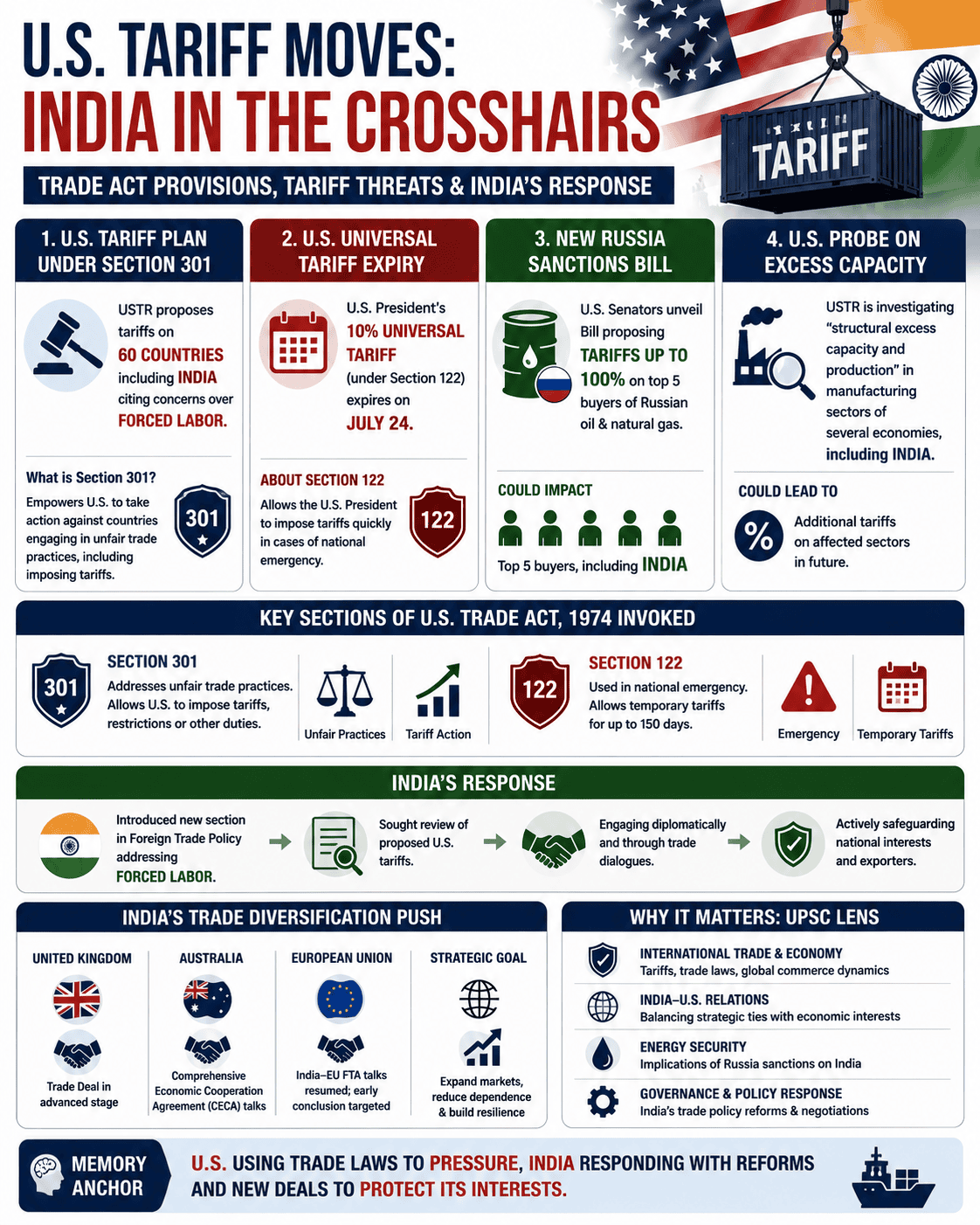
- The US Trade Representative (USTR) has proposed levying tariffs on 60 countries, including India, under Section 301 of the US Trade Act, 1974, citing concerns over forced labor.
- India has responded by introducing a new section in its foreign trade policy addressing forced labor and has sought a review of the proposed US tariffs.
- The US President's current 10% universal tariff, operationalized through Section 122 of the Trade Act, is set to expire on July 24.
- A new Russia sanctions Bill unveiled by US senators proposes tariffs of up to 100% on the top five buyers of Russian oil and natural gas, including India.
- India is actively pursuing trade deals with other major economies like the UK, Australia, and the EU to expand its market and protect its interests.
Ind-US.png
Detailed Insights:
- The US Trade Representative (USTR) is also investigating "structural excess capacity and production" in manufacturing sectors of various economies, including India, which could lead to additional tariffs.
- Section 301 of the US Trade Act, 1974, empowers the US government to take action, including imposing tariffs, against countries engaging in unfair trade practices.
- Section 122 of the US Trade Act, 1974, provides the President with temporary authority to impose tariffs for a maximum of 150 days to address serious balance-of-payments deficits.
- India's significant reliance on Russian energy imports makes it a key target of the proposed Russia sanctions Bill, which aims to curtail Russia's revenue from energy exports.
- To address US concerns regarding energy, Indian Public Sector Undertakings (PSUs) have signed a deal to import 10% of their Liquefied Petroleum Gas (LPG) requirements from the US.
- India's strategy involves carefully navigating these trade pressures while simultaneously expanding its market access through new trade agreements to reduce uncertainty in its international relations.
Key Concepts Involved:
- Section 301 of the US Trade Act, 1974: A US law authorizing the USTR to investigate and act against foreign trade practices deemed unfair, potentially imposing tariffs.
- Section 122 of the US Trade Act, 1974: A US law granting the President temporary authority to impose tariffs for up to 150 days to address balance-of-payments deficits.
- United States Trade Representative (USTR): The US government agency responsible for developing and coordinating US international trade policy and conducting trade negotiations.
- Tariffs: Taxes imposed by a government on imported goods and services, often used to protect domestic industries or as a tool in trade disputes.

SuperKalam is your personal mentor for UPSC preparation, guiding you at every step of the exam journey.
Download the App


STUDY RESOURCES
CONTACT US
ⓒ Snapstack Technologies Private Limited