GS 2: GovernanceGS 3: Science & TechnologyGS 3: EconomyPrelimsGS 3: Changes in Industrial Policy and Effects on Industrial Growth
Semiconductoe mission 2.0 gets cabinet nod, Pg1
India's Cabinet greenlights Rs 1.27 lakh crore Semicon 2.0, boosting domestic chip manufacturing supply chain with significant subsidies.
Practice MCQs
883 Students attempted
Key Highlights:
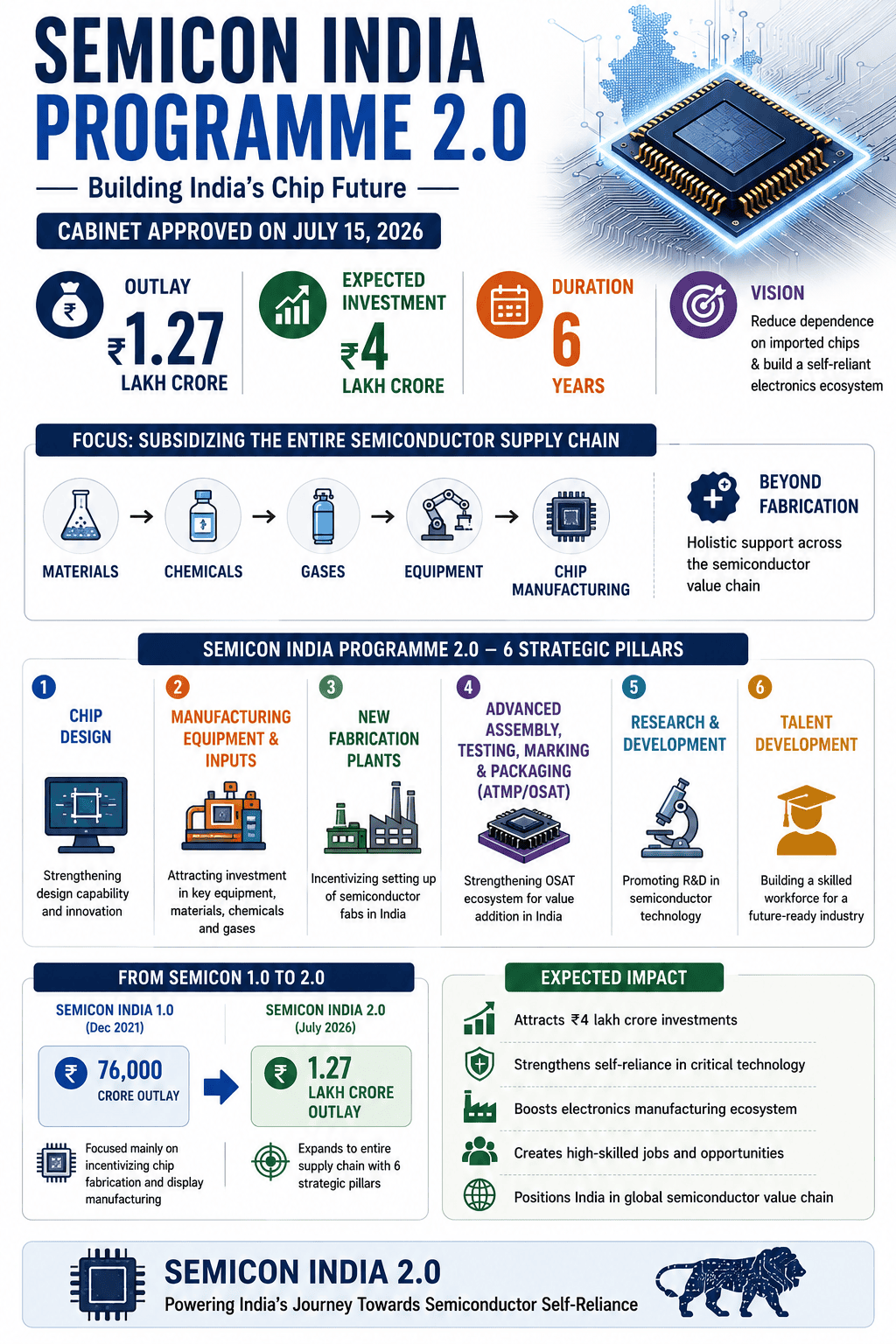
- The Union Cabinet approved the Semicon India Programme 2.0 with an outlay of ₹1.27 lakh crore on July 15, 2026.
- The program focuses on subsidizing the entire supply chain around chip manufacturing, extending beyond just fabrication.
- It aims to attract investments in materials, chemicals, gases, and equipment crucial for semiconductor production.
- The scheme has a duration of six years and is expected to attract investments of ₹4 lakh crore.
- The initiative is designed to reduce India's reliance on imported semiconductor chips and foster a self-reliant electronics manufacturing ecosystem.
Semicon 2.0.png
Detailed Insights:
- Semicon India Programme 2.0 is the second phase of India's semiconductor development strategy, building upon the initial Semicon India Programme 1.0 launched in December 2021 with a ₹76,000 crore outlay.
- The expanded scope of Semicon 2.0 covers six strategic pillars: chip design, manufacturing equipment and inputs, new fabrication plants, advanced assembly, testing, marking and packaging (ATMP/OSAT), research, and talent development.
- Incentives under the new scheme include 40% capital expenditure subsidy for silicon fabs, 35% for other fabs, 35% for advanced packaging, and 25% for conventional packaging.
- The long-term vision aims for India to design and manufacture chips for 70-75% of domestic applications by 2029 and become a top semiconductor nation by 2035.
- The India Semiconductor Mission (ISM), operating under the Ministry of Electronics and Information Technology (MeitY), is the nodal agency responsible for implementing this program.
- This initiative aligns with national goals such as Digital India, Make in India, and Atmanirbhar Bharat, promoting domestic value addition and technological sovereignty.
Key Concepts Involved:
- Semiconductor: A material with electrical conductivity between a conductor and an insulator, forming the fundamental component of electronic devices.
- Fabrication Plant (Fab): A highly specialized facility where semiconductor devices, such as integrated circuits, are manufactured.
- ATMP (Assembly, Testing, Marking, and Packaging) / OSAT (Outsourced Semiconductor Assembly and Test): The final stages of semiconductor manufacturing, involving the assembly, testing, and packaging of chips into functional products.
- Supply Chain: The interconnected network of all entities, resources, and activities involved in producing and delivering a product, from raw materials to the end consumer.

SuperKalam is your personal mentor for UPSC preparation, guiding you at every step of the exam journey.
Download the App


STUDY RESOURCES
CONTACT US
ⓒ Snapstack Technologies Private Limited