GS 2: International RelationsGS 3: Environment & EcologyGS 3: EconomyPrelimsGS 3: Effects of Liberalization on the Economy
India-UK trade deal kicks in: PM says boost for farmers & MSMEs, Pg1
India-UK Comprehensive Economic and Trade Agreement (CETA) takes effect, eliminating 99% UK tariffs on Indian goods, boosting MSMEs, and reducing duties on British cars and alcohol.
Practice MCQs
883 Students attempted
Key Highlights:
- The India-UK Comprehensive Economic and Trade Agreement (CETA) came into force on Wednesday.
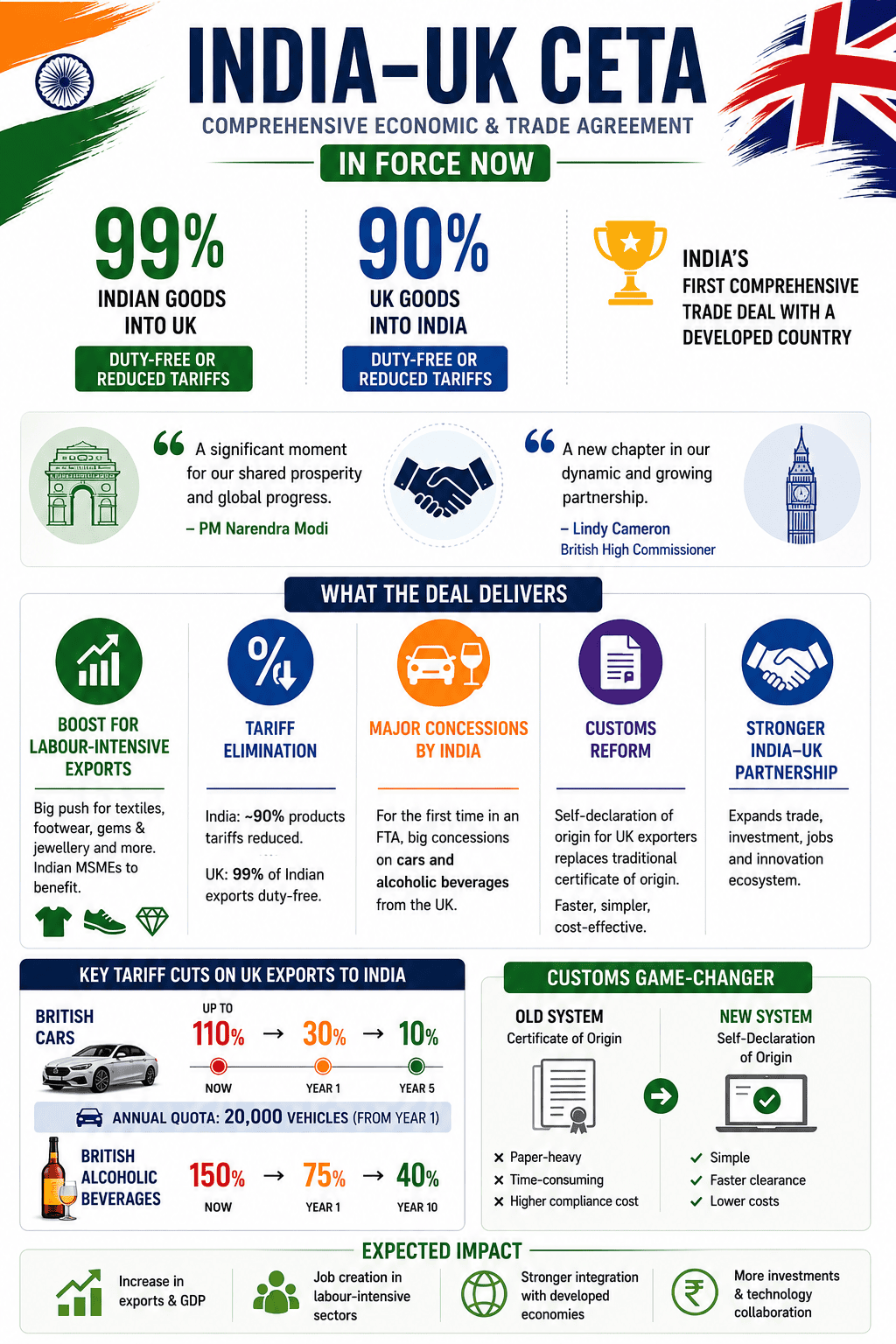
- Under the agreement, 99% of Indian goods entering the UK and 90% of UK goods entering India will face duty-free or reduced tariffs.
- Prime Minister Narendra Modi hailed it as a significant moment, while British High Commissioner Lindy Cameron called it a "new chapter".
- This marks India's first comprehensive trade deal with a developed country.
- The deal is expected to boost India's labour-intensive exports like textiles, footwear, and gems & jewellery.
Ind-UK.png
Detailed Insights:
- The India-UK CETA was negotiated over four years, navigating significant political changes in the UK.
- India has reduced tariffs on approximately 90% of products, while the UK has eliminated tariffs on 99% of Indian exports.
- For the first time in an FTA, India has offered major concessions on imported cars and alcoholic beverages from the UK.
- Tariffs on British cars will reduce from up to 110% to 30% initially, reaching 10% by year five, with an annual quota starting at 20,000 vehicles.
- Tariffs on British alcoholic beverages will decrease from 150% to 75% initially, further reducing to 40% by year 10.
- The agreement introduces a system of self-declaration of origin for UK exporters, replacing traditional certificates, which is a significant customs change.
- India has removed up to 14% tariffs on UK medical devices, with phased reductions for sensitive items, addressing concerns about dependence on other nations.
- The UK has allocated quotas for India's iron and steel exports, projected to increase from $850 million to over $1 billion.
- The labour and environment chapter of the agreement is non-binding, which is seen as a win for India.
- India did not secure an exemption from the UK's proposed Carbon Border Adjustment Mechanism, set to take effect from January 1 next year.
- The deal on social security contributions will benefit 75,000 Indian professionals and 900 firms by exempting them from UK National Insurance for five years.
Key Concepts Involved:
- Comprehensive Economic and Trade Agreement (CETA): A broad trade pact covering goods, services, investment, and other areas to deepen economic ties.
- Free Trade Agreement (FTA): A treaty between two or more countries to reduce or eliminate certain barriers to trade, such as tariffs and quotas.
- Carbon Border Adjustment Mechanism (CBAM): A policy tool that imposes a carbon price on imported goods based on their carbon emissions during production.

SuperKalam is your personal mentor for UPSC preparation, guiding you at every step of the exam journey.
Download the App


STUDY RESOURCES
CONTACT US
ⓒ Snapstack Technologies Private Limited