GS 1: Indian SocietyGS 3: Environment & EcologyPrelimsGS 1: Changes in Critical Geographical Features, Water Bodies, Ice Caps, Flora and FaunaGS 2: Health Sector
People losing sleep in big cities due to high night-time temperatures: Study, Pg9
Climate change-induced night temperatures cause significant sleep loss in major Indian cities; Chennai residents lose 93 hours annually, impacting health and productivity.
Practice MCQs
883 Students attempted
Key Highlights:
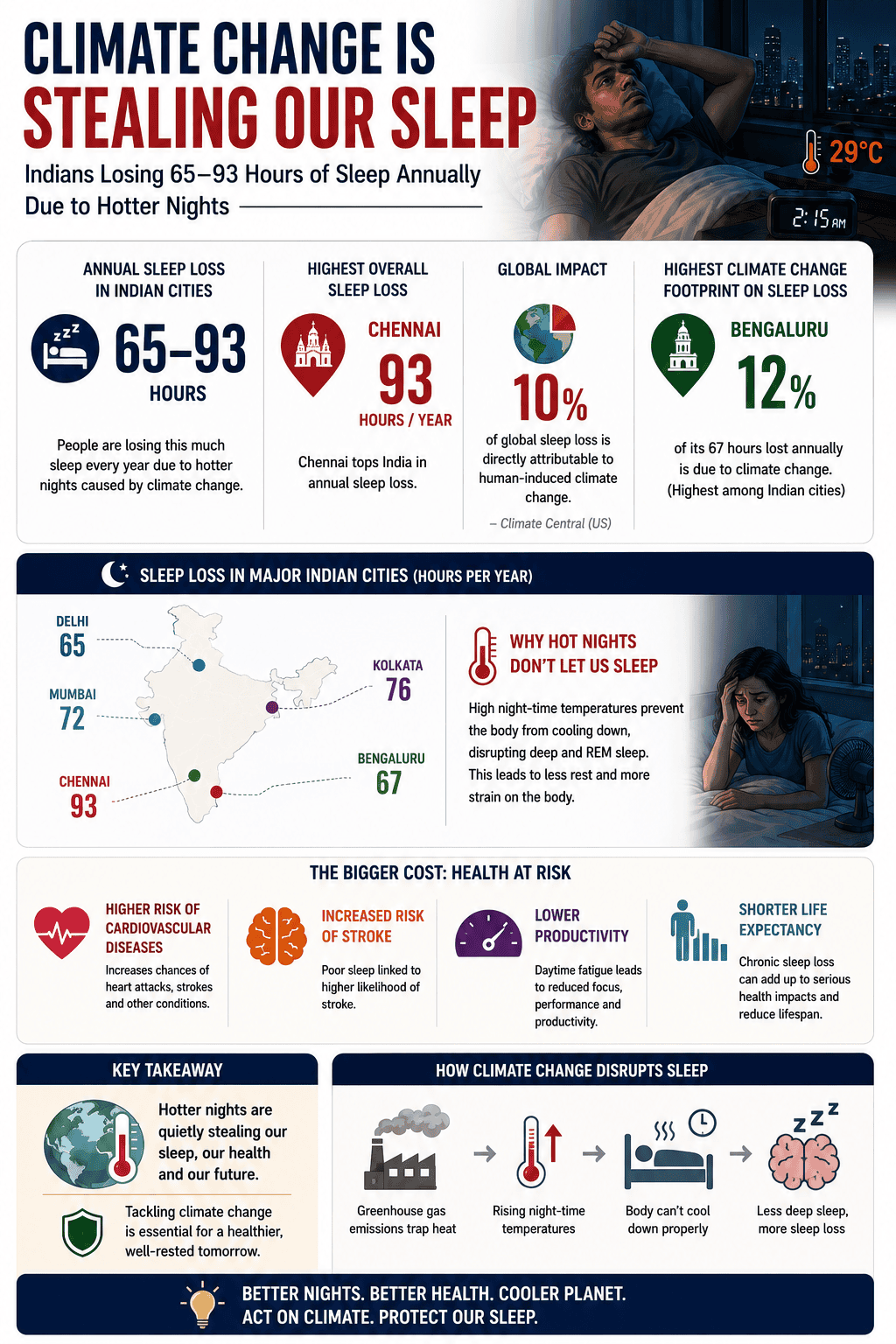
- A new study revealed people in major Indian cities are losing between 65 and 93 hours of sleep annually due to climate change-induced high night-time temperatures.
- Chennai recorded the highest overall sleep loss in India, with residents losing an average of 93 hours of sleep annually.
- The study by Climate Central, a US-based climate advocacy group, found that 10% of global sleep loss is directly attributable to human-induced climate change.
- Bengaluru showed the highest climate change footprint on sleep loss, accounting for 12% of its 67 hours lost annually.
Sleep.png
Detailed Insights:
- High night-time temperatures prevent the human body from cooling down, leading to discomfort and reduced productivity.
- This condition increases health risks such as strokes and cardiovascular conditions, and can shorten life expectancy.
- Night-time temperatures globally have increased at a faster rate compared to day-time temperatures due to climate change.
- The study assessed sleep loss in over 1,300 cities worldwide, including more than 100 Indian cities.
- Residents of Mumbai and Kolkata are losing 84 and 80 hours of sleep annually, respectively.
- Delhi and Chandigarh experienced some of the lowest sleep loss among Indian cities studied, at 67 and 62 hours per year.
Key Concepts Involved:
- Climate Change: Long-term shifts in temperatures and weather patterns, primarily caused by human activities.
- Heat Stress: The body's inability to cool itself down, leading to physiological strain and potential health issues.

SuperKalam is your personal mentor for UPSC preparation, guiding you at every step of the exam journey.
Download the App


STUDY RESOURCES
CONTACT US
ⓒ Snapstack Technologies Private Limited