GS 2: International RelationsGS 3: EconomyPrelimsGS 3: Effects of Liberalization on the EconomyGS 2: Bilateral, Regional and Global Groupings and Agreements
The long and rocky road to a trade deal with US, Pg6
India and US face significant hurdles in finalising an interim trade deal, grappling with tariffs, overcapacity, and geopolitical pressures, despite some progress.
Practice MCQs
898 Students attempted
Key Highlights:
- India and the US are continuing negotiations for an interim trade agreement framework, with Commerce Minister Piyush Goyal noting discussions are in line with "changed circumstances."
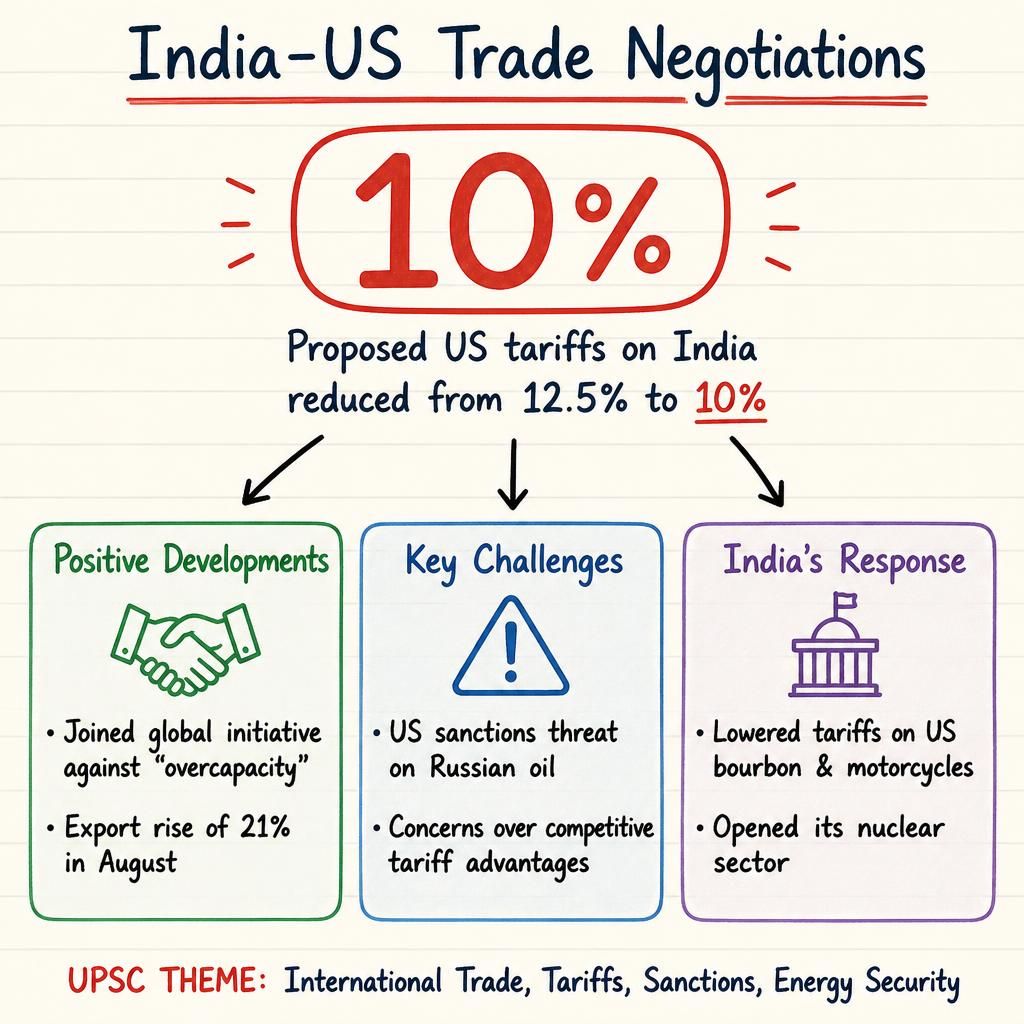
- India has joined a global initiative against "overcapacity," a move that could potentially exempt it from Section 301 tariffs imposed by the US.
- Proposed US tariffs on India were reduced from 12.5% to 10% after India implemented a ban on imports of goods produced through forced labor.
- Significant sticking points remain, including concerns over competitive tariff advantages for India and the threat of US sanctions related to Russian oil purchases.
India-US Trade.jpg
Detailed Insights:
- Negotiations for the bilateral trade pact have been ongoing for nearly a year, with varying signals from officials on both sides regarding progress.
- Finance Minister Nirmala Sitharaman indicated that talks had reached a plateau, while US Trade Representative Jamieson Greer stated a deal was "not imminent."
- The US initiated a Section 301 investigation into overcapacity, targeting several economies including India, which was discussed at the G20 trade ministers’ meeting.
- India's participation in the joint statement against structural excess capacity is seen as a positive step towards avoiding potential US tariffs.
- A key concern for New Delhi is the US's history of imposing fresh curbs despite existing trade agreements, as observed with the USMCA.
- The Lindsey O. Graham Sanctioning, Russia and Iran Act of 2026 threatens to impose up to 100% tariffs on buyers of Russian oil and gas, impacting India's energy security.
- India's goods exports to the US increased by 21% in August, driven by electronics and engineering goods, despite earlier 50% tariffs.
- Conversely, India's imports from the US, primarily energy products, also saw a sharp rise of 65% in August.
- India has made regulatory adjustments, such as lowering tariffs on US bourbon whiskey and motorcycles, and opening its nuclear sector, to align with US commercial interests.
Key Concepts Involved:
- Section 301 of the Trade Act of 1974: A US trade law allowing the President to take action against foreign trade practices deemed unfair or discriminatory.
- Overcapacity: A situation where a country's production capacity in a specific sector exceeds the market demand, potentially leading to trade imbalances.
- USMCA (United States-Mexico-Canada Agreement): A free trade agreement between the US, Mexico, and Canada, which replaced the North American Free Trade Agreement (NAFTA).
- Lindsey O. Graham Sanctioning, Russia and Iran Act of 2026: US legislation that grants the President authority to impose tariffs on countries purchasing Russian oil and gas.

SuperKalam is your personal mentor for UPSC preparation, guiding you at every step of the exam journey.
Download the App


STUDY RESOURCES
CONTACT US
ⓒ Snapstack Technologies Private Limited