GS 2: GovernanceGS 2: International RelationsGS 3: Environment & EcologyPrelimsGS 3: Conservation, Pollution and Degradation
Climate body faces deadlock over timeline of new reports, Pg II
IPCC faces unprecedented deadlock over report timelines, jeopardizing 2028 UN climate talks and global action on warming.
Practice MCQs
883 Students attempted
Key Highlights:
- The Intergovernmental Panel on Climate Change (IPCC) is facing an unprecedented deadlock over the timeline for publishing its next assessment reports.
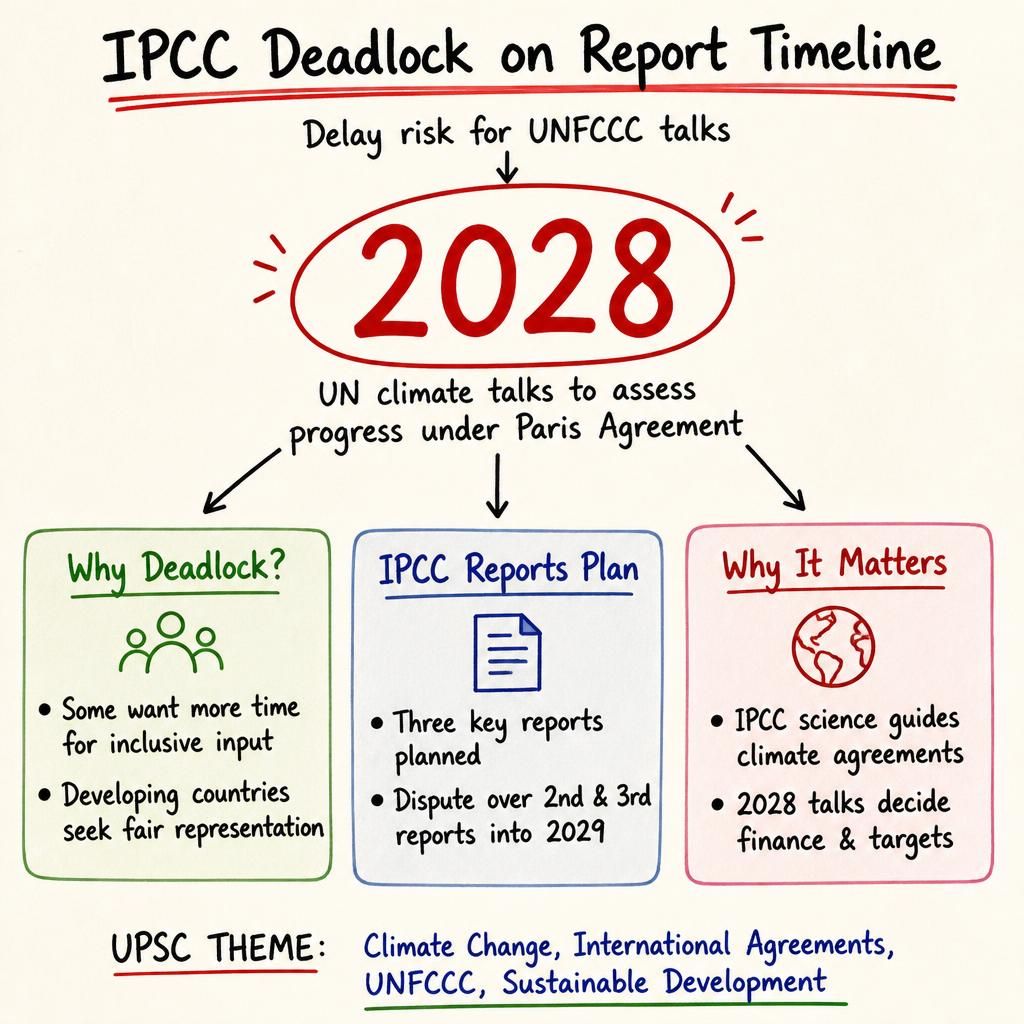
- This impasse could delay crucial scientific input for the 2028 United Nations Framework Convention on Climate Change (UNFCCC) talks, which will assess progress under the Paris Agreement.
- A plenary meeting of IPCC's 195 member states was expected on October 12 in Addis Ababa, Ethiopia, to resolve the disagreement on report publication dates.
- Countries including India, China, Russia, Saudi Arabia, and Kenya are advocating for more time to ensure inclusive contributions from less-resourced nations.
- The IPCC plans three key reports covering the extent and causes of climate change, vulnerabilities and adaptation, and options for mitigation.
IPCC Report.jpg
Detailed Insights:
- The IPCC's assessments have historically provided the scientific basis for major UN climate agreements over the past three decades.
- The current deadlock could leave countries without consensus on critical issues, such as the reversibility of global warming, for future climate policy decisions.
- The 2028 UN climate talks are significant as they are intended to guide decisions on climate financing and national targets for reducing greenhouse gas emissions.
- Scientists chairing the report groups proposed approval of all three reports by September 2028, but some member states prefer pushing the second and third reports into 2029.
- Developing countries argue that their perspectives are often underrepresented in IPCC reports due to a lack of experts and resources for peer-reviewed studies.
- The deadlock reflects increasing pressure on the IPCC from governments concerned about industrial competitiveness and the development needs of emerging economies.
Key Concepts Involved:
- Intergovernmental Panel on Climate Change (IPCC): The leading international body for assessing climate change, established by UNEP and WMO.
- United Nations Framework Convention on Climate Change (UNFCCC): An international environmental treaty adopted in 1992, aiming to stabilize greenhouse gas concentrations.
- Paris Agreement: A legally binding international treaty on climate change, adopted in 2015, with the goal of limiting global warming.
- Global Stocktake: A five-yearly process under the Paris Agreement to assess collective progress towards achieving its long-term goals.

SuperKalam is your personal mentor for UPSC preparation, guiding you at every step of the exam journey.
Download the App


STUDY RESOURCES
CONTACT US
ⓒ Snapstack Technologies Private Limited