GS 2: GovernanceGS 3: EconomyPrelimsGS 3: Indian Economy, Planning, Mobilization of Resources, Growth, Development and EmploymentGS 2: E Governance
Delivery Completed, Pg10
GST Council's 57th meeting introduces significant reforms, fostering taxpayer trust, reducing compliance burden, and automating processes for a more efficient tax system.
Practice MCQs
862 Students attempted
Key Highlights:
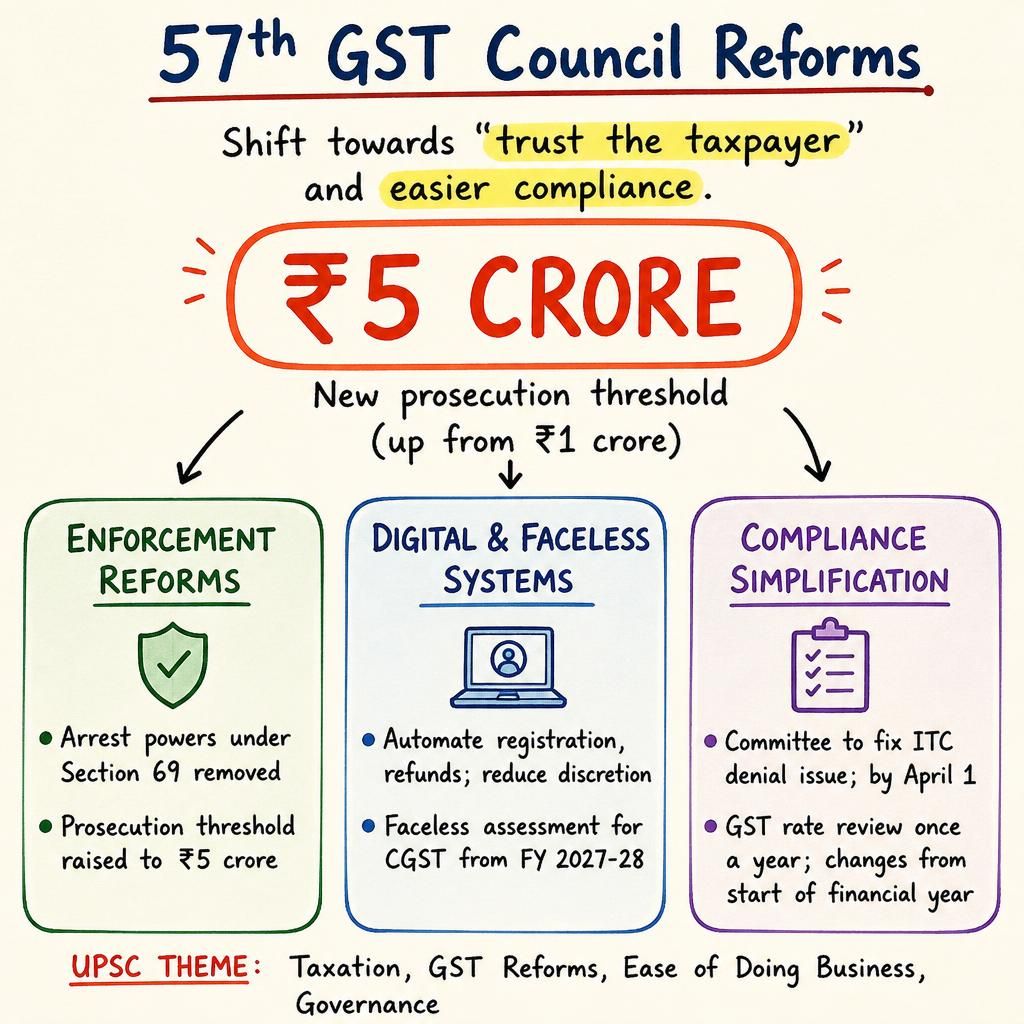
- The 57th Goods and Services Tax (GST) Council meeting introduced significant reforms aimed at fostering taxpayer trust and simplifying compliance.
- Key decisions include the complete removal of arrest powers for GST officers under Section 69 of the CGST Act and a five-fold increase in the prosecution threshold from ₹1 crore to ₹5 crore.
- The Council approved measures to automate processes like registration, refunds, and reduce human discretion, moving towards a "trust the taxpayer" approach.
- A committee has been tasked to resolve issues related to the denial of Input Tax Credit (ITC) until suppliers file returns, with a solution aimed for implementation by April 1.
- A faceless assessment system for Central GST (CGST) registered companies will be introduced, mirroring the income tax system, with implementation planned from FY 2027-28.
- GST rate reviews will now occur only once a year, with changes implemented solely at the start of financial years to reduce uncertainty.
GST Council Reforms.jpg
Detailed Insights:
- The reforms signify a shift in tax administration from a compliance-heavy, enforcement-driven model to one based on trust and ease of doing business.
- Removing arrest powers and increasing the prosecution threshold aims to reduce harassment and criminalization of genuine business errors, particularly benefiting Micro, Small, and Medium Enterprises (MSMEs).
- The move to automate refunds and reduce manual intervention is expected to expedite the refund process, improving liquidity and working capital for businesses.
- Addressing the ITC blockage issue is crucial as it directly impacts businesses' working capital by denying credit for taxes already paid on inputs.
- The introduction of faceless assessment for CGST aims to enhance transparency, minimize taxpayer-officer interface, and ensure uniformity in tax administration across multiple jurisdictions.
- The decision to review rates annually and implement changes only at the financial year's start provides predictability and stability for businesses in their planning and pricing strategies.
- These changes are part of a broader effort to streamline the Goods and Services Tax system, which was implemented on July 1, 2017, and is now in its tenth year.
Key Concepts Involved:
- Goods and Services Tax (GST): A comprehensive, multi-stage, destination-based indirect tax levied on the supply of goods and services across India.
- GST Council: A constitutional body chaired by the Union Finance Minister, comprising state finance ministers, responsible for making recommendations on GST rates, exemptions, and laws.
- Input Tax Credit (ITC): A mechanism under GST that allows businesses to claim credit for the tax paid on purchases of goods or services used for business, reducing their overall tax liability.
- Faceless Assessment: A system where tax assessments are conducted electronically without direct physical interaction between taxpayers and tax officers, aiming for greater transparency and efficiency.

SuperKalam is your personal mentor for UPSC preparation, guiding you at every step of the exam journey.
Download the App


STUDY RESOURCES
CONTACT US
ⓒ Snapstack Technologies Private Limited