GS 2: GovernanceGS 1: Indian SocietyGS 2: Social JusticePrelimsGS 2: Government policies and interventions for development in various sectors
An obesity prescription beyond the clinic, Pg15
WHO releases first guidelines for child obesity, urging systemic change, healthier diets, and policy interventions to combat India's dual malnutrition-obesity burden.
Practice MCQs
862 Students attempted
Key Highlights:
- The World Health Organization (WHO) released its first guidelines for managing obesity among children and adolescents.
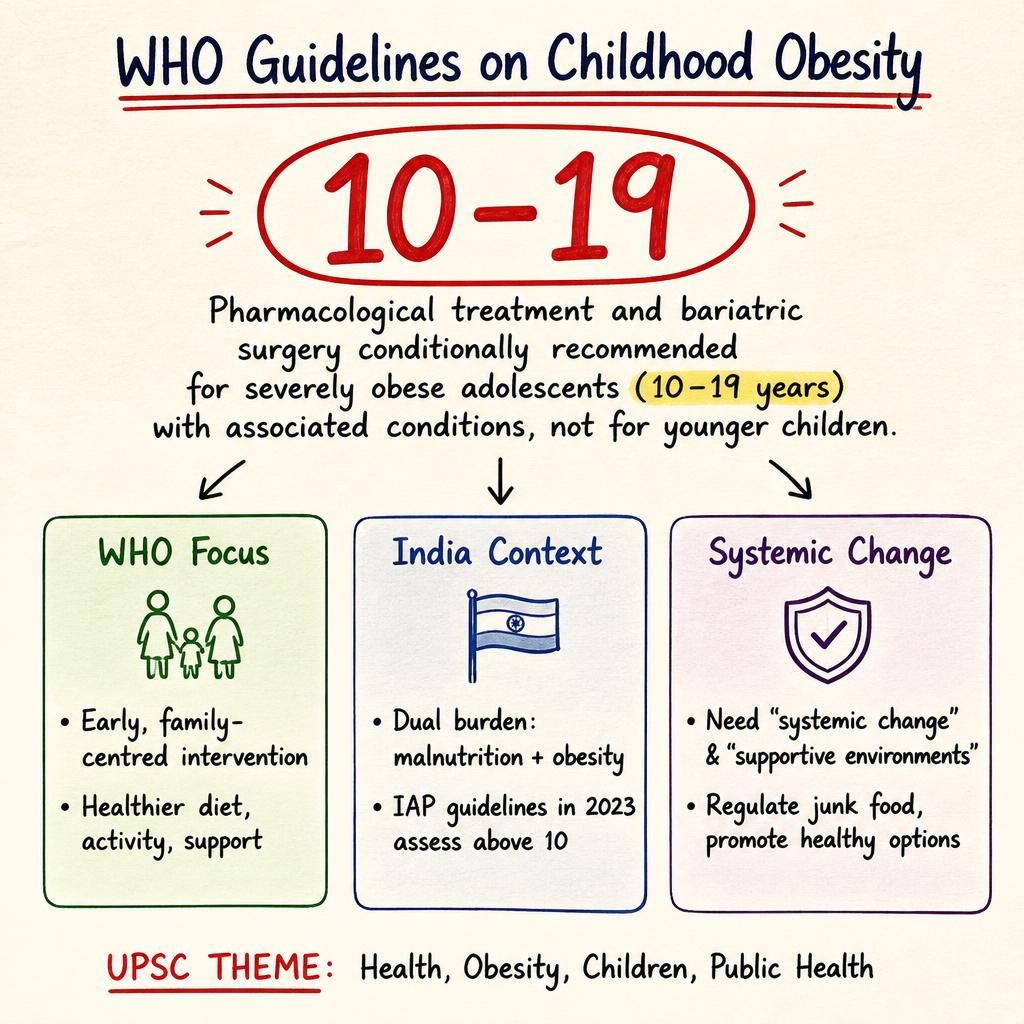
- These guidelines prioritize early, family-centred intervention, healthier diets, physical activity, and behavioural support.
- Pharmacological treatment and bariatric surgery are conditionally recommended for severely obese adolescents (10-19 years) with associated conditions, but not for younger children.
- India faces a unique challenge of simultaneously addressing malnutrition and obesity in its population.
- The Indian Academy of Paediatrics issued its own guidelines in 2023, recommending assessment for associated conditions in obese children above 10.
- The WHO emphasizes the need for "systemic change" and "supportive environments" to tackle nutritional challenges, including regulating junk food.
WHO Guidelines.jpg
Detailed Insights:
- The global burden of diabetes and lifestyle diseases is increasingly extending to the young population.
- The WHO guidelines stress that obesity management should focus on improving overall health, functioning, and well-being, not just weight loss.
- India's approach aligns with the WHO in advocating for a concerted effort involving parents, paediatricians, and schools to contain obesity-related maladies.
- Research indicates that children with limited access to healthy food options often rely on poor diets.
- Public health policy must address the aggressive promotion of unhealthy foods and enhance the accessibility of nutritious alternatives.
- Surveys have highlighted the links between child malnutrition and poor maternal diets, underscoring the importance of women's empowerment.
Key Concepts Involved:
- Childhood Obesity: A medical condition characterized by excessive body fat that negatively impacts a child's health.
- Lifestyle Diseases: Non-communicable diseases primarily caused by daily habits, such as diet, physical activity, and other lifestyle choices.
- Systemic Change: Fundamental alterations to policies, institutions, and societal structures to address the root causes of complex issues.
- Dual Burden of Malnutrition: The coexistence of both undernutrition (e.g., stunting, wasting) and overnutrition (e.g., overweight, obesity) within the same population or household.

SuperKalam is your personal mentor for UPSC preparation, guiding you at every step of the exam journey.
Download the App


STUDY RESOURCES
CONTACT US
ⓒ Snapstack Technologies Private Limited