GS 1: Physical GeographyGS 3: Disaster ManagementGS 3: Environment & EcologyPrelimsGS 3: Disaster and Disaster Management
Records reveal engineering’s effect on Yangtze floods, Pg13
Scientists reveal human engineering, like embankments and lake reclamation, intensified Yangtze River's 100-year floods by up to 18% over 500 years.
Practice MCQs
840 Students attempted
Key Highlights:
- A recent study revealed that human engineering and land-use changes have intensified flood risks on the Yangtze River over the last 500 years.
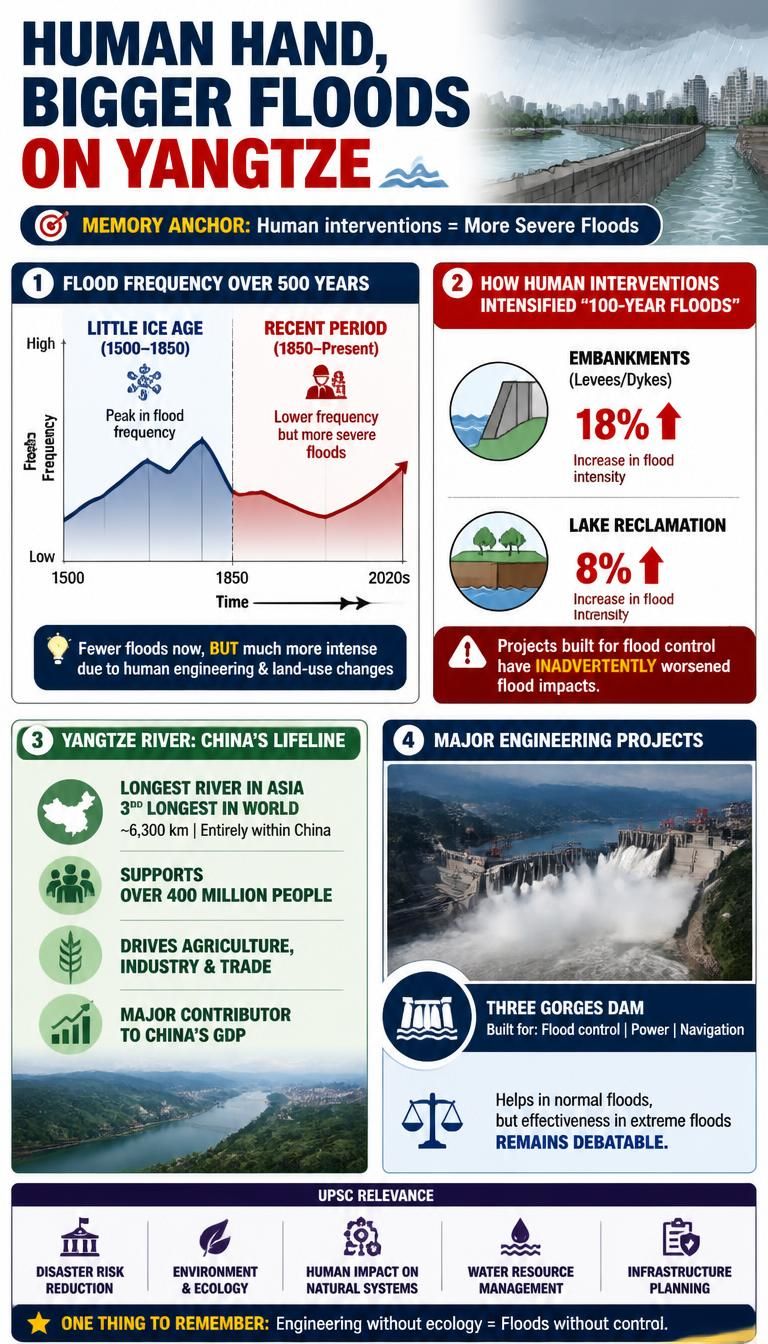
- Scientists found that while flood frequency peaked during the Little Ice Age (1500-1850), human interventions have made recent floods more severe.
- Embankments increased the intensity of "100-year floods" by 18%.
- Lake reclamation contributed to an 8% increase in the intensity of these floods.
- The findings indicate that engineering projects designed for flood control have inadvertently worsened their impact on the Yangtze River.
Yangtze.jpg
Detailed Insights:
- The Yangtze River, also known as Chang Jiang, is the longest river in Asia and the third longest globally, flowing entirely within China. It is vital for China's economy, supporting over 400 million people and contributing significantly to agricultural output and GDP.
- The Little Ice Age was a period of regional cooling, primarily in the Northern Hemisphere, spanning from the early 14th century through the mid-19th century, characterized by cooler temperatures and glacier expansion.
- Embankments (or levees/dykes) are structures built to confine river flow, but they can increase downstream flood risk by altering sediment transport and reducing the natural flood storage capacity of floodplains.
- Lake reclamation, the conversion of lake areas into dry land, reduces the natural ability of lakes to absorb excess runoff and regulate water flow, thereby exacerbating flood impacts.
- Major projects like the Three Gorges Dam on the Yangtze River were constructed for flood control, power generation, and navigation, though their overall effectiveness in mitigating extreme floods remains a subject of debate.
- The study highlights a paradox where interventions intended to mitigate natural hazards can, over time, amplify their destructive potential, necessitating a re-evaluation of flood management strategies.
Key Concepts Involved:
- Little Ice Age: A period of regional cooling, particularly in the Northern Hemisphere, from approximately the early 14th to the mid-19th century.
- Embankments (Levees/Dykes): Artificial structures, typically made of earth, constructed along riverbanks to prevent water from overflowing onto adjacent land.
- Lake Reclamation: The process of converting lake beds or parts of lakes into dry land, often for agricultural or urban development purposes.
- 100-year flood: A flood event that has a 1% chance of being equaled or exceeded in any given year.

SuperKalam is your personal mentor for UPSC preparation, guiding you at every step of the exam journey.
Download the App


STUDY RESOURCES
CONTACT US
ⓒ Snapstack Technologies Private Limited