GS 3: Science & TechnologyGS 3: Environment & EcologyPrelimsGS 3: Conservation, Pollution and DegradationGS 3: Indigenization of Technology and New Technology Development
Cellophane bees produce a kind of plastic that degrades: study, Pg13
Scientists discover cellophane bees produce naturally degrading polyester, offering a breakthrough solution to the global plastic pollution crisis.
Practice MCQs
855 Students attempted
Key Highlights:
- Scientists have discovered that Colletes inaequalis, commonly known as cellophane or polyester bees, produce a rapidly degrading plastic-like material.
- This unique material, a blend of silk and polyester secreted by female bees, lines their underground nests.
- The study, published in the Proceedings of the National Academy of Sciences, found that the polyester content of the nest lining degraded from 73% to 40% within four months in ambient soil.
- This natural biodegradable plastic offers a significant potential solution to the global plastic pollution crisis.
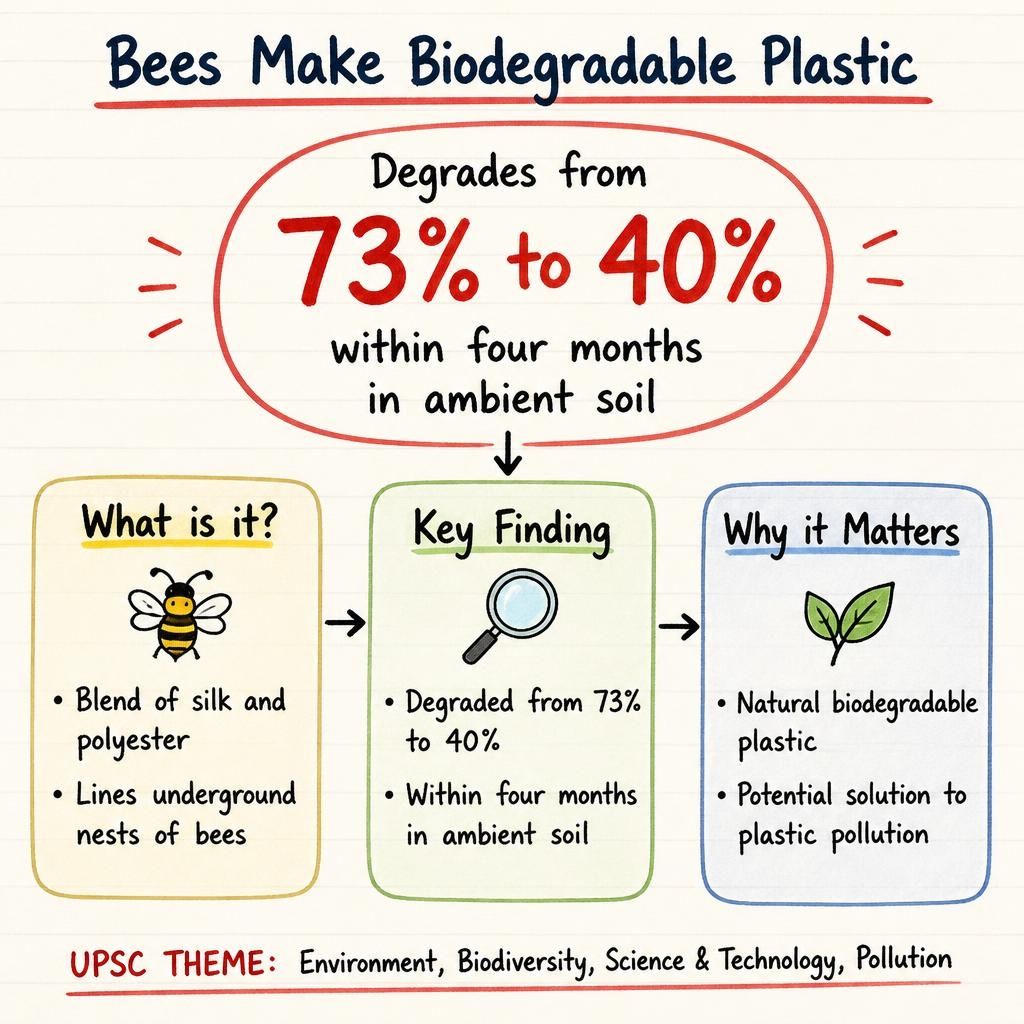
Biodegradable Plastic.jpg
Detailed Insights:
- The research involved collecting nest linings from Colletes inaequalis bees in eastern Tennessee, U.S., in March 2023.
- Initially, the newly formed nest lining was flexible and could be folded without fracturing, resembling synthetic polyester.
- Upon re-examination 11 months later, the same nest linings, which then contained pollen and larvae, were found to have cracked and crumbled, indicating substantial degradation.
- Conventional plastics, such as polythene, are highly persistent in the environment for centuries due to their stable carbon-carbon bonds.
- Previous efforts to create biodegradable polythene-like plastics have largely failed due to issues like crystallinity and water repellency.
- Despite Colletes bees nesting annually in aggregations of over 10,000 individuals, their polyester material does not accumulate in the environment over time.
- The biodegradable material is secreted from the female bees' abdomen, highlighting a natural process for sustainable material production.
Scientific/Technical Concepts Involved:
- Biodegradation: The process by which organic substances are broken down by microorganisms into simpler, environmentally benign compounds.
- Polyester: A synthetic polymer characterized by ester functional groups, widely used in plastics, fibers, and resins.
- Polythene (Polyethylene): A common thermoplastic polymer made from ethylene, known for its durability and widespread use in packaging, contributing significantly to plastic pollution.

SuperKalam is your personal mentor for UPSC preparation, guiding you at every step of the exam journey.
Download the App


STUDY RESOURCES
CONTACT US
ⓒ Snapstack Technologies Private Limited