GS 2: GovernanceGS 1: Indian SocietyGS 2: Social JusticePrelimsGS 2: Important International Institutions, Agencies and Fora
WHO underlines rise in obesity among children, issues guidelines, Pg14
WHO issues new guidelines addressing alarming rise in childhood obesity, recommending against weight-loss drugs and bariatric surgery for young children.
Practice MCQs
847 Students attempted
Key Highlights:
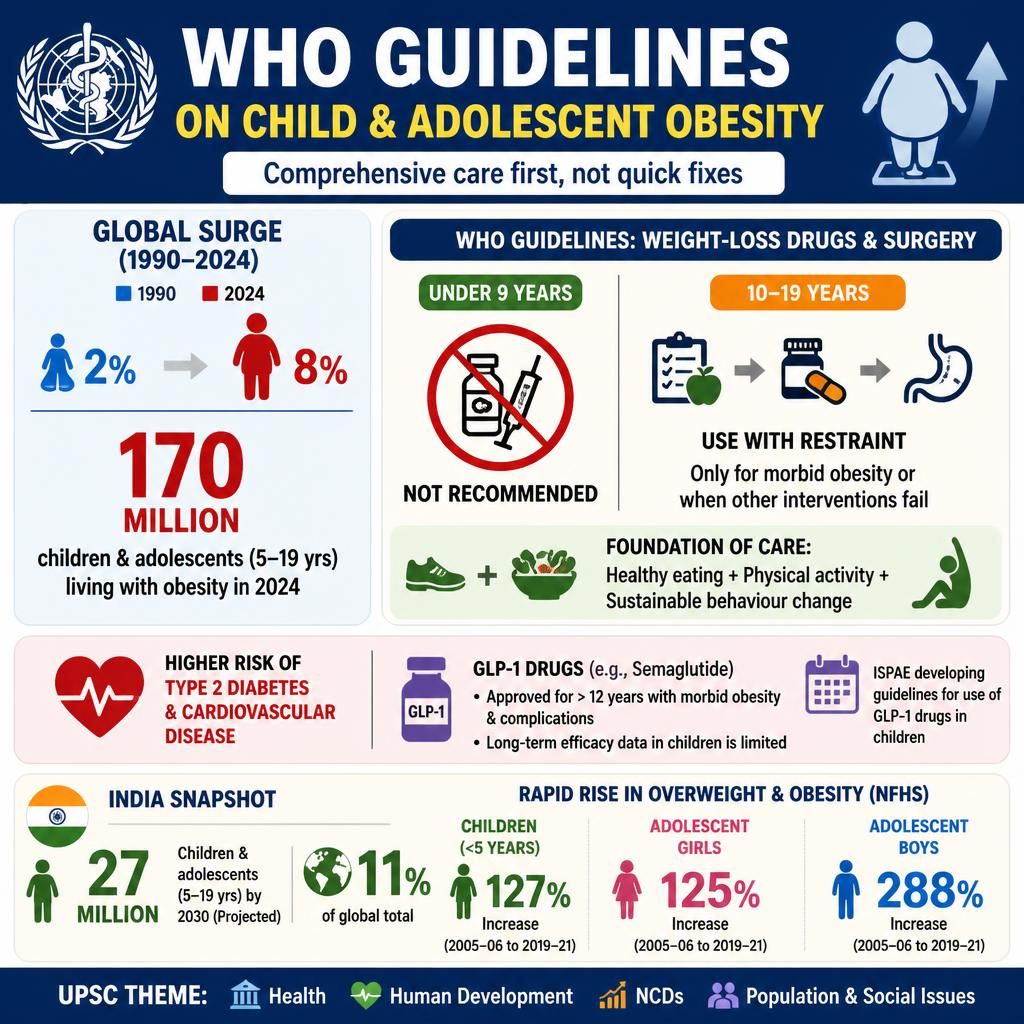
- The World Health Organization (WHO) released new guidelines addressing the rise in obesity among children and adolescents.
- The guidelines recommend against weight-loss drugs and bariatric surgery for children under nine years old.
- For adolescents aged 10-19, restraint is advocated for such practices, with drugs and surgery considered only for morbid obesity or when other interventions fail.
- Global childhood and adolescent obesity quadrupled since 1990, rising from 2% to 8%.
- In 2024, 170 million children and adolescents aged 5-19 years were living with obesity worldwide.
- India's burden of obese children and adolescents (5-19 years) is projected to reach 27 million by 2030, accounting for 11% of the global total.
Obesity Guidelines.jpg
Detailed Insights:
- The WHO emphasizes that the foundation of obesity care for children and adolescents is comprehensive support, healthy eating, physical activity, and sustainable behavior change.
- Children and adolescents with obesity face an increased risk of non-communicable diseases like type 2 diabetes and cardiovascular disease.
- The Indian Society for Paediatric and Adolescent Endocrinology (ISPAE) is developing guidelines for the use of GLP-1 drugs in children.
- GLP-1 drugs like semaglutide are approved for children over 12 with morbid obesity and complications, but long-term data on their efficacy in children is limited.
- India's National Family Health Survey (NFHS) data indicates a 127% increase in overweight and obesity among children under five between 2005-06 and 2019-21.
- Adolescent girls and boys in India have seen a 125% and 288% increase in overweight and obesity, respectively, during the same period.
- Bariatric surgery is generally not recommended for children due to potential growth impairment.
Scientific/Technical Concepts Involved:
- Obesity: A chronic disease characterized by excessive body fat accumulation that can impair health.
- Bariatric Surgery: Surgical procedures that modify the digestive system to induce weight loss, typically for severe obesity.
- GLP-1 drugs: A class of medications that mimic a natural hormone to regulate blood sugar, slow gastric emptying, and reduce appetite, primarily used for type 2 diabetes and weight management.

SuperKalam is your personal mentor for UPSC preparation, guiding you at every step of the exam journey.
Download the App


STUDY RESOURCES
CONTACT US
ⓒ Snapstack Technologies Private Limited