GS 2: GovernanceGS 1: Indian SocietyGS 1: Art & CultureGS 3: EconomyPrelims
Handloom — weaving India’s heritage into global growth, Pg8
India's handloom sector, a strategic asset, is poised for global growth, driving women-led development and rural entrepreneurship through government initiatives.
Practice MCQs
826 Students attempted
Key Highlights:
- India observed the 12th National Handloom Day on August 7th, recognizing handloom as a strategic sector for future growth.
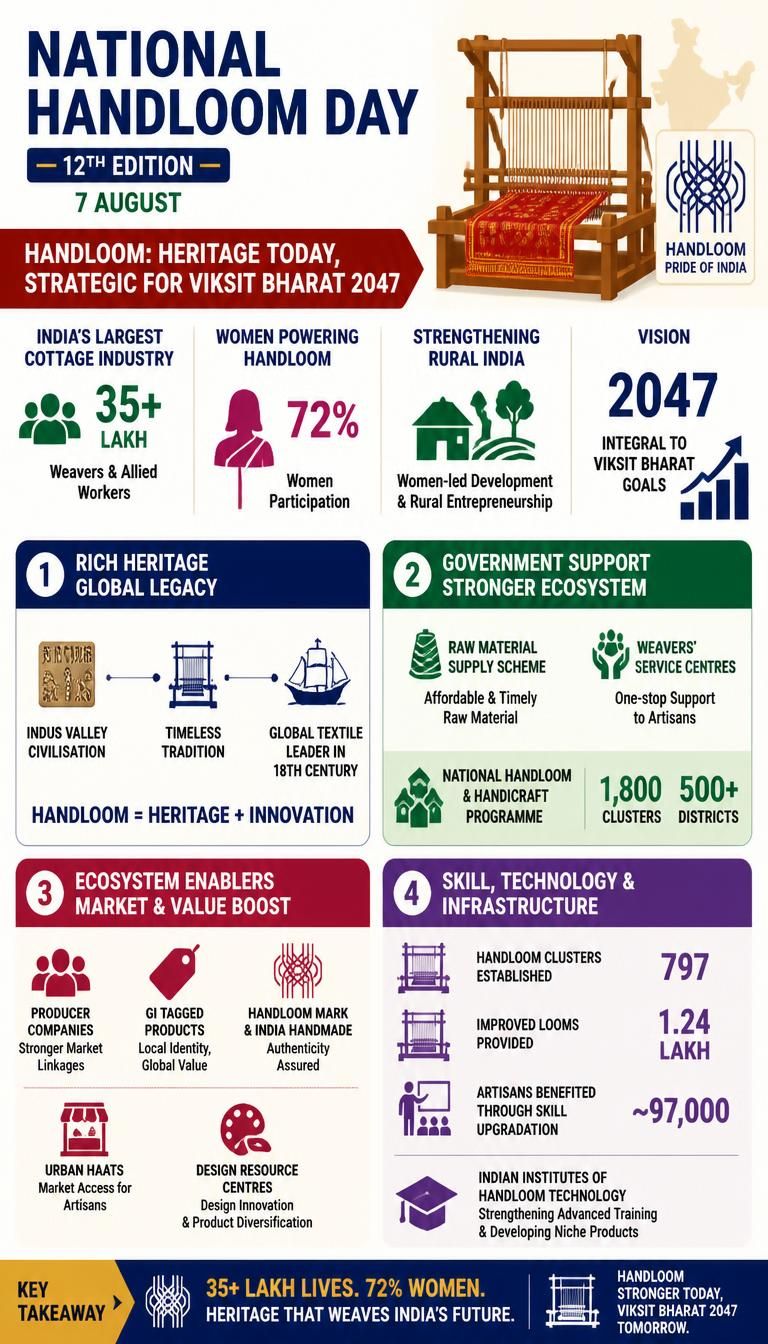
- The handloom sector is India’s largest cottage industry, supporting over 35 lakh weavers and allied workers, with 72% being women.
- The government aims to integrate handloom into the Viksit Bharat 2047 vision, emphasizing sustainability, authenticity, and global competitiveness.
- Initiatives like the Raw Material Supply Scheme and Weavers’ Service Centres provide comprehensive support to artisans.
- The forthcoming National Handloom and Handicraft Programme will strengthen 1,800 clusters across more than 500 districts.
Handloom.jpg
Detailed Insights:
- Handloom embodies a blend of heritage and innovation, driving women-led development and rural entrepreneurship.
- India has a rich handloom legacy, dating from the Indus Valley Civilisation to its global textile dominance in the 18th century.
- Government efforts include establishing 797 handloom clusters and providing over 1.24 lakh improved looms.
- Skill upgradation programs have benefited nearly 97,000 artisans, enhancing their craftsmanship.
- Producer Companies, GI Tagged products, Handloom Mark, and India Handmade certifications boost product value and authenticity.
- Urban Haats and Design Resource Centres facilitate market access and foster design innovation.
- Weavers’ Service Centres offer training, upskilling, design development, and raw material assistance.
- Indian Institutes of Handloom Technology are being strengthened to expand advanced training and develop niche products.
- Innovations like Ambar Charkha, Maina Loom, and Chitranjan Handloom have improved weaving efficiency and productivity.
- The Centre of Excellence for Handloom Technology, in collaboration with IITs, develops ergonomic and accessible looms.
- Handloom 4.0 utilizes digital tools and Artificial Intelligence for monitoring productivity, quality, and maintenance.
- Platforms such as VisioNXT help forecast demand, identify design trends, and connect weavers directly with global markets.
- Product diversification into premium silk, natural, and sustainable fibers aims to create high-value products and new markets.
- The long-term vision is to enable weavers to achieve a dignified income, targeting ₹50,000 per month.
Key Concepts Involved:
- Viksit Bharat 2047: A national vision for India to become a developed nation by its 100th year of independence.
- GI Tag (Geographical Indication Tag): A sign used on products that have a specific geographical origin and possess qualities or a reputation due to that origin.
- Producer Companies: A legal entity allowing primary producers, such as artisans, to form a company for better market access and value addition.
- Handloom Mark / India Handmade: Certification labels ensuring the authenticity and quality of handwoven products, promoting consumer trust.

SuperKalam is your personal mentor for UPSC preparation, guiding you at every step of the exam journey.
Download the App


STUDY RESOURCES
CONTACT US
ⓒ Snapstack Technologies Private Limited