GS 2: GovernanceGS 3: Environment & EcologyGS 3: EconomyPrelimsGS 3: Infrastructure: Energy, Ports, Roads, Airports, Railways etc.
Ethanol policy must count in water, sustainability costs, Pg15
India's ambitious E20 ethanol policy requires urgent re-evaluation of water footprint, environmental costs, and subsidies for long-term sustainability beyond blending targets.
Practice MCQs
826 Students attempted
Key Highlights:
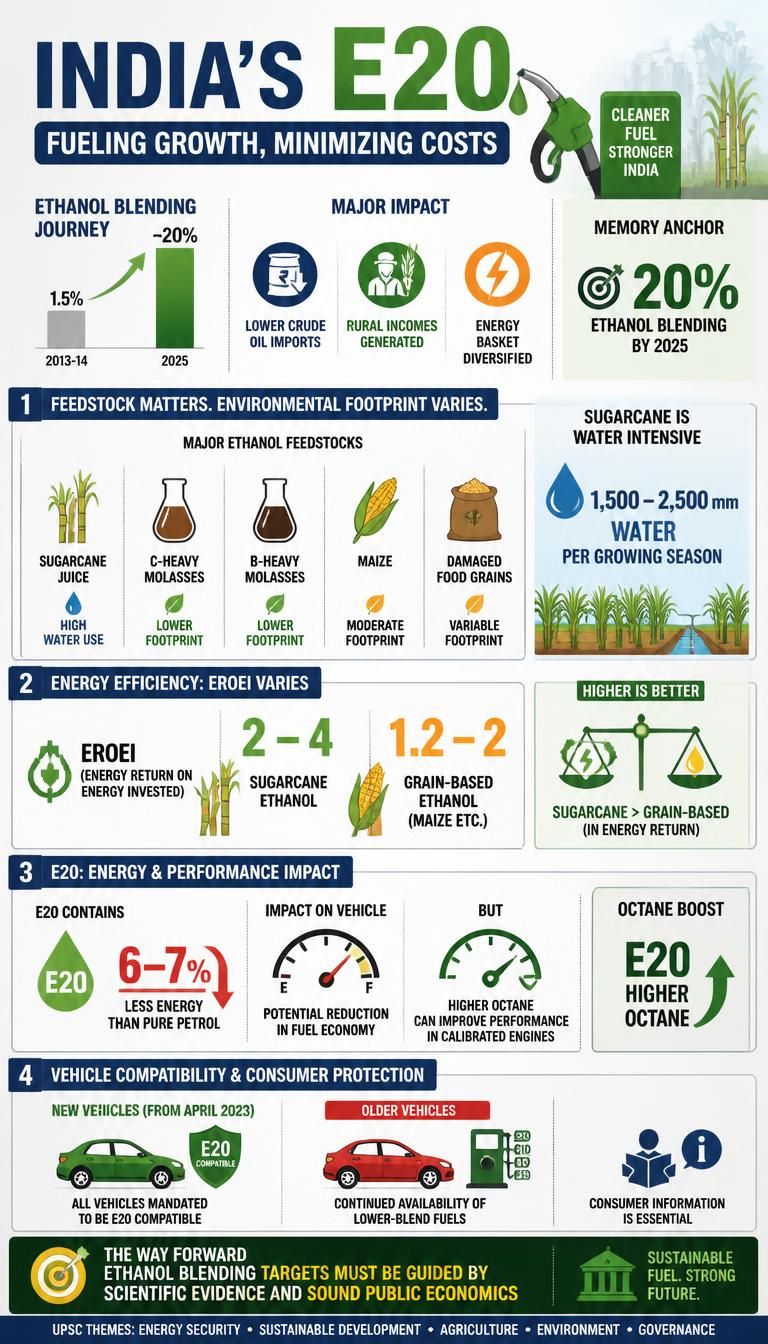
- India's E20 petrol rollout is an ambitious biofuel initiative, with ethanol blending increasing from 1.5% in 2013-14 to nearly 20% in 2025.
- The program has successfully reduced crude oil imports, generated rural incomes, and diversified the country’s energy basket.
- The article highlights concerns about the sustainability of ethanol production, particularly its significant water footprint and varying environmental impact based on feedstock.
- Sugarcane, a primary feedstock for ethanol, is highly water-intensive, requiring 1,500–2,500 mm of water per growing season.
- Policy decisions for ethanol blending should be guided by scientific evidence and sound public economics rather than solely by blending targets.
E20.jpg
Detailed Insights:
- Ethanol is produced from various feedstocks including C-heavy molasses, B-heavy molasses, sugarcane juice, maize, and damaged food grains, each with a different environmental footprint.
- The Energy Return on Energy Invested (EROEI) for sugarcane ethanol is typically 2-4, while grain-based ethanol ranges from 1.2-2, indicating varying energy efficiency.
- E20 fuel contains 6-7% less energy than pure petrol, potentially reducing fuel economy, though higher octane can offset this in calibrated engines.
- Vehicles manufactured from April 2023 are mandated to be E20 compatible, but older vehicles require continued availability of lower-blend fuels and consumer information.
- Climate benefits of ethanol must be assessed through a life-cycle assessment, considering emissions from cultivation, processing, and transport, as it is not inherently carbon neutral.
- Producing one litre of sugarcane ethanol can embody 2,000–3,500 litres of water, posing a significant challenge in India's water-stressed regions.
- Subsidies for electricity and urea encourage unsustainable practices like excessive groundwater extraction and overuse of nitrogen fertilizers in sugarcane cultivation.
- The article suggests reforming subsidies to support farmers directly through income transfers and allowing market-reflective pricing for resources.
- Investment in second-generation ethanol derived from agricultural residues and non-food biomass is crucial to reduce pressure on land and water resources.
Key Concepts Involved:
- E20 petrol: A motor fuel blend consisting of 20% ethanol and 80% gasoline.
- Energy Return on Energy Invested (EROEI): A ratio that compares the amount of energy delivered by a system to the amount of energy consumed to deliver that energy.
- Life-cycle assessment: A comprehensive method to evaluate the environmental impacts of a product or system throughout its entire life cycle, from raw material extraction to disposal.
- Second-generation ethanol: Biofuel produced from non-food biomass sources such as agricultural residues, wood, or dedicated energy crops.

SuperKalam is your personal mentor for UPSC preparation, guiding you at every step of the exam journey.
Download the App


STUDY RESOURCES
CONTACT US
ⓒ Snapstack Technologies Private Limited