GS 3: Science & TechnologyGS 1: Indian SocietyGS 2: Social JusticePrelimsGS 2: Health Sector
What a new global study reveals about women and how they experience pain, Pg II
Global study reveals women report significantly more intense and widespread pain across 11 anatomical sites than men, highlighting critical health disparities and under-recognition.
Practice MCQs
840 Students attempted
Key Highlights:
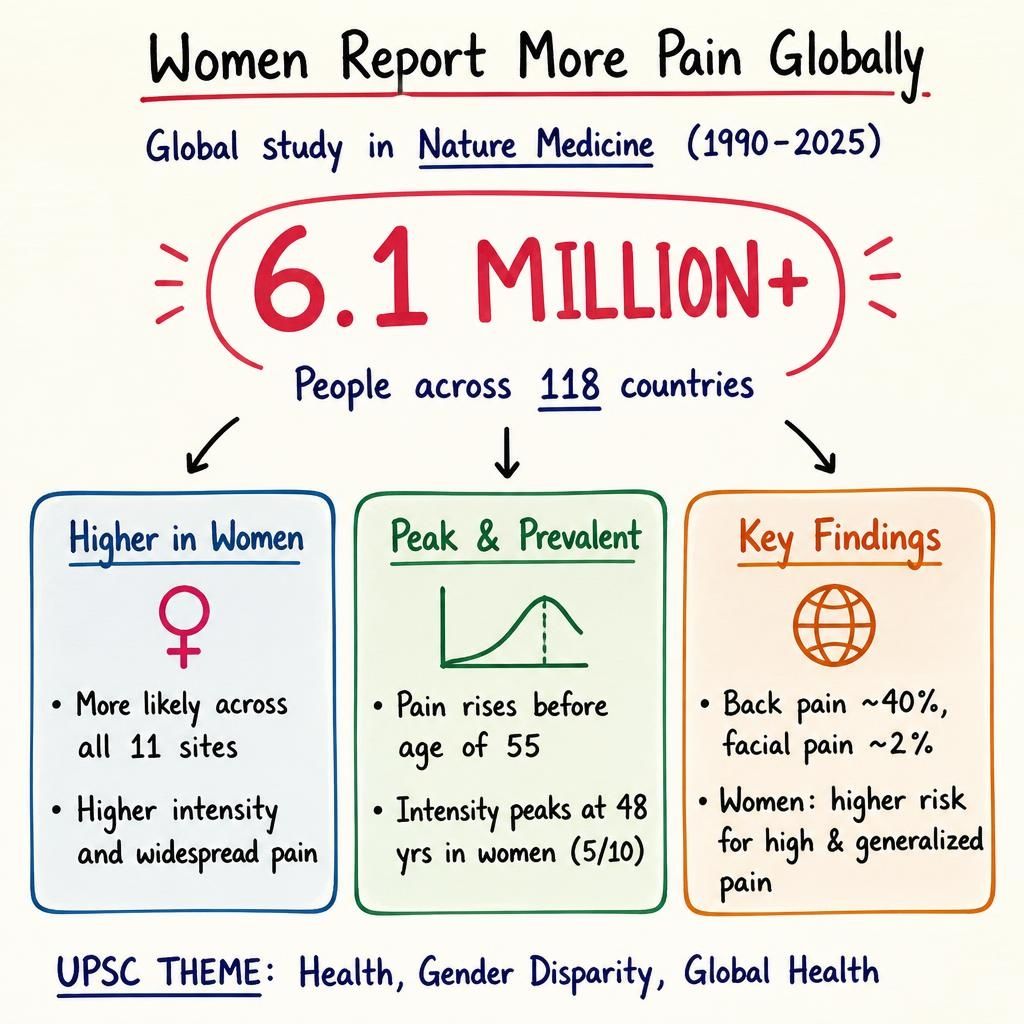
- A global study published in Nature Medicine involving over 6.1 million people across 118 countries revealed that women are more likely than men to report pain across all 11 anatomical sites examined.
- Differences in pain prevalence were particularly pronounced for facial pain (83% higher), headaches (74% higher), and abdominal pain (60% higher) in women compared to men.
- Women also reported higher intensity and more widespread pain, indicating a disparity beyond just the occurrence of pain.
- The findings align with observations from India, where studies consistently show a higher prevalence of chronic and musculoskeletal pain among women.
- The study found that pain prevalence generally rose sharply before the age of 55, with average pain intensity peaking around 48 years for women (5 on a 10-point scale) and 4.6 for men.
Pain Research.jpg
Detailed Insights:
- The research analyzed individual-level data collected between 1990 and 2025 from participants aged five to over 100 years.
- The 11 anatomical sites included the head, face, neck or shoulder, back, chest, abdomen, hip, knee, hand or wrist, elbow, and foot or ankle.
- Back pain was the most commonly reported, affecting about 40% of the study population, while facial pain was reported by approximately 2%.
- Women had a relative risk of 1.52 for high-intensity pain and 1.50 for generalized pain compared to men.
- The reasons for the gender disparity in pain are complex, involving biological influences, hormonal changes (like estrogen and progesterone), prevalence of specific pain conditions (e.g., migraine, fibromyalgia), and social/occupational demands.
- Historically, women's pain has often been under-recognized, misunderstood, or inadequately treated, sometimes attributed to psychological factors without sufficient clinical evaluation.
- Social factors such as balancing paid employment with household work, childcare, and caregiving responsibilities can exacerbate pain experiences for women.
- Poor nutrition and iron-deficiency anaemia can contribute to fatigue and reduced functional capacity, further impacting daily life for women.
- Significant differences were observed across countries with varying levels of Human Development Index (HDI), with higher pain prevalence in older individuals in lower HDI countries.
- Experts emphasize that these findings do not suggest lower pain tolerance in women but highlight the need for greater attention to pain across the lifespan and further research into contributing factors.
Key Concepts Involved:
- Nature Medicine: A monthly peer-reviewed medical journal publishing original research across all aspects of medicine, known for its high impact in biomedical science.
- Human Development Index (HDI): A composite index developed by the United Nations Development Programme (UNDP) measuring average achievement in three key dimensions of human development: a long and healthy life, access to knowledge, and a decent standard of living.
- Chronic Pain: Pain that persists or recurs for longer than three to six months, often continuing beyond the usual recovery time from injury or illness.

SuperKalam is your personal mentor for UPSC preparation, guiding you at every step of the exam journey.
Download the App


STUDY RESOURCES
CONTACT US
ⓒ Snapstack Technologies Private Limited