GS 2: GovernanceGS 2: International RelationsGS 3: Environment & EcologyPrelimsGS 2: Development Processes and Role of NGOs, SHGs and Other Stakeholders
From India to Global South, a Gujarat water-governance model, Pg14
India's Gujarat-born water governance model, emphasizing political will and community participation, offers crucial lessons for the Global South to achieve water security.
Practice MCQs
833 Students attempted
Key Highlights:
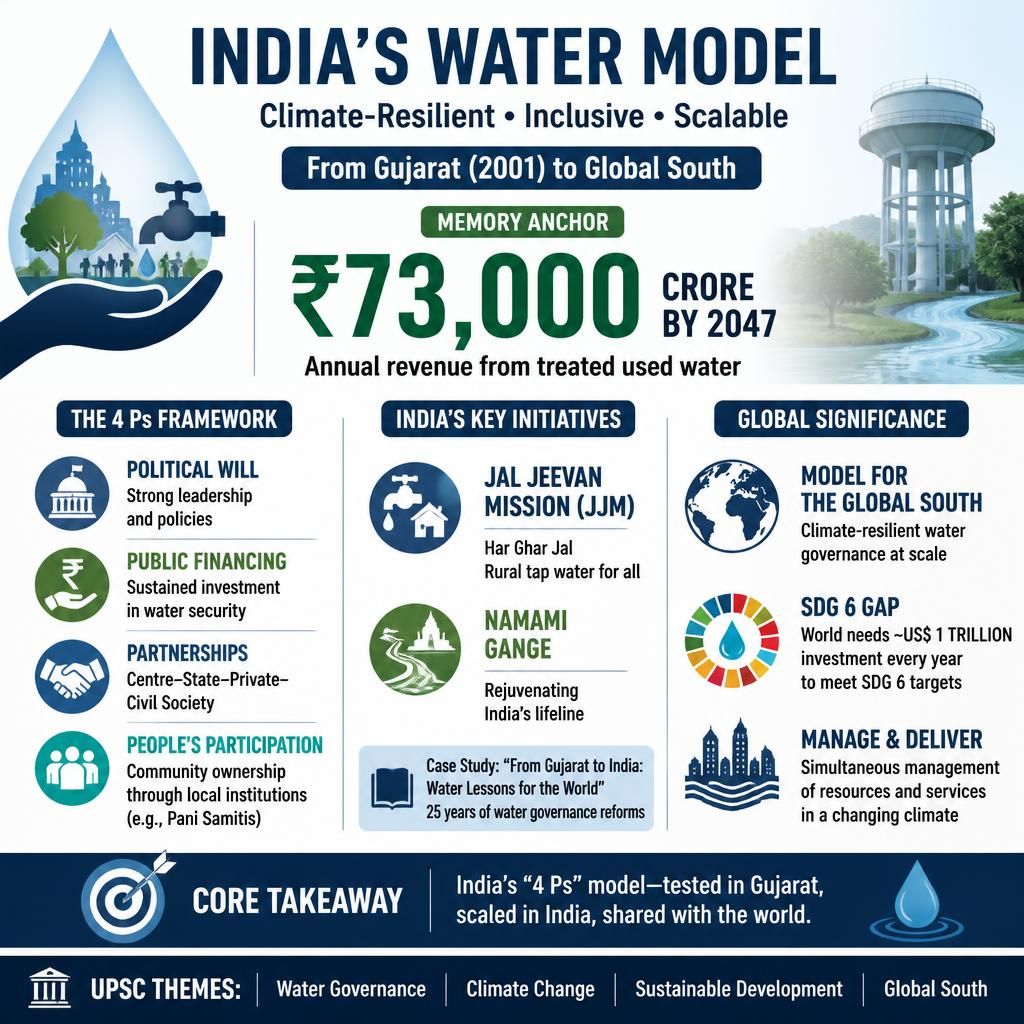
- The ninth India International Water Week focused on climate-resilient water management, showcasing India's model for the Global South.
- India's water governance journey, particularly from Gujarat (2001-2014), is presented as a blueprint for other developing nations.
- Key national initiatives like Jal Jeevan Mission (JJM) and Namami Gange exemplify this model's successful implementation.
- A case study, "From Gujarat to India: Water Lessons for the World," documents 25 years of water governance reforms.
- The model emphasizes political will, public financing, partnerships, and people's participation, known as the "4 Ps."
India's Water Model.jpg
Detailed Insights:
- India has transformed its approach to water management, moving from vulnerability to preparing for climate extremes like floods and droughts.
- The period between 2001 and 2014 in Gujarat served as a testing ground for water governance reforms later scaled nationally.
- The "4 Ps" framework, articulated in the Delhi Declaration in October 2018, guides the implementation of water security at scale.
- This framework integrates political leadership, public and private financing, multi-level partnerships, and community engagement.
- Simultaneous management of water resources and service delivery is crucial for sustainable development, especially in rapidly urbanizing regions.
- India anticipates an annual market revenue of approximately Rs 73,000 crore by 2047 from the sale of treated used water.
- Community ownership, fostered by local institutions like Pani Samitis, is essential for effective water conservation and access.
- The global community is significantly behind on achieving SDG 6, requiring substantial annual investment to meet its targets.
Key Concepts Involved:
- India International Water Week: A biennial event promoting water conservation, management, and sustainable use.
- SDG 6: The United Nations Sustainable Development Goal aiming to ensure availability and sustainable management of water and sanitation for all.
- Jal Jeevan Mission (JJM): A flagship Indian government initiative to provide safe and adequate drinking water through individual household tap connections by 2024.
- Pani Samitis: Village-level committees responsible for planning, implementing, and managing rural water supply infrastructure and services.
- Delhi Declaration: A joint statement by India and the UN, outlining a framework for water governance based on the "4 Ps."

SuperKalam is your personal mentor for UPSC preparation, guiding you at every step of the exam journey.
Download the App


STUDY RESOURCES
CONTACT US
ⓒ Snapstack Technologies Private Limited