GS 3: EconomyPrelimsGS 3: Buffer Stocks and Food SecurityGS 3: Farm Subsidies and Minimum Support PricesGS 3: Government Budgeting
India's Rising Subsidy Bill, Pg11
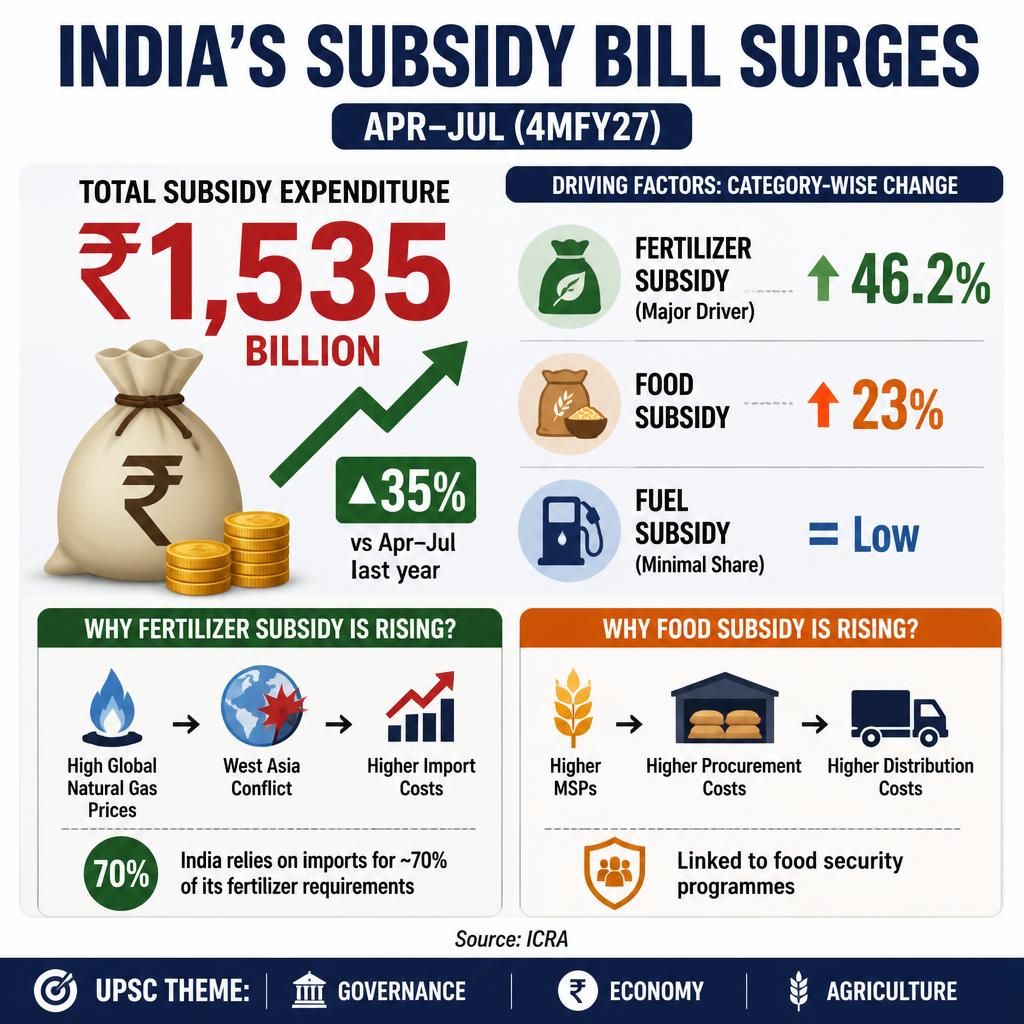
India's subsidy bill surged 35% to Rs 1,535 billion in 4MFY27, driven by a 46.2% jump in fertilizer subsidies amid West Asia conflict.
Practice MCQs
826 Students attempted
Key Highlights:
- India's total subsidy bill increased by 35% in the first four months of the ongoing financial year (4MFY27) compared to the same period last year.
- The total subsidy expenditure reached Rs 1,535 billion during this period.
- This surge was primarily driven by a 46.2% rise in fertilizer subsidies, influenced by the ongoing conflict in West Asia.
- Food subsidies also saw a significant increase of 23%.
- Fuel subsidies constituted a minimal share of the total subsidy bill.
- The data was reported by ICRA, an Investment Information and Credit Rating Agency.
Subsidy Bill.jpg
Detailed Insights:
- The substantial increase in fertilizer subsidies is largely attributed to elevated global prices of raw materials, such as natural gas, which are critical for fertilizer production.
- Geopolitical tensions, particularly the West Asia conflict, have disrupted global energy supply chains, leading to higher import costs for India, which is a major importer of fertilizers and their raw materials.
- India's significant reliance on overseas supplies for approximately 70% of its fertilizer requirements makes its subsidy expenditure vulnerable to international market fluctuations.
- Rising food subsidies are often a result of increased Minimum Support Prices (MSPs) for agricultural produce and higher procurement and distribution costs under food security programs.
- Food subsidies are essential for maintaining food security and are primarily channeled through the Public Distribution System (PDS), mandated by the National Food Security Act (NFSA) 2013.
- A growing subsidy bill can exert pressure on the government's fiscal targets, potentially impacting the fiscal deficit.
- The minimal contribution of fuel subsidies suggests either stable international crude oil prices during the period or a strategic shift in government policy regarding direct fuel price support.
Key Concepts Involved:
- Subsidies: Financial assistance provided by the government to reduce the cost of goods or services for producers or consumers.
- Fiscal Deficit: The difference between the government's total expenditure and its total revenue, excluding borrowings.
- National Food Security Act (NFSA) 2013: A landmark legislation that legally entitles a significant portion of India's population to receive subsidized foodgrains.
- Minimum Support Price (MSP): A guaranteed price set by the government for certain agricultural crops to protect farmers from price fluctuations and ensure remunerative prices.
- Public Distribution System (PDS): A government-sponsored network of fair price shops that distribute essential food and non-food items at subsidized rates to eligible beneficiaries.
Previous10/10

SuperKalam is your personal mentor for UPSC preparation, guiding you at every step of the exam journey.
Download the App


STUDY RESOURCES
CONTACT US
ⓒ Snapstack Technologies Private Limited