GS 3: EconomyGS 2: GovernancePrelimsGS2: Union State Relations and Federal StructureGS2: Government policies and interventions for development in various sectors
Next-Gen GST and India’s next phase of growth, Pg11
Next-Gen GST reforms, including rate rationalization and easier compliance, drive significant economic growth and boost state revenues, fostering a Viksit Bharat.
Practice MCQs
826 Students attempted
Key Highlights:
- The Next-Gen GST reforms, effective September 22, 2025, aim to simplify indirect taxation and boost India's economic growth towards becoming a Viksit Bharat.
- The reforms focus on reducing and rationalizing tax rates and easing compliance for taxpayers.
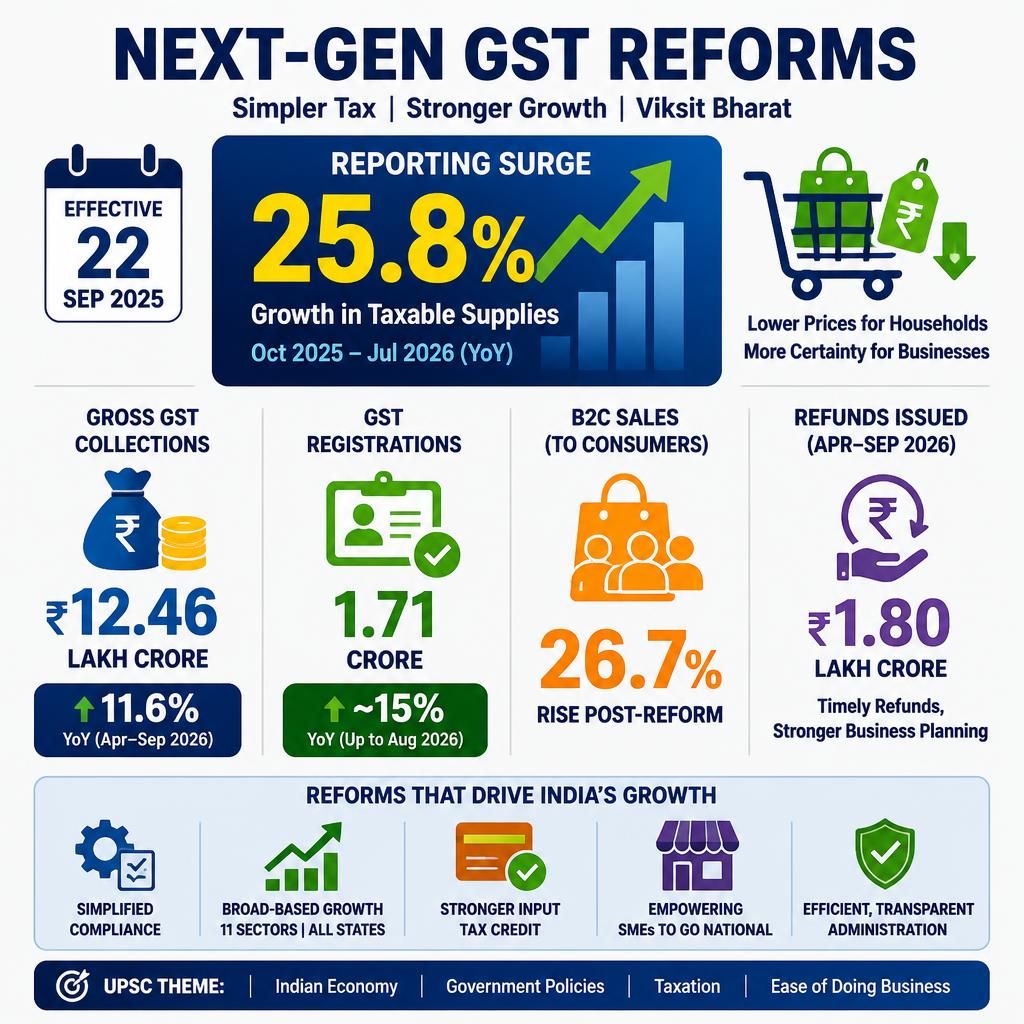
- Between October 2025 and July 2026, reported taxable supplies grew by 25.8% year-on-year.
- Gross GST collections reached ₹12.46 lakh crore during April-September 2026, marking an 11.6% increase over the previous year.
- GST registrations across Central and State jurisdictions increased by nearly 15% to approximately 1.71 crore by August 2026.
GST Reforms.jpg
Detailed Insights:
- The Next-Gen GST initiative was conceived under Prime Minister Narendra Modi's vision to foster an economy where enterprises of all sizes can thrive.
- The reforms are designed to provide relief to households through lower prices and greater certainty for businesses.
- The expansion in reported economic activity was broad-based, covering all 11 sector groups and major States.
- Reported sales to consumers (B2C) also saw a significant rise of 26.7% post-reform, indicating increased purchasing power.
- The simplified administration aims to help small and medium enterprises (SMEs) access a national market beyond their local surroundings.
- Improvements in the Input Tax Credit mechanism show a higher share of tax liability discharged through credits and a decline in accumulated credit relative to taxable supplies.
- Approximately ₹1.80 lakh crore was refunded during April-September 2026, highlighting the importance of timely refunds for business planning.
- States have experienced a stronger revenue position, with aggregate SGST receipts growing by about 16% during April-September 2026, supporting infrastructure and public services.
- Future proposals before the GST Council on October 7 will address registration, returns, refunds, disputes, and Input Tax Credit flow to further reduce compliance costs.
Key Concepts Involved:
- Goods and Services Tax (GST): A comprehensive indirect tax levied on the supply of goods and services across India, replacing multiple cascading taxes.
- Viksit Bharat: The Government of India's vision to transform India into a developed, self-reliant, and prosperous nation by 2047, the 100th anniversary of its independence.
- GST Council: A constitutional body established under Article 279A of the Indian Constitution, responsible for making recommendations on all key issues related to GST.
- Input Tax Credit (ITC): A mechanism under GST that allows registered businesses to claim credit for the tax paid on inputs (goods or services) used in the course of their business, reducing their overall tax liability.

SuperKalam is your personal mentor for UPSC preparation, guiding you at every step of the exam journey.
Download the App


STUDY RESOURCES
CONTACT US
ⓒ Snapstack Technologies Private Limited