GS 2: International RelationsGS 3: EconomyPrelimsGS2: Bilateral, Regional and Global Groupings and AgreementsGS2: Effect of Policies and Politics of Developed and Developing Countries on India's Interests
In trade deal with US, India needs to secure terms harder to reverse, Pg10
India-US trade deal stalls over unpredictable US tariffs; New Delhi seeks irreversible terms for stable economic advantage and sector-specific exemptions.
Practice MCQs
826 Students attempted
Key Highlights:
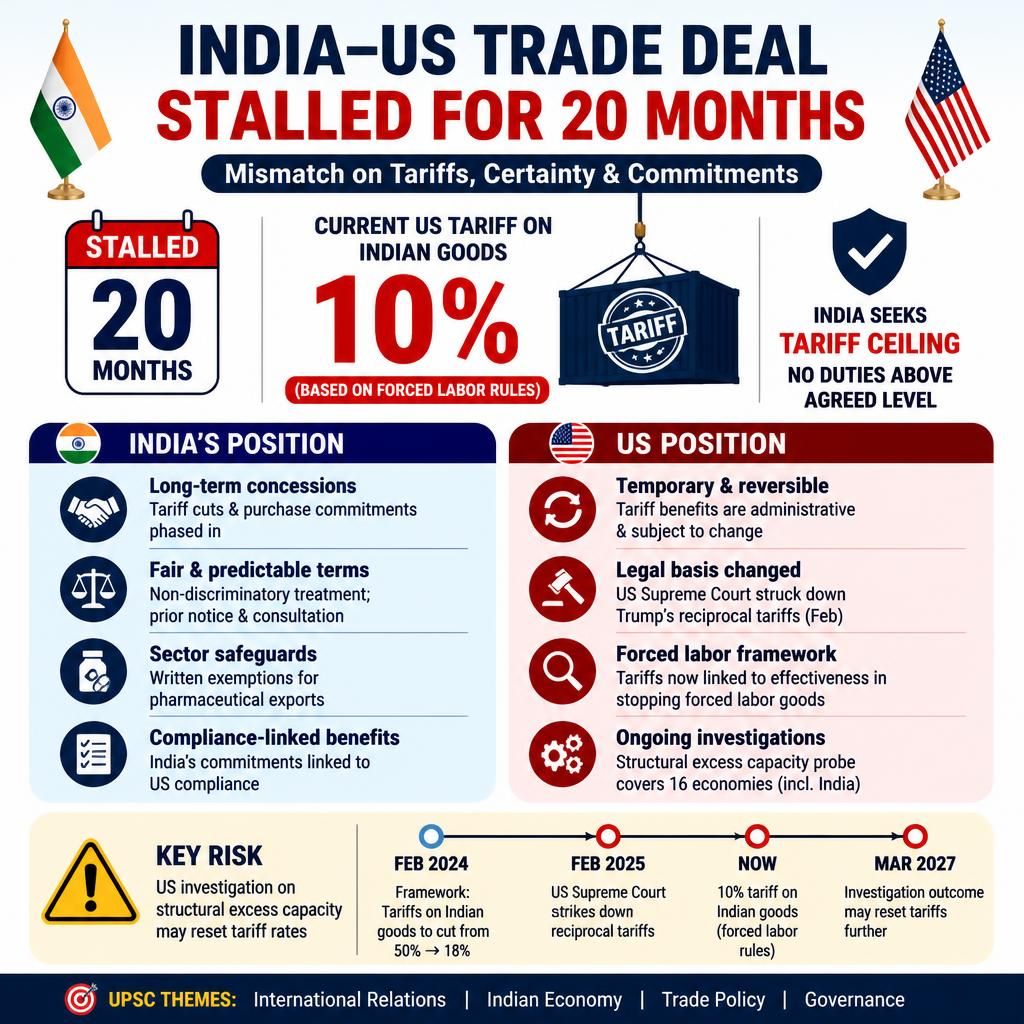
- The interim trade deal between India and the US has been stalled for 20 months, facing multiple delays.
- India is concerned about the temporary and reversible nature of tariff advantages offered by the US.
- US tariff rates on Indian goods have fluctuated, currently set at 10% based on forced labor regulations.
- India's proposed concessions, such as tariff cuts and purchase commitments, are long-term, while US tariff benefits are administrative and subject to change.
India-US Trade Deal.jpg
Detailed Insights:
- The initial framework in February aimed to reduce US tariffs on Indian goods from 50% to 18%, but the legal basis for this changed rapidly.
- The US Supreme Court struck down Trump's reciprocal tariffs in February, which were imposed under an emergency law.
- New US tariffs are now based on a country's effectiveness in preventing goods made with forced labor from entering its market.
- India seeks a tariff ceiling from the US, ensuring duties on Indian goods do not exceed an agreed level for the deal's duration.
- New Delhi also aims for non-discriminatory treatment compared to competitors and prior notice and consultation for any new tariffs affecting India.
- India proposes sector-specific exemptions, particularly for pharmaceutical exports, to be written into the agreement.
- India suggests phasing in its own tariff cuts and purchase commitments, linking them to US compliance with agreed terms.
- A separate US investigation into structural excess capacity involving 16 economies, including India, could further reset tariff rates by March 2027.
Key Concepts Involved:
- Tariff: A tax or duty to be paid on a particular class of imports or exports.
- Forced Labor: Work or service exacted from any person under the menace of any penalty and for which the person has not offered himself voluntarily.
- Structural Excess Capacity: A situation where a country's industrial production capacity significantly exceeds its domestic demand, often leading to oversupply in global markets.

SuperKalam is your personal mentor for UPSC preparation, guiding you at every step of the exam journey.
Download the App


STUDY RESOURCES
CONTACT US
ⓒ Snapstack Technologies Private Limited