GS 2: GovernanceGS 2: PolityGS 3: EconomyPrelimsGS 3: Indian Economy, Planning, Mobilization of Resources, Growth, Development and Employment
A BIT of a reset, with a wider debate, Pg6
India revisits its 2015 Model Bilateral Investment Treaty, seeking balance and addressing 'democratic deficit' through wider public and parliamentary consultation.
Practice MCQs
819 Students attempted
Key Highlights:
- India is currently revising its Model Bilateral Investment Treaty (BIT), following an announcement by Finance Minister Nirmala Sitharaman in the 2025 Union Budget.
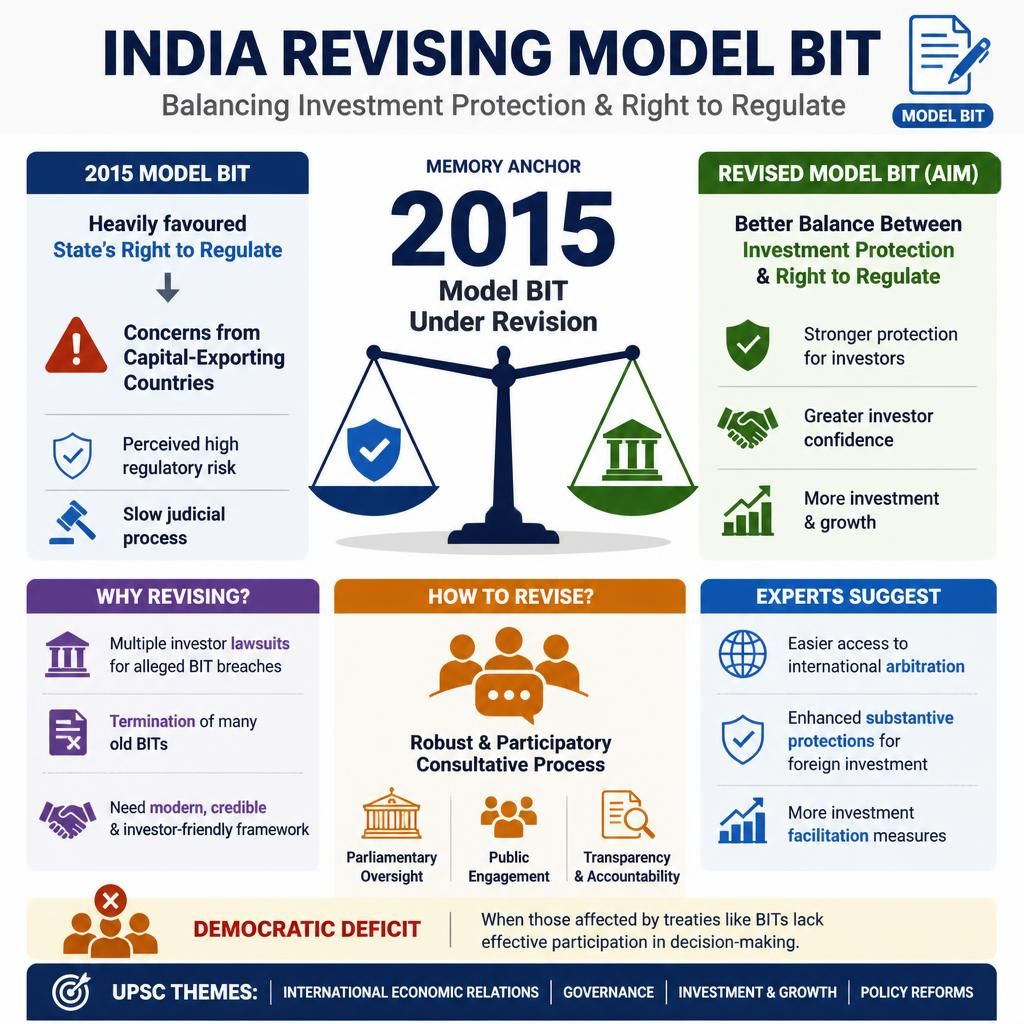
- The 2015 model was criticized for heavily prioritizing the state's right to regulate, leading to concerns among capital-exporting countries regarding investment protection.
- The revision aims to achieve a better balance between investment protection and the state's right to regulate.
- The article emphasizes the need for a robust and participatory consultative process, including parliamentary oversight and public engagement, to avoid a "democratic deficit."
BIT Model.jpg
Detailed Insights:
- The decision to revamp the 2015 model stems from a broader appraisal initiated after India faced multiple lawsuits from foreign investors for alleged BIT breaches.
- The previous appraisal led to the unilateral termination of many existing BITs and the adoption of the 2015 model as a basis for new negotiations.
- The 2015 model's imbalance created doubts among foreign investors due to perceived high regulatory risks and a slow judicial system in India.
- Experts suggest reforms such as easier access to international arbitration, enhanced substantive protections for foreign investment, and more investment facilitation measures.
- The concept of "democratic deficit" arises when those affected by international economic treaties, like BITs, lack effective participation in decision-making.
- Countries like the UK and Australia mandate parliamentary review of negotiated treaties, while Norway and Colombia conducted public consultations for their model BITs.
- India previously circulated its 2015 draft model BIT for public comment, leading to recommendations from the Law Commission of India (LCI) in its 260th report.
- A proposed consultative process for the new model includes engaging external experts, industry bodies, law firms, and civil society organizations.
- The draft model should be placed in the public domain for comments and also discussed in Parliament, potentially involving relevant department-related parliamentary committees.
Key Concepts Involved:
- Bilateral Investment Treaty (BIT): An international agreement between two countries establishing the terms and conditions for private investment by nationals and companies of one country in the other.
- Democratic Deficit: A perceived shortfall in the democratic accountability and legitimacy of decision-making processes, often in international governance or treaty-making.
- State's Right to Regulate: The inherent power of a sovereign government to enact and enforce laws and regulations to protect public welfare, even if it impacts foreign investments.
- Investment Protection: Legal safeguards and guarantees provided to foreign investors by a host country, typically outlined in BITs, to ensure fair treatment and security of their investments.

SuperKalam is your personal mentor for UPSC preparation, guiding you at every step of the exam journey.
Download the App


STUDY RESOURCES
CONTACT US
ⓒ Snapstack Technologies Private Limited