GS 2: GovernanceGS 3: Environment & EcologyPrelimsGS 3: Infrastructure: Energy, Ports, Roads, Airports, Railways etc.GS 3: Conservation, Pollution and Degradation
MP: Despite Red Flags, Panel Nod for Power Project in Tiger Corridor, Pg9
NBWL panel approves Panna-Ranipur hydropower project in critical tiger corridor despite DFO's red flags, with conditions for mitigation measures.
Practice MCQs
811 Students attempted
Key Highlights:
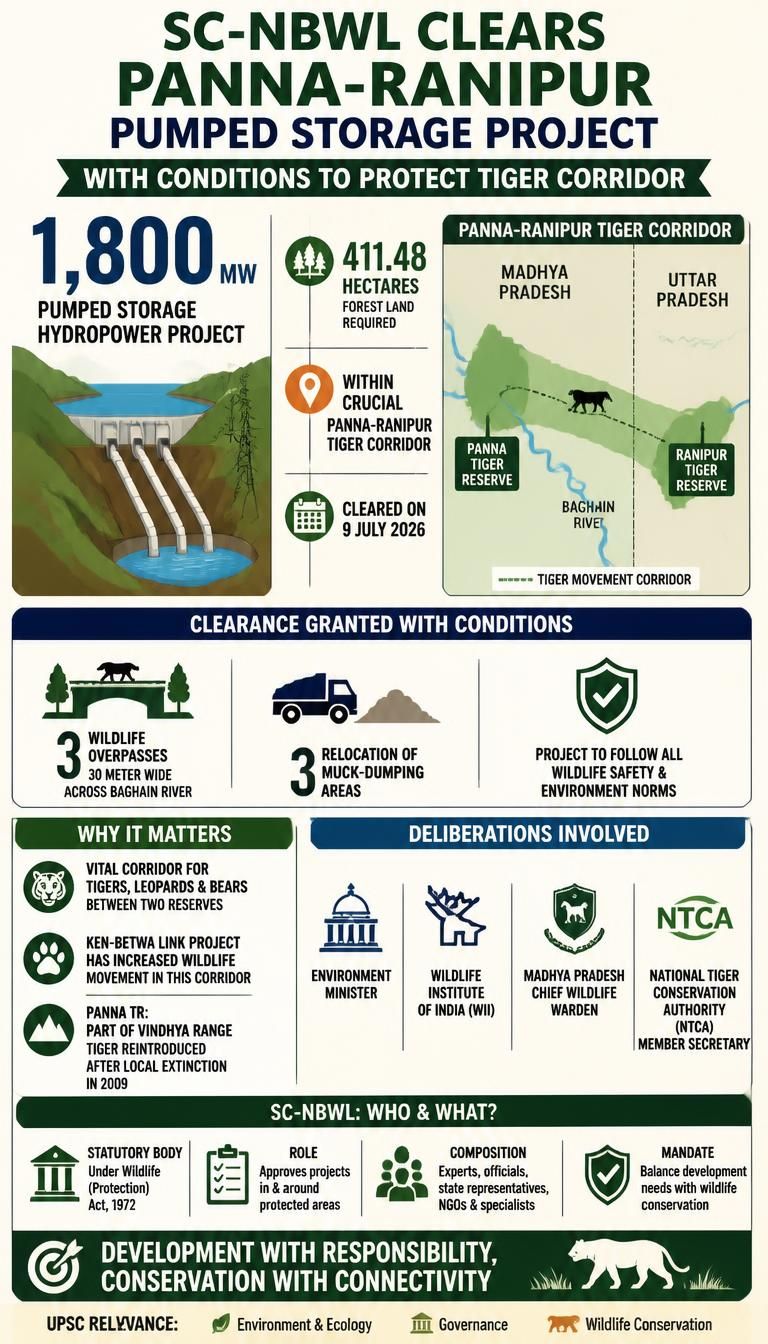
- The Standing Committee of the National Board for Wildlife (SC-NBWL) recommended clearance for the 1,800 MW Panna-Ranipur pumped storage hydropower project on July 9, 2026.
- The project requires 411.48 hectares of forest land within the crucial Panna-Ranipur tiger corridor, connecting Panna Tiger Reserve in Madhya Pradesh and Ranipur Tiger Reserve in Uttar Pradesh.
- A Madhya Pradesh Forest Department officer raised concerns about the project's location in an active tiger movement area and its potential to block the corridor.
- Clearance was granted with conditions, including the construction of three 30-meter-wide wildlife overpasses across the Baghain River and relocation of muck-dumping areas.
- Deliberations involved the Environment Minister, Director of the Wildlife Institute of India (WII), Madhya Pradesh Chief Wildlife Warden, and National Tiger Conservation Authority (NTCA) Member Secretary.
Pumped Storage Project.jpg
Detailed Insights:
- The Panna-Ranipur tiger corridor is vital for the dispersal of tigers, leopards, and bears between the two reserves.
- The SC-NBWL is a statutory body under the Wildlife (Protection) Act, 1972, responsible for approving projects in and around protected areas.
- The Ken-Betwa river-linking project has already increased wildlife activity and movement in this corridor, making its preservation even more critical.
- Panna Tiger Reserve, located in the Vindhya mountain range, is known for its successful tiger reintroduction program after a local extinction in 2009.
- Ranipur Tiger Reserve, Uttar Pradesh's fourth tiger reserve, serves as an important habitat and connectivity point for tigers from Panna.
- The mitigation measures aim to maintain the integrity of the wildlife corridor, despite concerns about habitat fragmentation.
- Pumped storage hydropower projects are crucial for grid stability, storing energy by pumping water to an upper reservoir during low demand and releasing it to generate electricity during high demand.
Key Concepts Involved:
- National Board for Wildlife (NBWL): India's apex statutory advisory body on wildlife conservation, chaired by the Prime Minister.
- Standing Committee of NBWL (SC-NBWL): A committee chaired by the Union Minister of Environment, Forest and Climate Change, exercising the full statutory powers of the NBWL for project approvals.
- National Tiger Conservation Authority (NTCA): A statutory body under the Ministry of Environment, Forest and Climate Change, responsible for Project Tiger and tiger reserve management.
- Wildlife Institute of India (WII): An autonomous institution under the MoEFCC, engaged in wildlife research, training, and advisory support for conservation.
- Wildlife Corridor: A strip of habitat connecting wildlife populations separated by human activities, crucial for genetic exchange and species dispersal.
- Pumped Storage Hydropower Project: A type of hydroelectric energy storage that moves water between two reservoirs at different elevations to store and generate electricity.

SuperKalam is your personal mentor for UPSC preparation, guiding you at every step of the exam journey.
Download the App


STUDY RESOURCES
CONTACT US
ⓒ Snapstack Technologies Private Limited