GS 2: GovernanceGS 2: Social JusticePrelimsGS 2: Government policies and interventions for development in various sectorsGS 2: Health Sector
Rising Child Leprosy Cases Challenge India’s 2027 Goal, Pg11
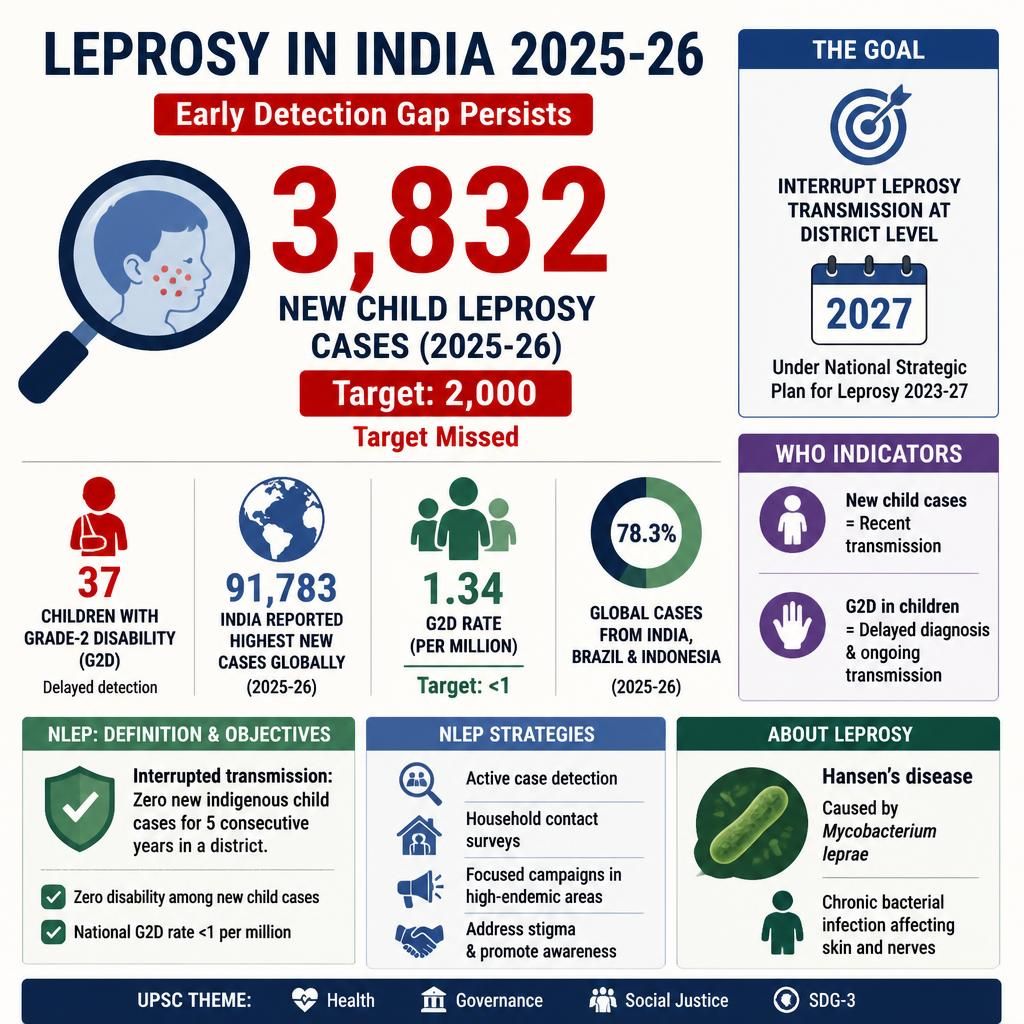
India records 3,832 new child leprosy cases, significantly exceeding targets and challenging the 2027 transmission interruption goal amidst delayed detection.
Practice MCQs
819 Students attempted
Key Highlights:
- India recorded 3,832 new child leprosy cases in 2025-26, significantly exceeding the National Leprosy Eradication Programme (NLEP) target of 2,000 cases.
- 37 children were diagnosed with Grade-2 disability (G2D), indicating delayed detection of the disease.
- The country aims to interrupt leprosy transmission at the district level by 2027 under the National Strategic Plan for Leprosy 2023-27.
- India reported the world’s largest number of new leprosy cases (91,783) and new child leprosy cases in 2025-26.
- The national G2D rate was 1.34 per million, above the NLEP target of less than one case per million.
Leprosy in India.jpg
Detailed Insights:
- The NLEP defines interrupted transmission as zero new indigenous child cases for five consecutive years in a district.
- NLEP objectives include achieving zero disability among new child cases and a national G2D rate below one case per million.
- The World Health Organisation (WHO) considers new child cases an indicator of recent transmission and G2D in children a sign of delayed diagnosis and ongoing transmission.
- India, Brazil, and Indonesia collectively accounted for 78.3% of all new leprosy cases reported globally in 2025-26.
- The Health Ministry prioritizes intensified case detection in high-endemic and hard-to-reach areas.
- NLEP strategies include active case detection, household contact surveys, focused campaigns, and addressing stigma.
- Leprosy, or Hansen’s disease, is a chronic bacterial infection caused by Mycobacterium leprae, primarily affecting skin and nerves.
- The disease is curable with multidrug therapy, emphasizing the importance of early detection.
- High-burden states include Chhattisgarh, Jharkhand, Maharashtra, Odisha, and Madhya Pradesh, with specific districts showing high prevalence rates.
Key Concepts Involved:
- National Leprosy Eradication Programme (NLEP): India's national health program focused on eliminating leprosy and managing existing cases.
- Grade-2 Disability (G2D): Visible and irreversible physical impairments caused by leprosy, signifying late diagnosis.
- National Strategic Plan for Leprosy 2023-27: India's comprehensive roadmap to achieve district-level interruption of leprosy transmission by 2027.
- Multidrug Therapy (MDT): The standard and effective treatment for leprosy, involving a combination of antibiotics.

SuperKalam is your personal mentor for UPSC preparation, guiding you at every step of the exam journey.
Download the App


STUDY RESOURCES
CONTACT US
ⓒ Snapstack Technologies Private Limited