GS 2: GovernanceGS 2: International RelationsGS 3: EconomyPrelimsGS 3: Farm Subsidies and Minimum Support Prices
Why Iran war didn't cause fertiliser crisis, Pg9
India deftly navigates global energy shock from Iran war, securing urea supply through diversification and subsidies, but faces challenges with DAP and complex fertilizers.
Practice MCQs
804 Students attempted
Key Highlights:
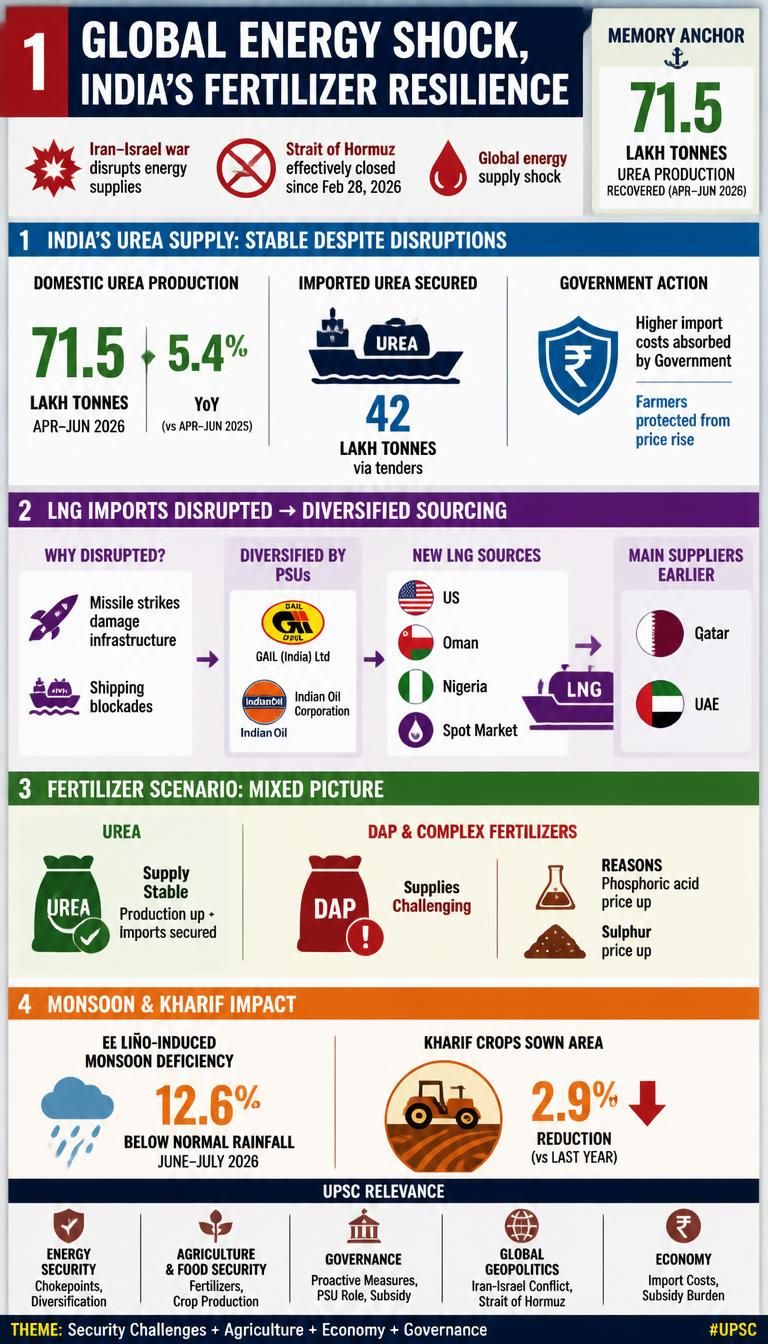
- The Iran-Israel war and the effective closure of the Strait of Hormuz since February 28, 2026, caused a significant global energy supply shock.
- India's urea supply remained stable due to proactive government measures, despite disruptions in Liquefied Natural Gas (LNG) imports.
- Domestic urea production recovered to 71.5 lakh tonnes in April-June 2026, a 5.4% increase compared to the same period last year.
- The government diversified LNG sourcing to the spot market and secured 42 lakh tonnes of imported urea through tenders.
- Supplies of Di-ammonium Phosphate (DAP) and complex fertilizers remain challenging due to raw material shortages and price hikes for phosphoric acid and sulphur.
- An El Niño-induced monsoon deficiency led to a 12.6% below-normal rainfall during June-July and a 2.9% reduction in kharif crops sown area.
Energy Shock.jpg
Detailed Insights:
- The Strait of Hormuz is a critical maritime chokepoint connecting the Persian Gulf with the Gulf of Oman, vital for global energy trade.
- India's LNG imports, primarily from Qatar and UAE, faced disruptions due to shipping blockades and infrastructure damage from missile strikes.
- Public sector undertakings like GAIL (India) Ltd and Indian Oil Corporation were directed to diversify LNG sourcing from countries including the US, Oman, and Nigeria.
- State-owned entities such as Indian Potash Ltd (IPL) and National Fertilizers Ltd issued tenders to secure imported urea.
- The government absorbed the higher import costs for urea to shield farmers from price increases, impacting the overall fertilizer subsidy bill.
- Raw materials for DAP and complex fertilizers, such as phosphoric acid and sulphur, experienced substantial price increases.
- Sulphur prices surged significantly due to geopolitical events, including drone attacks on Russian oil refineries and tightened supplies from West Asia.
- The El Niño phenomenon, characterized by the warming of Pacific Ocean waters, contributed to the monsoon deficiency in India.
- Subdued demand for fertilizers was observed due to the deficient monsoon, contrasting with previous years of high demand.
Key Concepts Involved:
- Strait of Hormuz: A narrow, strategically vital waterway connecting the Persian Gulf with the Gulf of Oman, crucial for global energy trade.
- Liquefied Natural Gas (LNG): Natural gas cooled to a liquid state for efficient storage and long-distance transport, primarily methane.
- Urea: A nitrogen-rich chemical fertilizer (46% nitrogen) essential for plant growth, widely used in India.
- Di-ammonium Phosphate (DAP): A widely used phosphatic fertilizer containing both nitrogen (18%) and phosphorus (46%), crucial for early root development.
- Complex Fertilisers: Fertilizers containing two or more primary plant nutrients (N, P, K) in chemical combination, often granular.
- El Niño: A climate pattern characterized by the unusual warming of surface waters in the eastern tropical Pacific Ocean, affecting global weather.
- Kharif Crops: Monsoon crops sown with the onset of the southwest monsoon (June-July) and harvested in September-October.
- Rabi Cropping Season: The winter cropping season in India, with sowing in October-November and harvesting in March-April.

SuperKalam is your personal mentor for UPSC preparation, guiding you at every step of the exam journey.
Download the App


STUDY RESOURCES
CONTACT US
ⓒ Snapstack Technologies Private Limited