GS 3: EconomyPrelimsGS 3: Indian Economy, Planning, Mobilization of Resources, Growth, Development and EmploymentGS 2: Statutory, Regulatory and Quasi Judicial BodiesGS 2: Effect of Policies and Politics of Developed and Developing Countries on India's Interests
RBI Policy Panel Likely To Keep Interest Rates Unchanged On August 5, Pg12
RBI's MPC expected to hold interest rates steady on August 5, balancing inflation risks from West Asia conflict and crude oil prices.
Practice MCQs
797 Students attempted
Key Highlights:
- The Monetary Policy Committee (MPC) of the Reserve Bank of India (RBI) is widely expected to keep the key policy repo rate unchanged on August 5.
- This decision is primarily influenced by the continuing conflict in West Asia and elevated global crude oil prices.
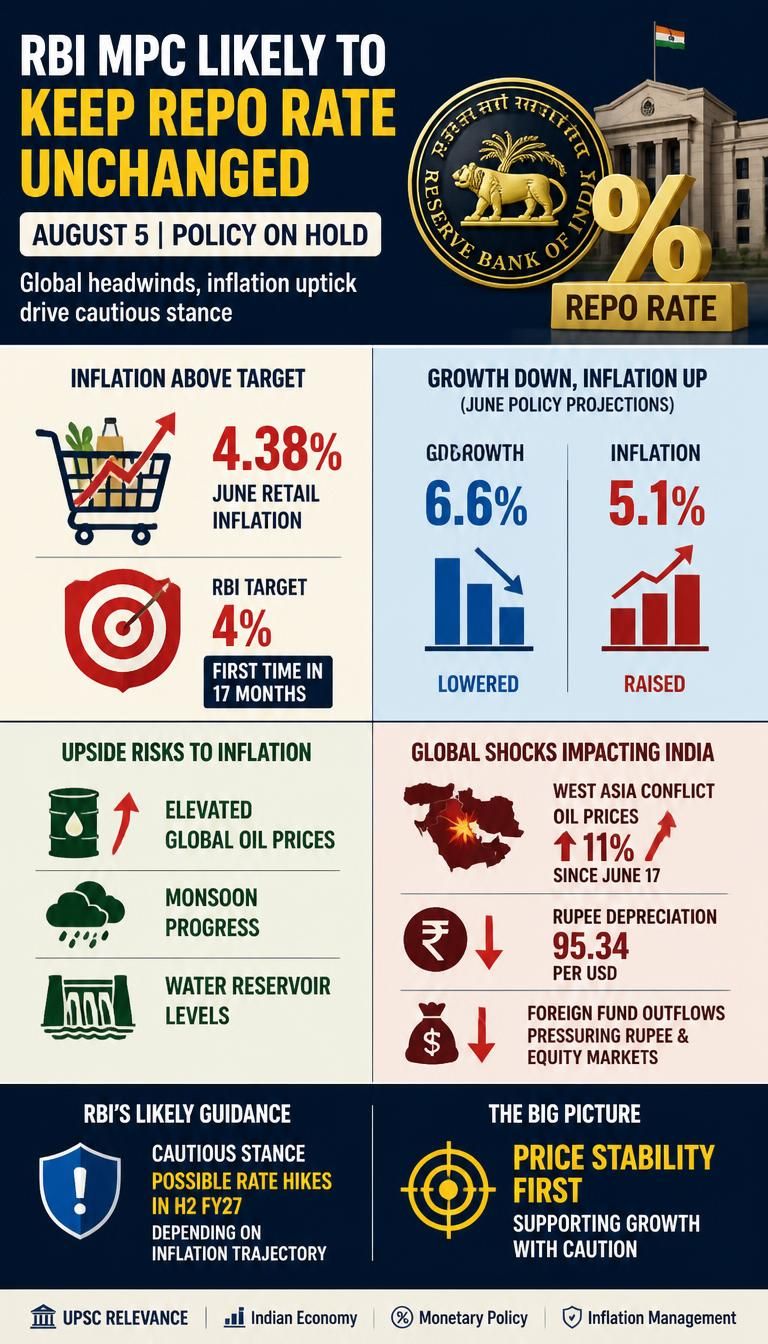
- Retail inflation in June rose to 4.38%, surpassing the RBI's 4% target for the first time in 17 months.
- In its June policy review, the MPC had lowered the growth projection to 6.6% and increased the inflation forecast to 5.1%.
RBI MPC.jpg
Detailed Insights:
- The MPC's decision to maintain the current repo rate reflects a strategy to balance inflation management with supporting economic resilience amidst global uncertainties.
- Upside risks to future inflation include elevated global oil prices, the progress of the monsoon, and water reservoir levels.
- Experts anticipate that the RBI may deliver cautionary guidance, potentially signaling future rate hikes in the second half of FY27, depending on the inflation trajectory.
- The West Asia conflict has led to an 11% increase in oil prices since June 17, contributing to the depreciation of the Indian rupee to 95.34.
- Foreign fund outflows, which tend to intensify during periods of global stress, have also impacted India's currency and equity markets.
Key Concepts Involved:
- Monetary Policy Committee (MPC): A statutory body of the RBI responsible for determining the benchmark interest rate in India.
- Repo Rate: The interest rate at which the Reserve Bank of India provides liquidity to commercial banks.
- Inflation Target: The specific range (currently 4% +/- 2%) mandated by the Government of India for the RBI to maintain retail inflation.

SuperKalam is your personal mentor for UPSC preparation, guiding you at every step of the exam journey.
Download the App


STUDY RESOURCES
CONTACT US
ⓒ Snapstack Technologies Private Limited