GS 2: International RelationsGS 3: EconomyPrelimsGS 2: Bilateral, Regional and Global Groupings and AgreementsGS 2: Effect of Policies and Politics of Developed and Developing Countries on India's Interests
OPEC+ agrees oil hike from September, Pg12
OPEC+ approves 188,000 bpd oil production hike from September, completing previous cuts amidst global supply disruptions.
Practice MCQs
797 Students attempted
Key Highlights:
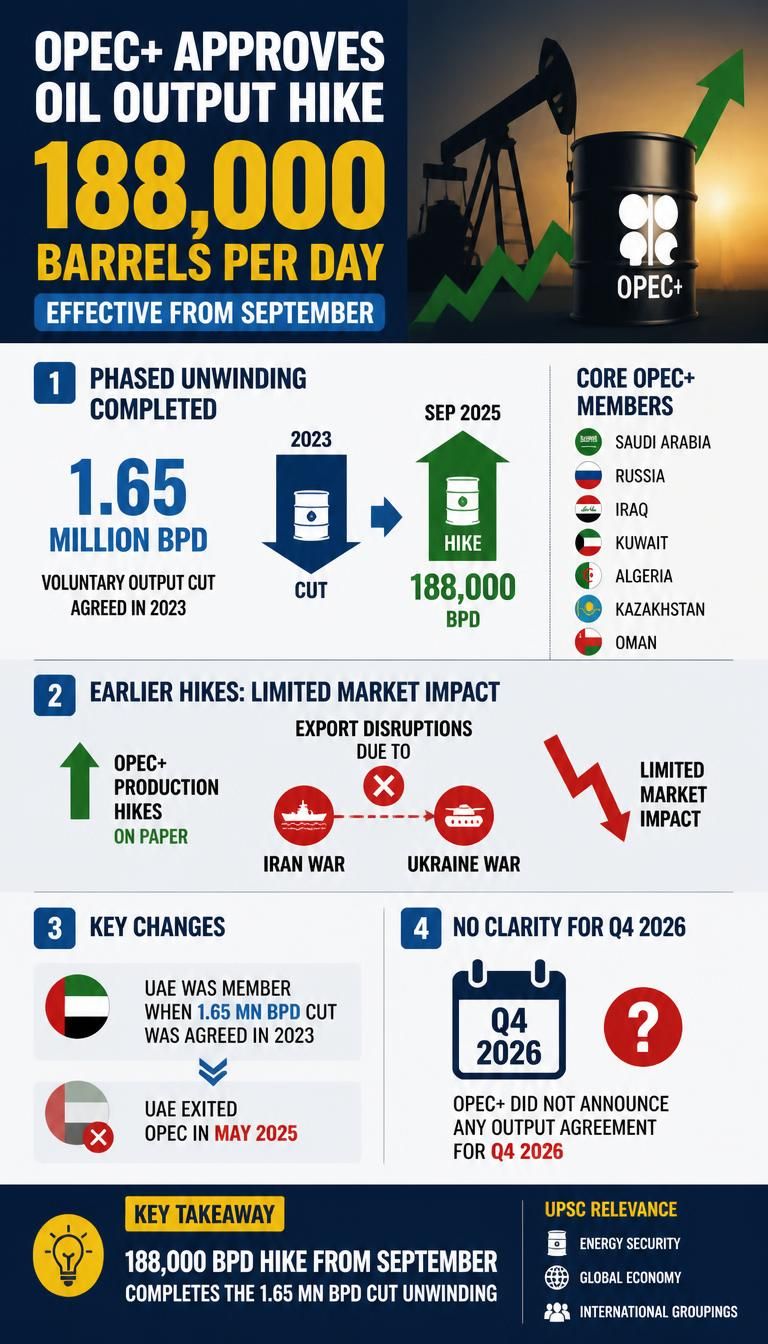
- OPEC+ approved an oil production quota increase of approximately 188,000 barrels per day, effective from September.
- This decision completes the phased unwinding of a 1.65 million bpd voluntary output cut that was originally agreed upon in 2023.
- Core OPEC+ members, including Saudi Arabia, Russia, Iraq, Kuwait, Algeria, Kazakhstan, and Oman, agreed to the increase.
- Previous monthly OPEC+ production hikes this year have had limited market impact due to export disruptions from the Gulf, Russia, and Kazakhstan, caused by the Iran and Ukraine wars.
OPEC+.jpg
Detailed Insights:
- The approved increase aims to add more crude oil to the global market, potentially influencing supply-demand dynamics.
- Export disruptions have meant that earlier agreed-upon production increases largely remained "on paper" without significantly impacting the market.
- The 1.65 million bpd supply cut was initially agreed in 2023 when the United Arab Emirates (UAE) was still a member of OPEC.
- The UAE departed from OPEC in May, prior to this latest agreement on production quotas.
- OPEC+ did not make any announcements regarding potential output agreements for the fourth quarter of 2026.
Key Concepts Involved:
- OPEC+: An alliance of oil-exporting nations, including OPEC members and other major oil producers like Russia, that coordinates oil production policies.
- Oil Production Quota: An agreed-upon limit or target for the amount of crude oil that a member country can produce within a specific period.
- Voluntary Output Cuts: Deliberate reductions in oil production by member countries, often implemented to stabilize or increase global oil prices.

SuperKalam is your personal mentor for UPSC preparation, guiding you at every step of the exam journey.
Download the App


STUDY RESOURCES
CONTACT US
ⓒ Snapstack Technologies Private Limited