GS 2: GovernanceGS 3: EconomyPrelimsGS 3: Changes in Industrial Policy and Effects on Industrial GrowthGS 3: Indian Economy, Planning, Mobilization of Resources, Growth, Development and Employment
Steel Policy For 2047 Needs To Shift Focus — From Protection To Competition, Pg11
Draft National Steel Policy 2047 criticized for protectionist measures, hindering global competitiveness; experts urge tariff reduction and mining reforms.
Practice MCQs
811 Students attempted
Key Highlights:
- The Ministry of Steel released the Draft National Steel Policy: Vision 2047 to enhance global competitiveness and increase steel exports to 45 million tonnes.
- India is currently the world's second-largest steel producer, with an output of 170 Mt.
- The Indian steel industry's high profitability is largely due to protectionist measures, including a 30% export duty on iron ore and an 18% import tariff on steel.
- Domestic steel is sold at a 6-7% premium over international prices, negatively impacting downstream industries.
- The policy proposes reducing tariffs, removing non-tariff barriers like Quality Control Orders (QCOs), privatizing public sector units, and overhauling mining policy.
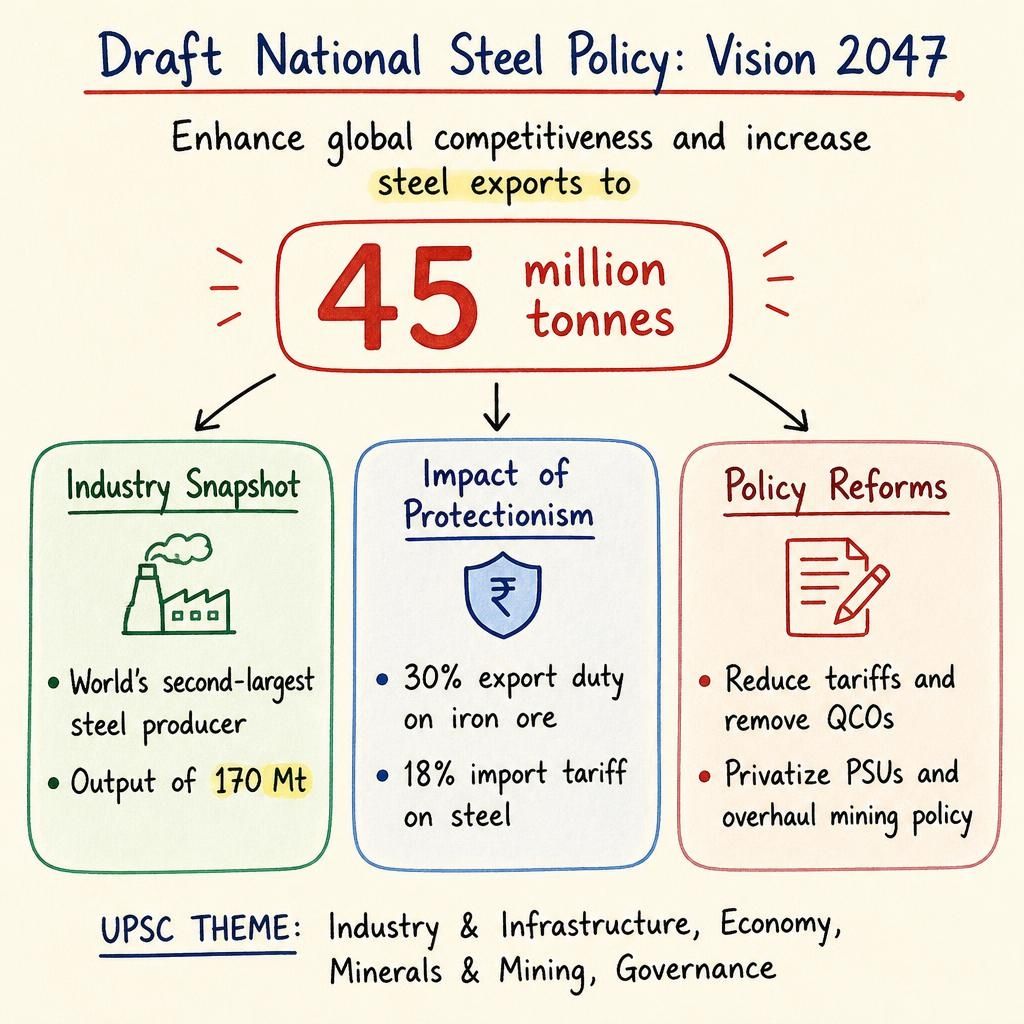
National Steel Policy.jpg
Detailed Insights:
- The average profitability (EBITDA over sales) of the Indian steel sector is around 15%, which is 3-4% higher than the rest of Indian manufacturing.
- A 30% export duty on iron ore with over 58% iron content keeps domestic ore prices 30-40% lower than global prices, benefiting steel producers.
- India's import tariff on steel is 18% (7.5% basic duty plus 11.5% safeguard duty), significantly higher than the 3-4% tariff in ASEAN nations.
- Quality Control Orders (QCOs) are imposed on 228 steel products, acting as non-tariff barriers; the Gauba Committee recommended removing 122, but only 59 have been suspended.
- Removing protectionist measures could lead to a significant drop in profitability for major steel firms, with some public sector firms potentially seeing a 50% reduction.
- The policy suggests a calibrated reduction of duties over five years to match ASEAN levels and immediate removal of certain QCOs.
- Privatization of public sector steel plants, such as SAIL, is recommended to improve efficiency and governance, as SAIL's market share has declined from 30% to 10% since 2000.
- Overhauling the mining policy to encourage exploration, similar to practices in Australia, is crucial to boost mineral contribution to GDP.
Key Concepts Involved:
- National Steel Policy: A government framework outlining objectives and strategies for the development and growth of the steel industry.
- Quality Control Orders (QCOs): Mandatory standards imposed on products to ensure quality and safety, often acting as non-tariff barriers to trade.
- Tariff Protection: Government policies that impose taxes (tariffs) on imported goods to make them more expensive and protect domestic industries.

SuperKalam is your personal mentor for UPSC preparation, guiding you at every step of the exam journey.
Download the App


STUDY RESOURCES
CONTACT US
ⓒ Snapstack Technologies Private Limited