GS 3: EconomyPrelimsGS 3: Changes in Industrial Policy and Effects on Industrial GrowthGS 3: Indian Economy, Planning, Mobilization of Resources, Growth, Development and EmploymentGS 2: Effect of Policies and Politics of Developed and Developing Countries on India's Interests
Endurance test, Pg8
India's economy records robust 7.8% Q1 growth driven by manufacturing and services, yet faces future challenges from oil prices and rural demand.
Practice MCQs
797 Students attempted
Key Highlights:
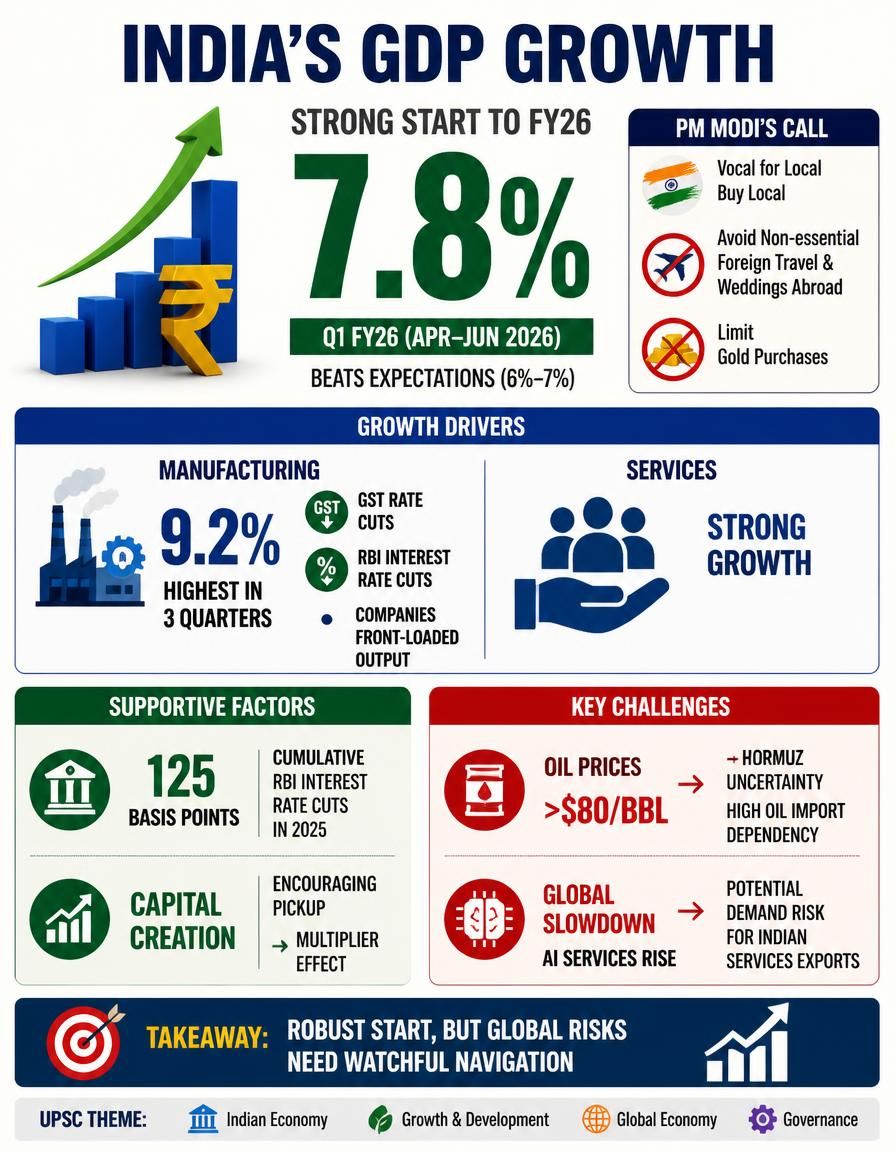
- India's economy recorded a robust 7.8% growth in the first quarter of this financial year (April-June 2026).
- This growth was primarily driven by strong performances in the manufacturing sector, which grew at 9.2%, and the services sector.
- Manufacturing benefited from Goods and Services Tax rate cuts and cumulative interest rate reductions by the Reserve Bank of India.
- Prime Minister Narendra Modi urged citizens to support local products, avoid non-essential foreign travel and weddings abroad, and limit gold purchases.
GDP Growth.jpg
Detailed Insights:
- The Q1 FY26 growth surpassed economists' expectations of 6%-7%, despite the ongoing West Asia crisis.
- The 9.2% manufacturing growth was the highest in three quarters, partly due to companies front-loading output.
- The Reserve Bank of India implemented 125-basis point cumulative interest rate cuts throughout 2025.
- Capital creation has shown an encouraging pickup, which has a positive multiplier effect on the economy.
- Challenges include high oil prices, likely above $80 a barrel due to Hormuz uncertainty, impacting India's significant oil import dependency.
- The global economic slowdown and the rise of Artificial Intelligence services could potentially reduce demand for Indian services exports.
- Concerns also exist regarding the impact of a deficient monsoon on rural demand and rising inflation, projected to reach 5.9% in October-December 2026.
- Chief Economic Adviser V. Anantha Nageswaran highlighted the persistent risk of elevated oil prices.
Key Concepts Involved:
- Goods and Services Tax (GST): An indirect tax levied on the supply of goods and services across India.
- Reserve Bank of India (RBI): India's central bank, responsible for monetary policy, currency issuance, and financial regulation.
- Trade Deficit: The amount by which a country's imports of goods and services exceed its exports.
- Index of Industrial Production (IIP): An index that measures the growth rates in different industry groups of the economy.

SuperKalam is your personal mentor for UPSC preparation, guiding you at every step of the exam journey.
Download the App


STUDY RESOURCES
CONTACT US
ⓒ Snapstack Technologies Private Limited