GS 3: EconomyPrelimsGS 3: Government BudgetingGS 3: Indian Economy, Planning, Mobilization of Resources, Growth, Development and Employment
GST collections rose 15.4% in July on imports, sales, Pg11
July GST collections surge 15.4% to ₹2.11 lakh crore, driven by robust imports and domestic sales, signaling economic resilience.
Practice MCQs
790 Students attempted
Key Highlights:
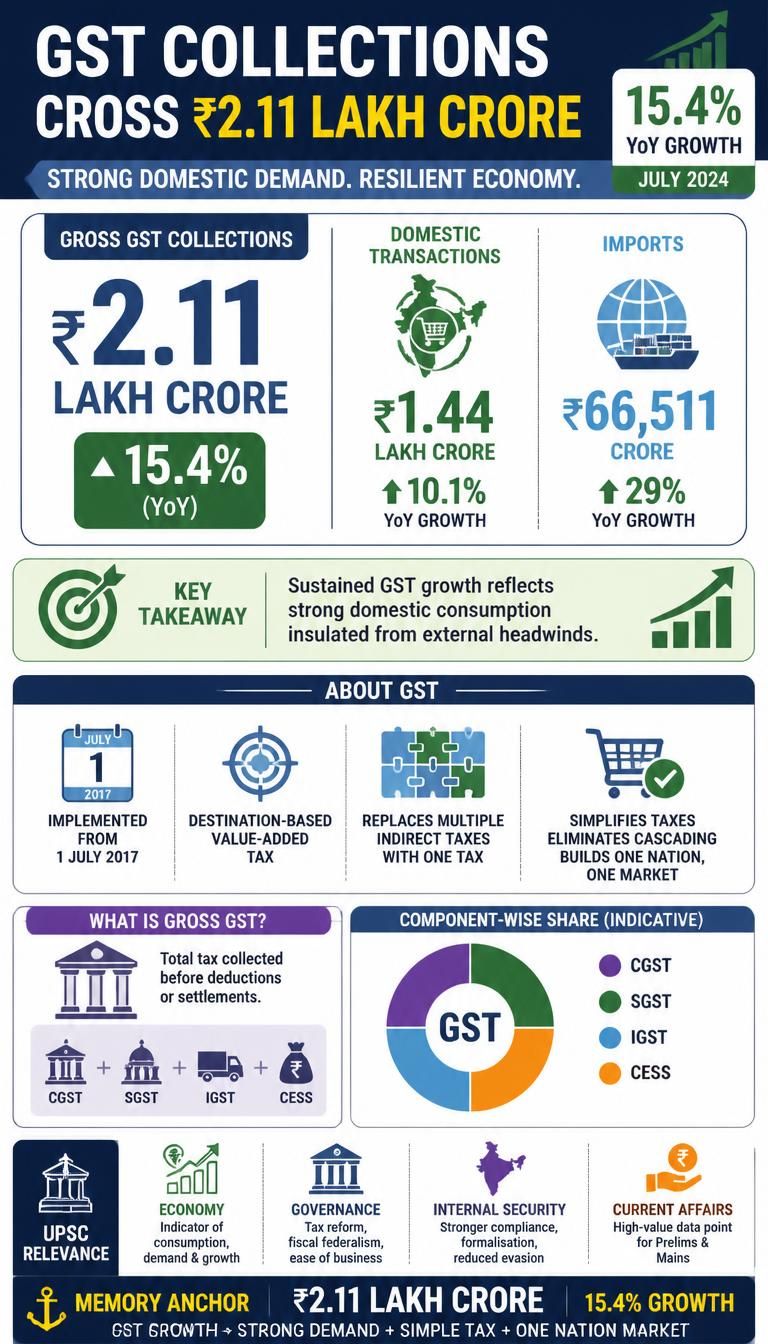
- Gross Goods and Services Tax (GST) collections for July rose by 15.4% to exceed ₹2.11 lakh crore.
- This increase was primarily driven by higher revenue from domestic sales and imports.
- Tax collection from domestic transactions grew by 10.1% to over ₹1.44 lakh crore.
- Gross revenues from imports saw a substantial 29% increase, reaching ₹66,511 crore.
GST.jpg
Detailed Insights:
- The consistent growth in GST collections indicates sustained domestic consumption and economic resilience despite external challenges.
- Steady monthly growth from domestic consumption suggests it is largely insulated from seasonal variations and external headwinds.
- GST was implemented in India from July 1, 2017, as a destination-based, value-added tax, replacing a complex system of multiple indirect taxes.
- Its primary objectives include simplifying the tax structure, eliminating the cascading effect of taxes, and fostering a unified national market.
- Gross GST collections represent the total tax amount collected, encompassing Central GST (CGST), State GST (SGST), Integrated GST (IGST), and Cess, before any deductions or settlements.
Key Concepts Involved:
- Goods and Services Tax (GST): A comprehensive, multi-stage, destination-based indirect tax levied on the supply of goods and services across India.
- Indirect Tax: A tax levied on goods and services, where the tax burden can be shifted from the initial payer to the final consumer.
- Gross GST collections: The aggregate sum of all tax revenue collected under the GST framework before any adjustments, refunds, or inter-state settlements.

SuperKalam is your personal mentor for UPSC preparation, guiding you at every step of the exam journey.
Download the App


STUDY RESOURCES
CONTACT US
ⓒ Snapstack Technologies Private Limited