GS 2: International RelationsGS 3: Disaster ManagementGS 3: EconomyPrelimsGS 3: Disaster and Disaster Management
Despite Flood, Nepal Stepped Up Power Exports to India, Pg17
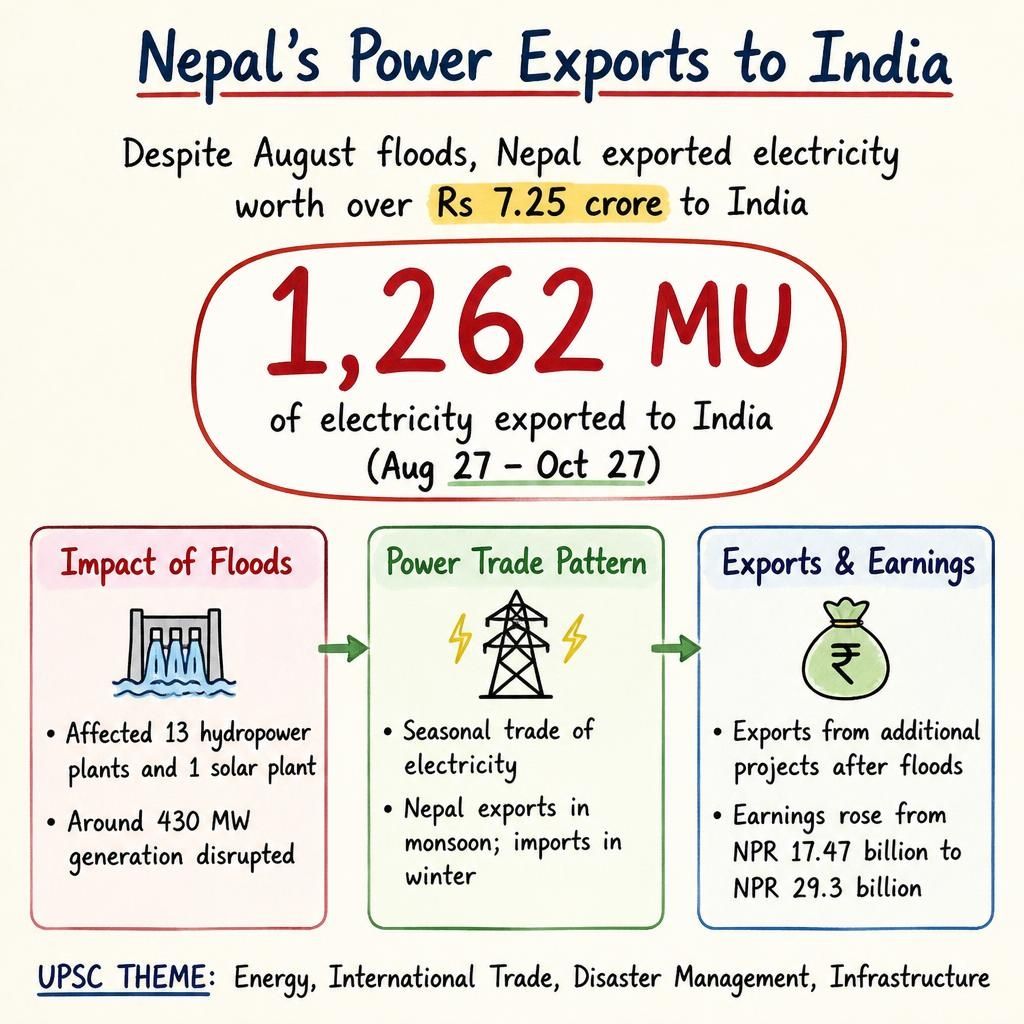
Nepal surprisingly exported 1,262 MU electricity worth Rs 7.25 crore to India post-August floods, defying expectations of supply disruption.
Practice MCQs
804 Students attempted
Key Highlights:
- Despite flash floods in August, Nepal exported electricity worth over Rs 725 crore to India between August 27 and October 27.
- During this two-month period, Nepal exported approximately 1,262 million units (MU) of electricity to India.
- The floods damaged several hydropower projects, including the 14-MW Devighat hydropower plant, and disrupted electricity evacuation.
- The Union Ministry of Power had previously approved Nepal's request for early electricity imports from India due to flood-induced generation capacity reduction.
- Nepal's sustained exports are primarily attributed to its seasonal surplus generation during the monsoon period.
Nepal Power Export.jpg
Detailed Insights:
- The floods, which occurred on August 26, affected 13 hydropower plants and a solar power plant in Nepal.
- Around 430 MW of electricity generation capacity was disrupted due to damaged transmission lines, with 74 MW directly damaged.
- Electricity trade between Nepal and India is seasonal, with Nepal exporting surplus power during the monsoon and importing during dry winter months.
- The Nepal Electricity Authority (NEA) confirmed that Nepal applied for approval to export electricity from additional projects shortly after the floods.
- Indian government officials also suggest that a decline in Nepal's domestic electricity demand following flood damage to infrastructure might have contributed to the exportable surplus.
- Nepal's earnings from electricity exports significantly increased from Nepalese Rupee (NPR) 17.47 billion in 2024-25 to NPR 29.3 billion in 2025-26.
Key Concepts Involved:
- Hydropower: Electricity generated by harnessing the kinetic energy of flowing or falling water.
- Seasonal Surplus: A period when electricity generation significantly exceeds domestic demand, often due to natural factors like monsoon-fed rivers for hydropower.
- Power Evacuation: The process of transmitting generated electricity from power plants to the main grid and consumption centers.

SuperKalam is your personal mentor for UPSC preparation, guiding you at every step of the exam journey.
Download the App


STUDY RESOURCES
CONTACT US
ⓒ Snapstack Technologies Private Limited