GS 2: GovernanceGS 3: EconomyPrelimsGS 3: Indian Economy, Planning, Mobilization of Resources, Growth, Development and EmploymentGS 2: Effect of Policies and Politics of Developed and Developing Countries on India's Interests
US Treasury Yields At 25-Yr High: What Are Bond Yields, What Happens When They Rise, Pg12
US Treasury bond yields hit a 25-year high, signaling increased borrowing costs for governments and businesses globally, threatening economic activity.
Practice MCQs
797 Students attempted
Key Highlights:
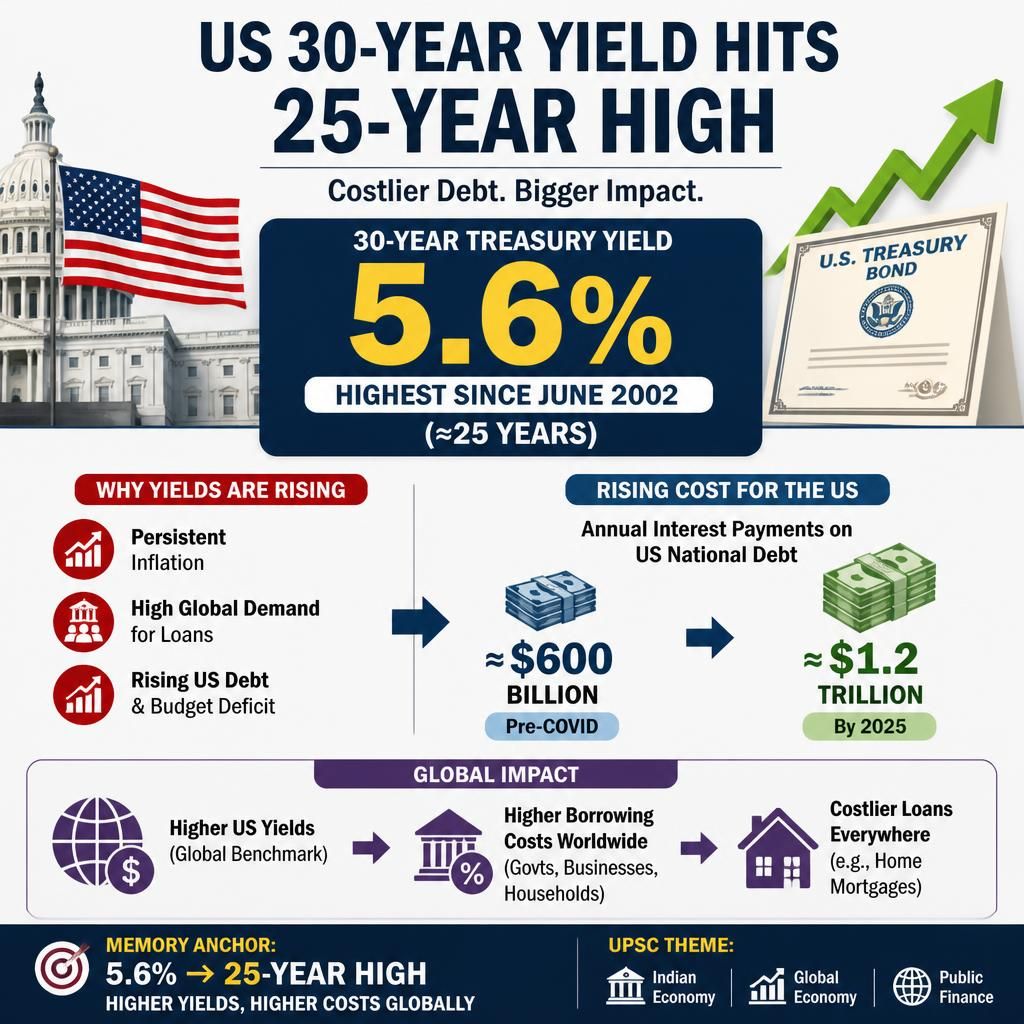
- The yield on the 30-year US Treasury bond reached approximately 5.6% in late September 2023, marking its highest level in about 25 years since June 2002.
- This rise indicates increased borrowing costs for the US government, which uses these bonds to finance its expenditures.
- The primary drivers for the surging yields include persistent inflation and a heightened global demand for loans from both governments and businesses.
- Higher US Treasury yields typically lead to increased borrowing costs for other governments and businesses worldwide, including higher interest rates on loans like home mortgages.
- The annual interest payments on the US national debt have significantly increased from around $600 billion before the COVID-19 pandemic to an estimated $1.2 trillion by 2025.
Bond Yield.jpg
Detailed Insights:
- US Treasury bonds are debt instruments issued by the US government to borrow money, with the yield representing the return on investment for lenders.
- The coupon is the fixed interest amount the government pays to bondholders annually, but bond yields fluctuate in the secondary market based on demand and price.
- When inflation rises, the real value of future coupon payments decreases, prompting investors to sell bonds, which drives down bond prices and consequently increases yields.
- The growing US budget deficit, which has pushed the national debt to over $40 trillion, necessitates more borrowing, further contributing to higher yields.
- Increased borrowing costs for the US government mean a larger portion of its budget must be allocated to interest payments, reducing funds available for other priorities like social security.
- Globally, as US Treasury bonds are considered a benchmark for safe lending, their higher yields make all other loans riskier and thus more expensive.
- This situation is exacerbated by high debt levels in many major economies and substantial borrowing by companies, particularly in the artificial intelligence sector.
- The overall increase in borrowing costs threatens to slow down global economic activity, making rising bond yields a concern for economic stability.
Key Concepts Involved:
- US Treasury Bond: A long-term debt security issued by the US government to finance its spending, considered a low-risk investment.
- Bond Yield: The return an investor receives on a bond, which moves inversely to the bond's market price.
- Coupon: The fixed annual interest payment made by the bond issuer to the bondholder.
- Secondary Market: A financial market where previously issued securities are traded between investors.
- Inflation: The rate at which the general level of prices for goods and services is rising, eroding the purchasing power of currency.
- Budget Deficit: Occurs when government expenditures exceed its revenues over a specific period, leading to increased borrowing.

SuperKalam is your personal mentor for UPSC preparation, guiding you at every step of the exam journey.
Download the App


STUDY RESOURCES
CONTACT US
ⓒ Snapstack Technologies Private Limited