GS 2: GovernanceGS 2: Social JusticeGS 3: Environment & EcologyPrelimsGS 3: Conservation, Pollution and Degradation
What two districts can teach us about dealing with rural waste, Pg II
Majuli and Tawang districts pioneer community-led rural waste management models, preventing tonnes of garbage from polluting rivers and landfills, despite financial and logistical challenges.
Practice MCQs
790 Students attempted
Key Highlights:
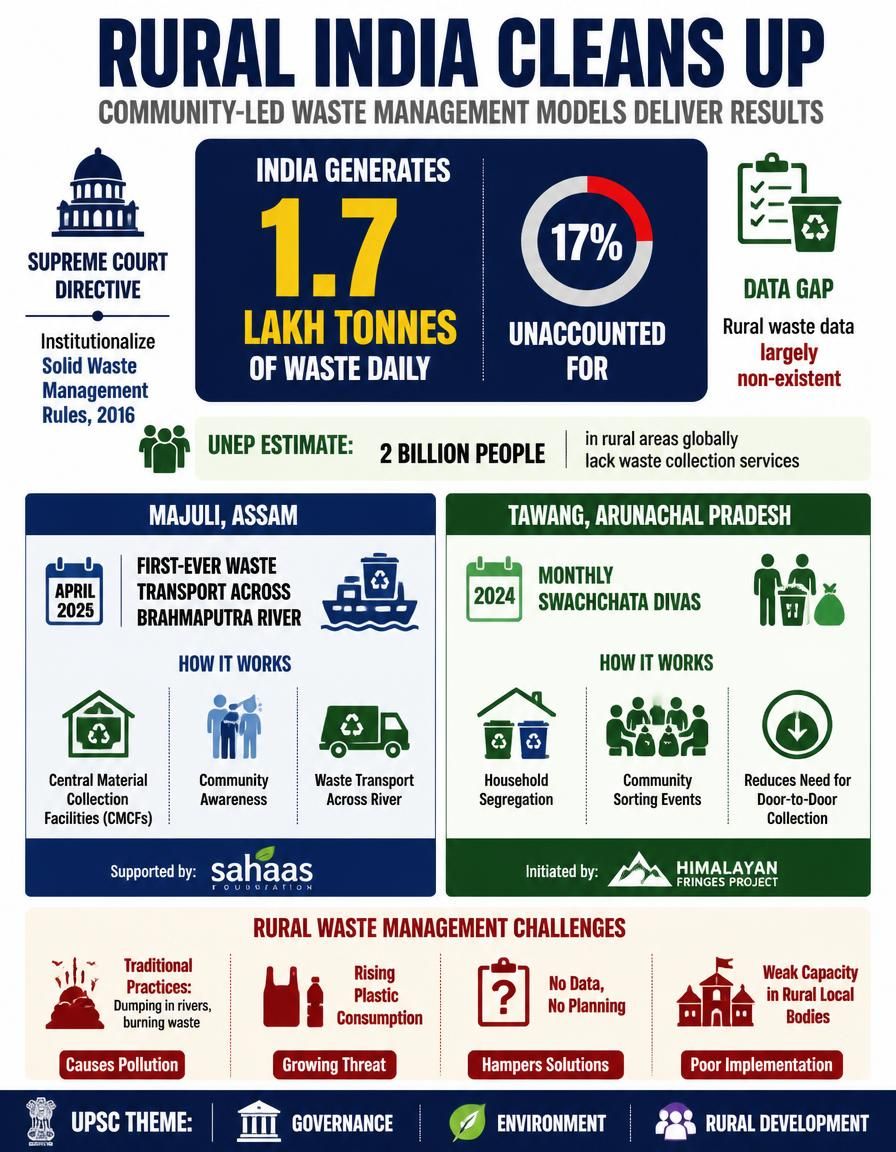
- Two districts, Majuli in Assam and Tawang in Arunachal Pradesh, have successfully implemented community-led rural waste management models.
- In April 2025, Majuli began transporting waste across the Brahmaputra river, a first for the island, with support from non-profit Sahaas.
- Tawang's model, initiated in 2024 by the Himalayan Fringes Project, involves monthly "Swachchata Divas" for community waste segregation.
- The Supreme Court recently directed Union and State governments to institutionalize the Solid Waste Management Rules 2016.
- Rural India faces significant challenges in waste management, including a lack of data and increased plastic consumption.
Community Led Waste Management.jpg
Detailed Insights:
- India generates 1.7 lakh tonnes of waste daily, with 17% unaccounted for and rural waste data largely non-existent.
- The Central Pollution Control Board is tasked with waste data collection, but rural local bodies often neglect this duty.
- The UN Environment Programme (UNEP) estimates that 2 billion people in rural areas globally lack waste collection services.
- Traditional rural waste disposal methods, such as dumping in rivers or burning, contribute to environmental pollution.
- Majuli's system involved establishing Central Material Collection Facilities (CMCFs) and raising community awareness.
- Tawang's model relies on household segregation and community-organized sorting events, reducing the need for door-to-door collection.
- Financial sustainability in Tawang is achieved through monthly fees from households and shops, managed by local committees.
- Material Recovery Facilities (MRFs) in Tawang process segregated waste into numerous categories, generating revenue from recyclables.
- High transportation costs to distant recyclers pose a significant challenge for rural waste management due to geographical remoteness.
- The shift from organic to mixed waste, including multi-layered plastics, necessitates advanced and structured waste management solutions.
Key Concepts Involved:
- Solid Waste Management Rules 2016: A legal framework in India for the scientific management of solid waste, emphasizing segregation, collection, and processing.
- Central Material Collection Facilities (CMCFs): Designated collection points in rural areas for aggregated segregated waste from multiple households.
- Material Recovery Facilities (MRFs): Specialized facilities where collected recyclable materials are sorted, processed, and prepared for market.
- Swachh Bharat Mission: A nationwide campaign by the Government of India aimed at achieving universal sanitation and cleanliness across the country.

SuperKalam is your personal mentor for UPSC preparation, guiding you at every step of the exam journey.
Download the App


STUDY RESOURCES
CONTACT US
ⓒ Snapstack Technologies Private Limited