GS 2: GovernanceGS 2: PolityPrelimsGS 2: Constitutional BodiesGS 2: Representation of the People's Act
Over 6 Cr. Names Deleted So Far In Third Phase Of SIR, Pg1
Over 6 crore names deleted from electoral rolls during Special Intensive Revision (SIR) across 16 States, sparking political concerns.
Practice MCQs
790 Students attempted
Key Highlights:
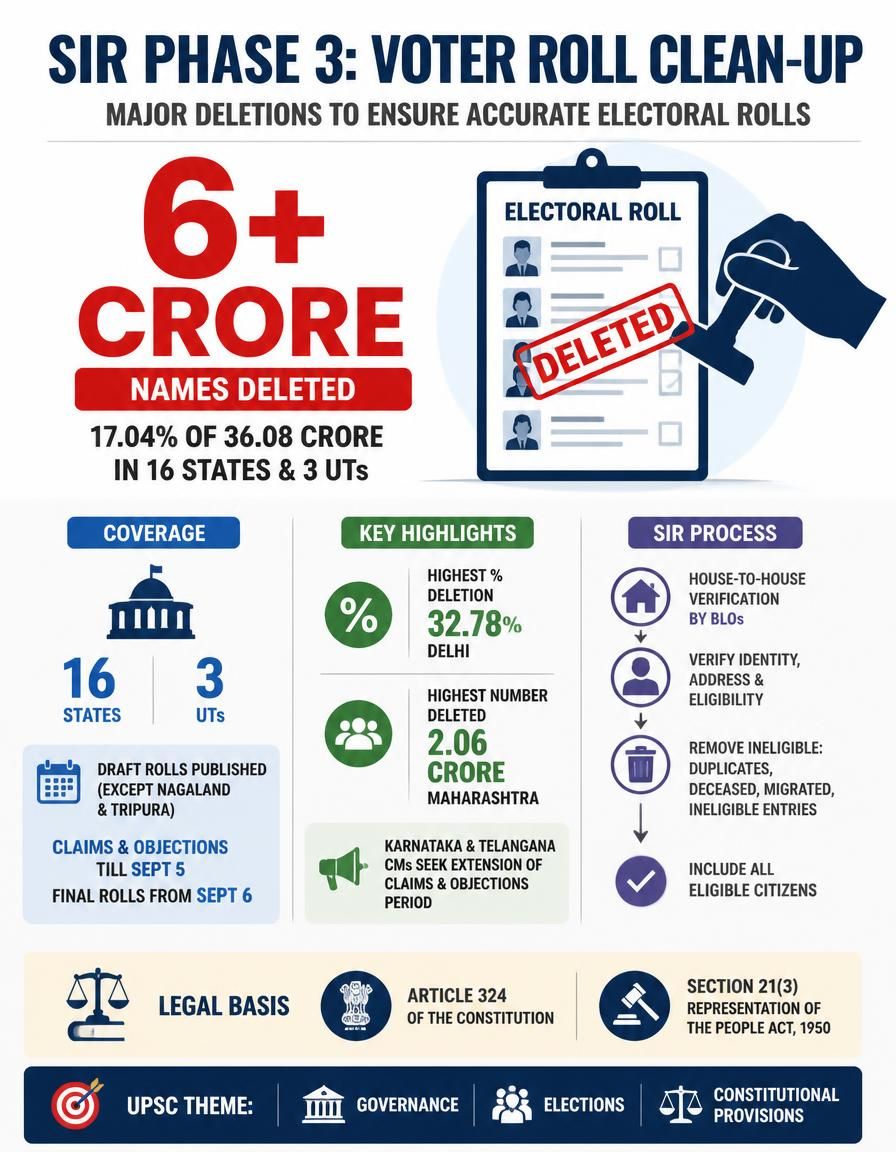
- Over 6 crore names have been deleted from the voters’ registry in the third phase of the Special Intensive Revision (SIR) of electoral rolls.
- This phase covered 16 States and three Union Territories, with draft rolls published for most, except Nagaland and Tripura.
- The deletions represent 17.04% of the 36.08 crore names initially on the electoral rolls in these regions.
- Delhi recorded the highest percentage of deletions at 32.78%, while Maharashtra had the highest absolute number with 2.06 crore names removed.
- The Election Commission (EC) provides a window for claims and objections before the final rolls are published, starting September 6.
- Karnataka and Telangana Chief Ministers have raised concerns regarding the "massive and unjustified" deletions and urged the EC to extend the claims and objections period.
- The Supreme Court previously upheld the constitutional validity of the SIR process in March.
SIR.jpg
Detailed Insights:
- The Special Intensive Revision (SIR) is a comprehensive exercise by the Election Commission of India (ECI) to verify and update electoral rolls, ensuring accuracy and integrity.
- It aims to remove duplicate entries, deceased voters, migrated persons, and other ineligible entries, while including all eligible citizens.
- The SIR is authorized under Article 324 of the Constitution and Section 21(3) of the Representation of the People Act, 1950.
- This process involves house-to-house verification by Booth Level Officers (BLOs) to validate voter identity and address.
- The current SIR is significant as it is the first nationwide revision of this scale in over two decades, addressing rapid urbanization and migration.
- The Supreme Court has clarified that SIR data is solely for electoral roll revision and cannot be used to deny welfare benefits or determine citizenship.
- The ECI is responsible for preparing and periodically revising electoral rolls to ensure free and fair elections.
- The Registration of Electors Rules, 1960, framed under the Representation of the People Act, 1950, provide the procedural framework for electoral roll management.
Key Concepts Involved:
- Special Intensive Revision (SIR): A large-scale, comprehensive exercise by the Election Commission of India to verify, update, and purify electoral rolls.
- Electoral Rolls: Official lists of individuals eligible to vote in a given election within a specific jurisdiction.
- Election Commission of India (ECI): A permanent, independent constitutional body established under Article 324 to superintend, direct, and control elections.
- Representation of the People Act, 1950: A parliamentary law that deals with the preparation and revision of electoral rolls.

SuperKalam is your personal mentor for UPSC preparation, guiding you at every step of the exam journey.
Download the App


STUDY RESOURCES
CONTACT US
ⓒ Snapstack Technologies Private Limited