GS 2: GovernanceGS 1: Indian GeographyGS 3: Disaster ManagementGS 3: Environment & EcologyPrelims
Himalayas' hanging glacier threat, Pg14
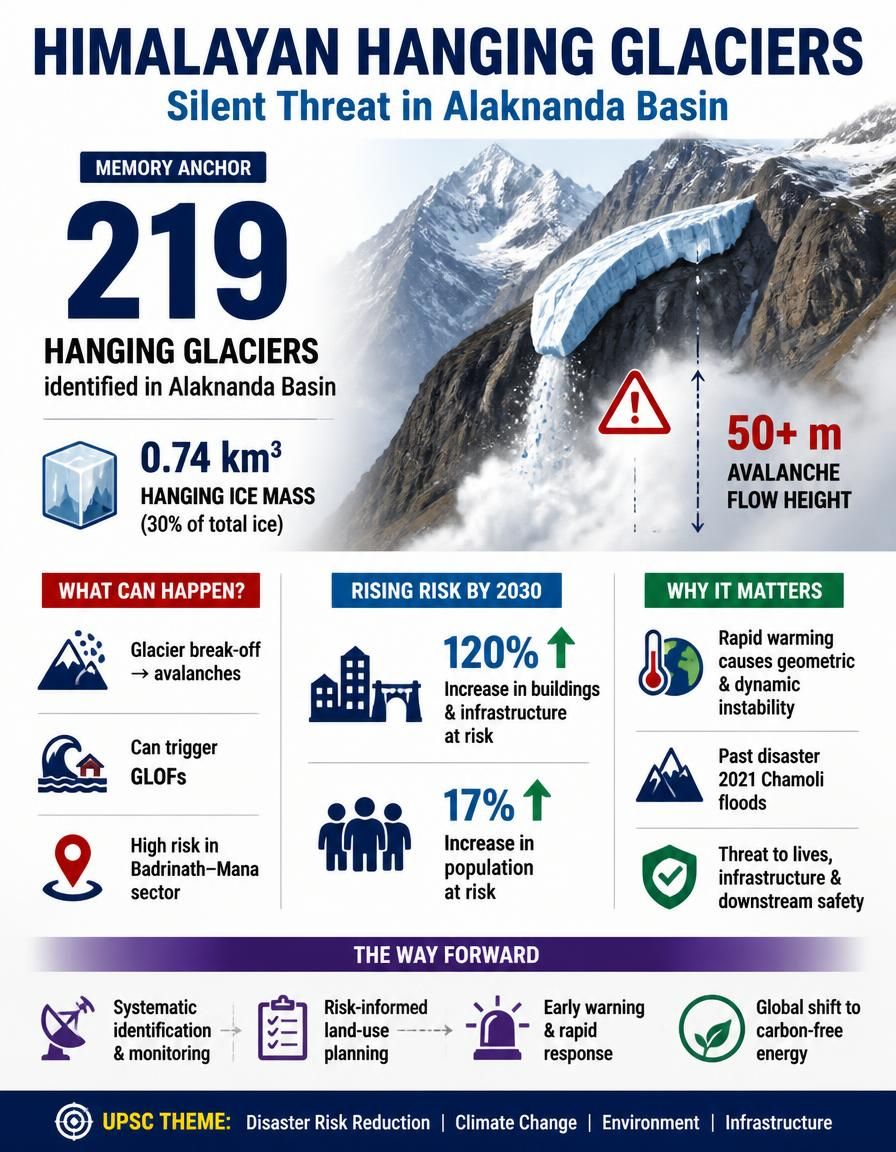
New study identifies 219 'hanging glaciers' in Garhwal Himalayas, posing severe avalanche and flood risks to settlements and infrastructure due to climate change.
Practice MCQs
790 Students attempted
Key Highlights:
- A study published in Nature identified 219 hanging glaciers in the Alaknanda basin of the Garhwal Himalayas.
- These unstable ice masses on steep slopes pose a significant risk of detaching and causing massive avalanches and Glacial Lake Outburst Floods (GLOFs).
- The research highlights the "geometric and dynamic instability" of Himalayan glaciers due to rapid warming and climate variability.
- Avalanche flows from these break-offs could exceed 50 meters in height in Uttarakhand's Badrinath-Mana sector, threatening infrastructure.
- The study projects a 120% increase in buildings and infrastructure and a 17% rise in population at risk in the Alaknanda basin by 2030.
Himalayan Glacier.jpg
Detailed Insights:
- The study was co-authored by researchers from IIT Bhubaneswar and the Indian Institute of Science, Bengaluru.
- Unstable glaciers are characterized by rapid changes in velocity, leading to ice redistribution and structural shifts that form hanging glaciers.
- While common in the Alps, comprehensive basin-scale assessments of hanging glaciers in the Himalayas have been limited until this study.
- The Alaknanda basin contains an estimated 2.39 km³ of ice volume, with 0.74 km³ specifically identified as hanging ice mass.
- Experts advocate for systematic identification, monitoring programs, and risk-informed land-use planning to mitigate downstream hazards.
- The 2021 Chamoli disaster is cited as an example of the devastating impact, underscoring the need for better preparedness and rapid response.
- There is an urgent call for a global transition to carbon-free energy to address the root cause of climate change impacting glaciers.
- Effective risk management requires treating these as cascading hazards and strengthening anticipatory monitoring, including transboundary cooperation.
Key Concepts Involved:
- Hanging Glaciers: Ice masses perched on steep mountain slopes prone to sudden detachment and avalanches.
- Glacial Lake Outburst Floods (GLOFs): Sudden and rapid release of water from glacial lakes, often triggered by glacier or landslide events.
- Alaknanda Basin: A significant river basin in the Garhwal Himalayas identified as having a high concentration of unstable glaciers.
- Climate Variability: Fluctuations in global or regional climate patterns over time, contributing to glacier instability.

SuperKalam is your personal mentor for UPSC preparation, guiding you at every step of the exam journey.
Download the App


STUDY RESOURCES
CONTACT US
ⓒ Snapstack Technologies Private Limited